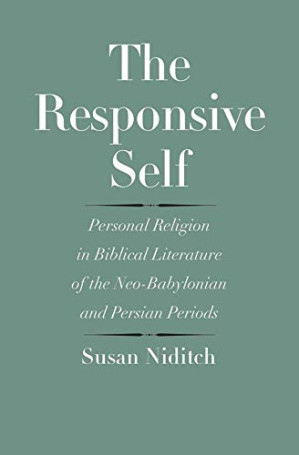
The Responsive Self: Personal Religion in Biblical Literature of the Neo-Babylonian and Persian Periods (The Anchor Yale Bible Reference Library) 🔍
Susan Niditch
Yale University Press, The Anchor Yale Bible reference library, New Haven, 2015
英语 [en] · PDF · 1.0MB · 2015 · 📘 非小说类图书 · 🚀/lgli/lgrs/nexusstc/upload/zlib · Save
描述
Works created in the period from the Babylonian conquest of Judea through the takeover and rule of Judea and Samaria by imperial Persia reveal a profound interest in the religious responses of individuals and an intimate engagement with the nature of personal experience. Using the rich and varied body of literature preserved in the Hebrew Bible, Susan Niditch examines ways in which followers of Yahweh, participating in long-standing traditions, are shown to privatize and personalize religion. Their experiences remain relevant to many of the questions we still ask today: Why do bad things happen to good people? Does God hear me when I call out in trouble? How do I define myself? Do I have a personal relationship with a divine being? How do I cope with chaos and make sense of my experience? What roles do material objects and private practices play within my religious life? These questions deeply engaged the ancient writers of the Bible, and they continue to intrigue contemporary people who try to find meaning in life and to make sense of the world.
__The Responsive Self__ studies a variety of phenomena, including the use of first-person speech, seemingly autobiographic forms and orientations, the emphasis on individual responsibility for sin, interest in the emotional dimensions of biblical characters, and descriptions of self-imposed ritual. This set of interests lends itself to exciting approaches in the contemporary study of religion, including the concept of “lived religion,” and involves understanding and describing what people actually do and believe in cultures of religion.
__The Responsive Self__ studies a variety of phenomena, including the use of first-person speech, seemingly autobiographic forms and orientations, the emphasis on individual responsibility for sin, interest in the emotional dimensions of biblical characters, and descriptions of self-imposed ritual. This set of interests lends itself to exciting approaches in the contemporary study of religion, including the concept of “lived religion,” and involves understanding and describing what people actually do and believe in cultures of religion.
备用文件名
nexusstc/The Responsive Self: Personal Religion in Biblical Literature of the Neo-Babylonian and Persian Periods/0c41aaba17bb5c25ac35693a510e9f95.pdf
备用文件名
lgli/The_Responsive_Self_978-0-300-16636-1.pdf
备用文件名
lgrsnf/The_Responsive_Self_978-0-300-16636-1.pdf
备用文件名
zlib/Religion & Spirituality/Bible/Susan Niditch/The Responsive Self: Personal Religion in Biblical Literature of the Neo-Babylonian and Persian Periods_2602469.pdf
备选作者
Niditch, Susan
备用出版商
San Francisco Museum of Modern Art
备用出版商
Brandywine River Museum
备用出版商
Mariners' Museum, The
备用版本
Anchor Bible reference library, New Haven, cop. 2015
备用版本
The Anchor Yale Bible Reference Library, 2017
备用版本
United States, United States of America
备用版本
Yale University Press, New Haven, 2015
备用版本
Sep 01, 2015
元数据中的注释
0
元数据中的注释
lg1392078
元数据中的注释
{"isbns":["0300166362","0300166532","9780300166361","9780300166538"],"last_page":200,"publisher":"Yale University Press","series":"The Anchor Yale Bible Reference Library"}
元数据中的注释
Source title: The Responsive Self: Personal Religion in Biblical Literature of the Neo-Babylonian and Persian Periods (The Anchor Yale Bible Reference Library)
备用描述
<div>Works created in the period from the Babylonian conquest of Judea through the takeover and rule of Judea and Samaria by imperial Persia reveal a profound interest in the religious responses of individuals and an intimate engagement with the nature of personal experience. Using the rich and varied body of literature preserved in the Hebrew Bible, Susan Niditch examines ways in which followers of Yahweh, participating in long-standing traditions, are shown to privatize and personalize religion. Their experiences remain relevant to many of the questions we still ask today: Why do bad things happen to good people? Does God hear me when I call out in trouble? How do I define myself? Do I have a personal relationship with a divine being? How do I cope with chaos and make sense of my experience? What roles do material objects and private practices play within my religious life? These questions deeply engaged the ancient writers of the Bible, and they continue to intrigue contemporary people who try to find meaning in life and to make sense of the world.<BR> <BR> <I>The Responsive Self </I>studies a variety of phenomena, including the use of first-person speech, seemingly autobiographic forms and orientations, the emphasis on individual responsibility for sin, interest in the emotional dimensions of biblical characters, and descriptions of self-imposed ritual. This set of interests lends itself to exciting approaches in the contemporary study of religion, including the concept of “lived religion,” and involves understanding and describing what people actually do and believe in cultures of religion.</div>
备用描述
"Works created in the period from the Babylonian conquest of Judea through the takeover and rule of Judea and Samaria by imperial Persia reveal a profound interest in the religious responses of individuals and an intimate engagement with the nature of personal experience. Using the rich and varied body of literature preserved in the Hebrew Bible, Susan Niditch examines ways in which followers of Yahweh, participating in long-standing traditions, are shown to privatize and personalize religion. Their experiences remain relevant to many of the questions we still ask today: Why do bad things happen to good people? Does God hear me when I call out in trouble? How do I define myself? Do I have a personal relationship with a divine being? How do I cope with chaos and make sense of my experience? What roles do material objects and private practices play within my religious life? These questions deeply engaged the ancient writers of the Bible, and they continue to intrigue contemporary people who try to find meaning in life and to make sense of the world. The Responsive Self studies a variety of phenomena, including the use of first-person speech, seemingly autobiographic forms and orientations, the emphasis on individual responsibility for sin, interest in the emotional dimensions of biblical characters, and descriptions of self-imposed ritual. This set of interests lends itself to exciting approaches in the contemporary study of religion, including the concept of "lived religion," and involves understanding and describing what people actually do and believe in cultures of religion."--Dust jacket
备用描述
Cover 1
Contents 6
Acknowledgments 8
Introduction 12
1. Sour Grapes, Suffering, and Coping with Chaos: Outlook on the Individual 28
2. Personal Religion in Ecclesiastes and Job: Conventional Wisdom, Responses in the First-Person Voice, and the Problem of Suffering 43
3. From Incantation and Lament to Autobiography 64
4. The Negotiating Self: Vowing and Personal Religion 83
5. Material Religion, Created and Experienced: Burial Sites, Symbolic Visions, and Sign Acts 101
6. Experiencing the Divine Personally: Heavenly Visits and Earthly Encounters 117
7. Characterization and Contrast: Dynamics of the Personal in Late-Biblical Narration 131
Conclusion 145
Notes 150
Bibliography 174
General Index 190
A 190
B 190
C 190
D 190
E 190
F 191
G 191
H 191
I 191
J 191
K 191
L 191
M 191
N 192
P 192
Q 192
R 192
S 193
T 193
U 193
V 193
W 193
Z 193
Scripture Index 194
Contents 6
Acknowledgments 8
Introduction 12
1. Sour Grapes, Suffering, and Coping with Chaos: Outlook on the Individual 28
2. Personal Religion in Ecclesiastes and Job: Conventional Wisdom, Responses in the First-Person Voice, and the Problem of Suffering 43
3. From Incantation and Lament to Autobiography 64
4. The Negotiating Self: Vowing and Personal Religion 83
5. Material Religion, Created and Experienced: Burial Sites, Symbolic Visions, and Sign Acts 101
6. Experiencing the Divine Personally: Heavenly Visits and Earthly Encounters 117
7. Characterization and Contrast: Dynamics of the Personal in Late-Biblical Narration 131
Conclusion 145
Notes 150
Bibliography 174
General Index 190
A 190
B 190
C 190
D 190
E 190
F 191
G 191
H 191
I 191
J 191
K 191
L 191
M 191
N 192
P 192
Q 192
R 192
S 193
T 193
U 193
V 193
W 193
Z 193
Scripture Index 194
开源日期
2015-09-06
🚀 快速下载
成为会员以支持书籍、论文等的长期保存。为了感谢您对我们的支持,您将获得高速下载权益。❤️
如果您在本月捐款,您将获得双倍的快速下载次数。
🐢 低速下载
由可信的合作方提供。 更多信息请参见常见问题解答。 (可能需要验证浏览器——无限次下载!)
- 低速服务器(合作方提供) #1 (稍快但需要排队)
- 低速服务器(合作方提供) #2 (稍快但需要排队)
- 低速服务器(合作方提供) #3 (稍快但需要排队)
- 低速服务器(合作方提供) #4 (稍快但需要排队)
- 低速服务器(合作方提供) #5 (无需排队,但可能非常慢)
- 低速服务器(合作方提供) #6 (无需排队,但可能非常慢)
- 低速服务器(合作方提供) #7 (无需排队,但可能非常慢)
- 低速服务器(合作方提供) #8 (无需排队,但可能非常慢)
- 低速服务器(合作方提供) #9 (无需排队,但可能非常慢)
- 下载后: 在我们的查看器中打开
所有选项下载的文件都相同,应该可以安全使用。即使这样,从互联网下载文件时始终要小心。例如,确保您的设备更新及时。
外部下载
-
对于大文件,我们建议使用下载管理器以防止中断。
推荐的下载管理器:JDownloader -
您将需要一个电子书或 PDF 阅读器来打开文件,具体取决于文件格式。
推荐的电子书阅读器:Anna的档案在线查看器、ReadEra和Calibre -
使用在线工具进行格式转换。
推荐的转换工具:CloudConvert和PrintFriendly -
您可以将 PDF 和 EPUB 文件发送到您的 Kindle 或 Kobo 电子阅读器。
推荐的工具:亚马逊的“发送到 Kindle”和djazz 的“发送到 Kobo/Kindle” -
支持作者和图书馆
✍️ 如果您喜欢这个并且能够负担得起,请考虑购买原版,或直接支持作者。
📚 如果您当地的图书馆有这本书,请考虑在那里免费借阅。
下面的文字仅以英文继续。
总下载量:
“文件的MD5”是根据文件内容计算出的哈希值,并且基于该内容具有相当的唯一性。我们这里索引的所有影子图书馆都主要使用MD5来标识文件。
一个文件可能会出现在多个影子图书馆中。有关我们编译的各种数据集的信息,请参见数据集页面。
有关此文件的详细信息,请查看其JSON 文件。 Live/debug JSON version. Live/debug page.