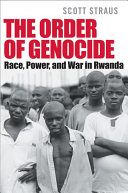
lgli/Scott Straus - The Order of Genocide : Race, Power, and War in Rwanda (2008, Cornell University Press).pdf
The Order of Genocide: Race, Power, and War in Rwanda 1 🔍
Scott Straus
Cornell University Press, Lightning Source Inc. (Tier 3), Ithaca, 2006
英语 [en] · PDF · 1.8MB · 2006 · 📘 非小说类图书 · 🚀/lgli/zlib · Save
描述
Winner of the Award for Excellence in Government and Political Science (AAP)The Rwandan genocide has become a touchstone for debates about the causes of mass violence and the responsibilities of the international community. Yet a number of key questions about this tragedy remain unanswered: How did the violence spread from community to community and so rapidly engulf the nation? Why did individuals make decisions that led them to take up machetes against their neighbors? And what was the logic that drove the campaign of extermination?According to Scott Straus, a social scientist and former journalist in East Africa for several years (who received a Pulitzer Prize nomination for his reporting for the Houston Chronicle), many of the widely held beliefs about the causes and course of genocide in Rwanda are incomplete. They focus largely on the actions of the ruling elite or the inaction of the international community. Considerably less is known about how and why elite decisions became widespread exterminatory violence.Challenging the prevailing wisdom, Straus provides substantial new evidence about local patterns of violence, using original research—including the most comprehensive surveys yet undertaken among convicted perpetrators—to assess competing theories about the causes and dynamics of the genocide. Current interpretations stress three main causes for the genocide: ethnic identity, ideology, and mass-media indoctrination (in particular the influence of hate radio). Straus's research does not deny the importance of ethnicity, but he finds that it operated more as a background condition. Instead, Straus emphasizes fear and intra-ethnic intimidation as the primary drivers of the violence. A defensive civil war and the assassination of a president created a feeling of acute insecurity. Rwanda's unusually effective state was also central, as was the country's geography and population density, which limited the number of exit options for both victims and perpetrators.In conclusion, Straus steps back from the particulars of the Rwandan genocide to offer a new, dynamic model for understanding other instances of genocide in recent history—the Holocaust, Armenia, Cambodia, the Balkans—and assessing the future likelihood of such events.
备用文件名
zlib/History/African History/Scott Straus/The Order of Genocide : Race, Power, and War in Rwanda_22268522.pdf
备选作者
Straus, Scott
备用出版商
Comstock Publishing Associates
备用版本
United States, United States of America
备用版本
Ithaca, NY, USA, 20080701
备用版本
Ithaca, 2008, ©2006
备用版本
1, 2008-07-16
备用版本
December 2006
备用版本
1, PS, 2006
备用版本
1, 2013
元数据中的注释
lg2467081
备用描述
Winner of the Award for Excellence in Government and Political Science (AAP) The Rwandan genocide has become a touchstone for debates about the causes of mass violence and the responsibilities of the international community. Yet a number of key questions about this tragedy remain unanswered: How did the violence spread from community to community and so rapidly engulf the nation? Why did individuals make decisions that led them to take up machetes against their neighbors? And what was the logic that drove the campaign of extermination? According to Scott Straus, a social scientist and former journalist in East Africa for several years (who received a Pulitzer Prize nomination for his reporting for the Houston Chronicle), many of the widely held beliefs about the causes and course of genocide in Rwanda are incomplete. They focus largely on the actions of the ruling elite or the inaction of the international community. Considerably less is known about how and why elite decisions became widespread exterminatory violence. Challenging the prevailing wisdom, Straus provides substantial new evidence about local patterns of violence, using original researchincluding the most comprehensive surveys yet undertaken among convicted perpetratorsto assess competing theories about the causes and dynamics of the genocide. Current interpretations stress three main causes for the genocide: ethnic identity, ideology, and mass-media indoctrination (in particular the influence of hate radio). Straus's research does not deny the importance of ethnicity, but he finds that it operated more as a background condition. Instead, Straus emphasizes fear and intra-ethnic intimidation as the primary drivers of the violence. A defensive civil war and the assassination of a president created a feeling of acute insecurity. Rwanda's unusually effective state was also central, as was the country's geography and population density, which limited the number of exit options for both victims and perpetrators. In conclusion, Straus steps back from the particulars of the Rwandan genocide to offer a new, dynamic model for understanding other instances of genocide in recent historythe Holocaust, Armenia, Cambodia, the Balkansand assessing the future likelihood of such events.
备用描述
<P>The Rwandan genocide has become a touchstone for debates about the causes of mass violence and the responsibilities of the international community. Yet a number of key questions about this tragedy remain unanswered: How did the violence spread from community to community and so rapidly engulf the nation? Why did individuals make decisions that led them to take up machetes against their neighbors? And what was the logic that drove the campaign of extermination?</P><P>According to Scott Straus, a social scientist and former journalist in East Africa for several years (who received a Pulitzer Prize nomination for his reporting for the <I>Houston Chronicle</I>), many of the widely held beliefs about the causes and course of genocide in Rwanda are incomplete. They focus largely on the actions of the ruling elite or the inaction of the international community. Considerably less is known about how and why elite decisions became widespread exterminatory violence.</P><P>Challenging the prevailing wisdom, Straus provides substantial new evidence about local patterns of violence, using original research—including the most comprehensive surveys yet undertaken among convicted perpetrators—to assess competing theories about the causes and dynamics of the genocide. Current interpretations stress three main causes for the genocide: ethnic identity, ideology, and mass-media indoctrination (in particular the influence of hate radio). Straus's research does not deny the importance of ethnicity, but he finds that it operated more as a background condition. Instead, Straus emphasizes fear and intra-ethnic intimidation as the primary drivers of the violence. A defensive civil war and the assassination of a president created a feeling of acute insecurity. Rwanda's unusually effective state was also central, as was the country's geography and population density, which limited the number of exit options for both victims and perpetrators.</P><P>In conclusion, Straus steps back from the particulars of the Rwandan genocide to offer a new, dynamic model for understanding other instances of genocide in recent history—the Holocaust, Armenia, Cambodia, the Balkans—and assessing the future likelihood of such events.</P>
备用描述
Challenging The Prevailing Wisdom, Straus Provides Substantial New Evidence About Local Patterns Of Violence, Using Original Research - Including The Most Comprehensive Surveys Yet Undertaken Among Convicted Perpetrators - To Assess Competing Theories About The Causes And Dynamics Of The Genocide. Current Interpretations Stress Three Main Causes For The Genocide: Ethnic Identity, Ideology, And Mass-media Indoctrination (in Particular The Influence Of Hate Radio). Straus's Research Does Not Deny The Importance Of Ethnicity, But He Finds That It Operated More As A Background Condition. Instead, Straus Emphasizes Fear And Intra-ethnic Intimidation As The Primary Drivers Of The Violence. A Defensive Civil War And The Assassination Of A President Created A Feeling Of Acute Insecurity. Rwanda's Unusually Effective State Was Also Central, As Was The Country's Geography And Population Density, Which Limited The Number Of Exit Options For Both Victims And Perpetrators. In Conclusion, Straus Steps Back From The Particulars Of The Rwandan Genocide To Offer A New, Dynamic Model For Understanding Other Instances Of Genocide In Recent History -- The Holocaust, Armenia, Cambodia, The Balkans -- And Assessing The Future Likelihood Of Such Events.--jacket. Background To The Genocide -- Genocide At The National And Regional Levels -- Local Dynamics -- The Génocidaires -- Why Perpetrators Say They Committed Genocide -- The Logic Of Genocide -- Historical Patterns Of Violence -- Rwanda's Leviathan. Scott Straus. Originally Presented As The Author's Thesis (ph. D.)--university Of California, Berkeley, 2004. Includes Bibliographical References And Index.
开源日期
2022-08-05
🚀 快速下载
成为会员以支持书籍、论文等的长期保存。为了感谢您对我们的支持,您将获得高速下载权益。❤️
如果您在本月捐款,您将获得双倍的快速下载次数。
🐢 低速下载
由可信的合作方提供。 更多信息请参见常见问题解答。 (可能需要验证浏览器——无限次下载!)
- 低速服务器(合作方提供) #1 (稍快但需要排队)
- 低速服务器(合作方提供) #2 (稍快但需要排队)
- 低速服务器(合作方提供) #3 (稍快但需要排队)
- 低速服务器(合作方提供) #4 (稍快但需要排队)
- 低速服务器(合作方提供) #5 (无需排队,但可能非常慢)
- 低速服务器(合作方提供) #6 (无需排队,但可能非常慢)
- 低速服务器(合作方提供) #7 (无需排队,但可能非常慢)
- 低速服务器(合作方提供) #8 (无需排队,但可能非常慢)
- 低速服务器(合作方提供) #9 (无需排队,但可能非常慢)
- 下载后: 在我们的查看器中打开
所有选项下载的文件都相同,应该可以安全使用。即使这样,从互联网下载文件时始终要小心。例如,确保您的设备更新及时。
外部下载
-
对于大文件,我们建议使用下载管理器以防止中断。
推荐的下载管理器:JDownloader -
您将需要一个电子书或 PDF 阅读器来打开文件,具体取决于文件格式。
推荐的电子书阅读器:Anna的档案在线查看器、ReadEra和Calibre -
使用在线工具进行格式转换。
推荐的转换工具:CloudConvert和PrintFriendly -
您可以将 PDF 和 EPUB 文件发送到您的 Kindle 或 Kobo 电子阅读器。
推荐的工具:亚马逊的“发送到 Kindle”和djazz 的“发送到 Kobo/Kindle” -
支持作者和图书馆
✍️ 如果您喜欢这个并且能够负担得起,请考虑购买原版,或直接支持作者。
📚 如果您当地的图书馆有这本书,请考虑在那里免费借阅。
下面的文字仅以英文继续。
总下载量:
“文件的MD5”是根据文件内容计算出的哈希值,并且基于该内容具有相当的唯一性。我们这里索引的所有影子图书馆都主要使用MD5来标识文件。
一个文件可能会出现在多个影子图书馆中。有关我们编译的各种数据集的信息,请参见数据集页面。
有关此文件的详细信息,请查看其JSON 文件。 Live/debug JSON version. Live/debug page.