upload/wll/ENTER/Science/Astronomy/Astrochemistry, Astrobiology & SETI/McSween, Harry Y. Jr. - Cosmochemistry.pdf
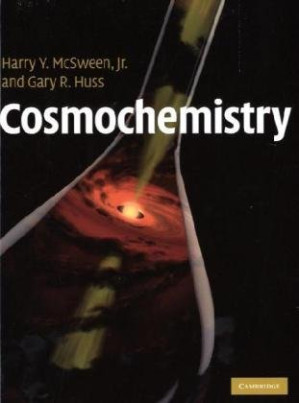
Cosmochemistry : probing the origin and chemical evolution of the solar system 🔍
Harry Y. McSween Jr Jr, Gary R. Huss
Cambridge University Press (Virtual Publishing), 1, PT, 2010
英语 [en] · PDF · 7.3MB · 2010 · 📘 非小说类图书 · 🚀/lgli/lgrs/nexusstc/upload/zlib · Save
描述
How Did The Solar System's Chemical Composition Evolve? This Textbook Provides The Answers In The First Interdisciplinary Introduction To Cosmochemistry. It Makes This Exciting And Evolving Field Accessible To Undergraduate And Graduate Students From A Range Of Backgrounds, Including Geology, Chemistry, Astronomy And Physics. The Authors - Two Established Leaders Who Have Pioneered Developments In The Field - Provide A Complete Background To Cosmochemical Processes And Discoveries, Enabling Students Outside Geochemistry To Understand And Explore The Solar System's Composition. Topics Covered Include: - Synthesis Of Nuclides In Stars - Partitioning Of Elements Between Solids, Liquids And Gas In The Solar Nebula - Overviews Of The Chemistry Of Extraterrestrial Materials - Isotopic Tools Used To Investigate Processes Such As Planet Accretion And Element Fractionation - Chronology Of The Early Solar System - Geochemical Exploration Of Planets Boxes Provide Basic Definitions And Mini-courses In Mineralogy, Organic Chemistry, And Other Essential Background Information For Students. Review Questions And Additional Reading For Each Chapter Encourage Students To Explore Cosmochemistry Further--provided By Publisher. Machine Generated Contents Note: Preface; 1. Introduction To Cosmochemistry; 2. Nuclides And Elements - The Building Blocks Of Matter; 3. Origin Of The Elements; 4. Solar System And Cosmic Abundances - Elements And Isotopes; 5. Presolar Grains - A Record Of Stellar Nucleosynthesis And Processes In Interstellar Space; 6. Meteorites - A Record Of Nebular And Planetary Processes; 7. Cosmochemical And Geochemical Fractionations; 8. Radioisotopes As Chronometers; 9. Chronology Of The Early Solar System; 10. The Most Volatile Elements And Compounds - Organic Matter, Noble Gases, And Ices; 11. Chemistry Of Anhydrous Planetesimals; 12. Chemistry Of Comets And Other Ice-bearing Planetesimals; 13. Geochemical Exploration Of Planets - Moon And Mars As Case Studies; 14. Cosmochemical Models For The Formation Of The Solar System; Appendix: Some Analytical Techniques Commonly Used In Cosmochemistry; Index. Harry Y. Mcsween, Jr., Gary R. Huss. Includes Bibliographical References And Index.
备用文件名
upload/newsarch_ebooks/2017/10/05/0521878624.pdf
备用文件名
lgli/F:\Library.nu\4ae260c7b22cc6ec0a3170c9432ff605~0521878624,9780521878623.pdf
备用文件名
lgrsnf/F:\Library.nu\4ae260c7b22cc6ec0a3170c9432ff605~0521878624,9780521878623.pdf
备用文件名
nexusstc/Cosmochemistry/4ae260c7b22cc6ec0a3170c9432ff605.pdf
备用文件名
zlib/Science (General)/Harry Y. McSween Jr Jr, Gary R. Huss/Cosmochemistry_816860.pdf
备选作者
McSween Jr Jr, Harry Y., Huss, Gary R.
备选作者
McSween, Harry Y., Jr., Gary R. Huss
备用出版商
Greenwich Medical Media Ltd
备用版本
United Kingdom and Ireland, United Kingdom
备用版本
Cambridge, New York, England, 2010
备用版本
2012
元数据中的注释
lg392358
元数据中的注释
producers:
Acrobat Distiller 7.0.5 (Windows)
Acrobat Distiller 7.0.5 (Windows)
元数据中的注释
{"edition":"1","isbns":["0511804504","0521878624","9780511804502","9780521878623"],"last_page":568,"publisher":"Cambridge University Press"}
元数据中的注释
Includes bibliographical references and index.
备用描述
Half-title......Page 3
Title......Page 5
Copyright......Page 6
Dedication......Page 7
Contents......Page 9
Preface......Page 19
What is cosmochemistry?......Page 21
Geochemistry versus cosmochemistry......Page 23
Meteorites and microscopy......Page 26
Spectroscopy and the compositions of stars......Page 29
Solar system element abundances......Page 30
Isotopes and nuclear physics......Page 31
Space exploration and samples from other worlds......Page 34
New sources of extraterrestrial materials......Page 38
The tools and datasets of cosmochemistry......Page 40
Mineral chemistry......Page 41
Trace element abundances......Page 42
Stable isotope compositions......Page 43
Cosmochemical theory......Page 44
Relationship of cosmochemistry to other disciplines......Page 45
Suggestions for further reading......Page 46
References......Page 47
Elementary particles, isotopes, and elements......Page 49
Chart of the nuclides: organizing elements by their nuclear properties......Page 52
Radioactive elements and their modes of decay......Page 55
The periodic table: organizing elements by their chemical properties......Page 58
Chemical bonding......Page 64
Chemical and physical processes relevant to cosmochemistry......Page 66
Evaporation and condensation......Page 68
Isotope effects from chemical and physical processes......Page 69
Summary......Page 71
References......Page 72
In the beginning......Page 74
The Big Bang model......Page 75
The Hubble Constant......Page 76
Big Bang nucleosynthesis......Page 77
Nucleosynthesis in stars......Page 78
Classification, masses, and lifetimes of stars......Page 81
The life cycles of stars......Page 84
CNO cycles......Page 92
Helium burning......Page 95
Synthesis of elements heavier than iron......Page 97
Explosive nucleosynthesis......Page 99
Nuclides produced by irradiation......Page 100
Origin of the galaxy and galactic chemical evolution......Page 101
Summary......Page 102
Questions......Page 103
References......Page 104
Historical perspective......Page 105
How are solar system abundances determined?......Page 107
Spectroscopic observations of the Sun......Page 108
Collecting and analyzing the solar wind......Page 116
Importance of CI chondrites......Page 119
Neutron activation analysis......Page 120
Helium......Page 121
Solar system abundances of the elements......Page 122
Solar system abundances of the isotopes......Page 124
How did solar system abundances arise?......Page 130
Differences between solar system and cosmic abundances......Page 131
How are solar system abundances used in cosmochemistry?......Page 133
Normalizing to solar system abundances......Page 135
Summary......Page 136
Suggestions for further reading......Page 137
References......Page 138
Grains that predate the solar system......Page 140
A cosmochemical detective story......Page 142
Recognizing presolar grains in meteorites......Page 145
Known types of presolar grains......Page 147
Locating and identifying presolar grains......Page 148
Characterization of presolar grains......Page 149
Nondestructive characterization......Page 150
Destructive techniques......Page 151
Grains from AGB stars......Page 152
Nova grains......Page 159
Presolar grains as probes of stellar nucleosynthesis......Page 160
Internal stellar structure......Page 161
The neutron source(s) for the s-process......Page 162
Constraining supernova models......Page 163
Galactic chemical evolution......Page 164
Graphite grains from AGB stars......Page 166
Graphite grains from supernovae......Page 168
Presolar grains as probes of the early solar system......Page 169
Summary......Page 172
Suggestions for further reading......Page 173
References......Page 174
Primitive versus differentiated......Page 177
Chondrules......Page 178
Refractory inclusions......Page 183
Matrix......Page 184
Chondrite classification......Page 185
Primary characteristics: chemical compositions......Page 186
Secondary characteristics: petrologic types......Page 188
Other classification parameters: shock and weathering......Page 190
Oxygen isotopes in chondrites......Page 191
Classification of nonchondritic meteorites......Page 193
Primitive achondrites......Page 194
Acapulcoites and lodranites......Page 195
Ureilites......Page 196
Aubrites......Page 198
Angrites......Page 199
Classification and composition of iron meteorites......Page 200
Lunar samples......Page 202
Martian meteorites......Page 204
Oxygen isotopes in differentiated meteorites......Page 205
Summary......Page 207
Suggestions for further reading......Page 208
References......Page 209
What are chemical fractionations and why are they important?......Page 212
Condensation as a fractionation process......Page 215
Condensation sequences......Page 216
Applicability of condensation calculations to the early solar system......Page 221
Volatile element depletions......Page 225
Gas–solid interactions......Page 226
CAIs......Page 228
Magmatic processes that lead to fractionation......Page 230
Element partitioning......Page 231
Sorting of chondrite components......Page 233
Fractionations by impacts or pyroclastic activity......Page 235
Element fractionation resulting from oxidation/reduction......Page 237
Element fractionation resulting from planetary differentiation......Page 238
Massependent fractionation......Page 240
Fractionations produced by ion–molecule reactions......Page 241
Massndependent fractionation......Page 242
Radiogenic isotope fractionation and planetary differentiation......Page 244
Summary......Page 245
Suggestions for further reading......Page 246
References......Page 247
Methods of age determination......Page 250
Basic principles of radiometric age dating......Page 251
Long-lived radionuclides......Page 257
40K–40Ar dating......Page 258
40Ar–39Ar dating......Page 259
The 87Rb–87Sr system......Page 262
History......Page 263
Technical details......Page 264
Applications......Page 267
Chronology with slope of an isochron......Page 268
Chronology using the initial 87Sr/86Sr ratio......Page 269
The 147Sm–143Nd system......Page 272
Technical details......Page 273
Reservoir evolution......Page 274
Chronology with 147Sm–143Nd isochrons......Page 277
The U–Th–Pb system......Page 278
History......Page 281
The uranium–lead concordia diagram......Page 282
207Pb–206Pb dating......Page 286
The common-lead method......Page 288
The 187Re–187Os system......Page 290
Applications......Page 291
Chronology with Re–Os isochrons......Page 292
Reservoir evolution inferred from the 187Re–187Os system......Page 293
History......Page 294
Applications......Page 295
U–Th–He......Page 296
138La–138Ba and 138La–138Ce......Page 297
Shortived radionuclides......Page 298
History......Page 302
Technical details......Page 303
The 26Al–26Mg system......Page 304
History......Page 305
Applications......Page 306
Applications......Page 307
History......Page 308
The 60Fe–60Ni system......Page 309
History......Page 310
The 107Pd–107Ag system......Page 311
Applications......Page 312
Technical details......Page 313
Technical details......Page 314
The 10Be–10B system......Page 315
Applications......Page 316
244Pu–Xenon......Page 317
Summary......Page 318
Suggestions for further reading......Page 319
References......Page 320
Age of the elements and environment in which the Sun formed......Page 328
Age of the solar system......Page 335
Early solar system chronology......Page 338
Primitive components in chondrites......Page 339
CAIs......Page 341
Chondrules......Page 343
Accretion and history of chondritic parent bodies......Page 344
Ordinary chondrites......Page 345
CV and CO chondrites......Page 346
Accretion and differentiation of achondritic parent bodies......Page 347
HED meteorites......Page 348
Iron meteorites......Page 349
Age of the Earth......Page 350
Age of the Moon......Page 351
Age of Mars......Page 352
Shock ages of meteorites......Page 356
Shock ages of lunar rocks......Page 359
Cosmic-ray exposure ages......Page 360
Terrestrial ages......Page 365
Summary......Page 366
Suggestions for further reading......Page 367
References......Page 368
Volatility......Page 374
Organic matter: occurrence and complexity......Page 375
Extractable organic matter in chondrites......Page 376
Insoluble macromolecules in chondrites......Page 382
Stable isotopes in organic compounds......Page 384
Are organic compounds interstellar or nebular?......Page 386
Noble gases and how they are analyzed......Page 390
Nuclear components......Page 391
The solar components......Page 392
Planetary components......Page 393
Planetary atmospheres......Page 395
Condensation and accretion of ices......Page 397
Summary......Page 398
Suggestions for further reading......Page 399
References......Page 400
Dry asteroids and meteorites......Page 402
Appearance and physical properties......Page 403
Spectroscopy and classification......Page 405
Orbits, distribution, and delivery......Page 409
Analyses of asteroids by spacecraft remote sensing......Page 410
Chondritic meteorites......Page 412
Differentiated meteorites......Page 416
Thermal evolution of anhydrous asteroids......Page 418
Thermal structure of the asteroid belt......Page 423
Collisions among asteroids......Page 426
Summary......Page 428
Suggestions for further reading......Page 429
References......Page 430
Icy bodies in the solar system......Page 432
Orbits......Page 433
Appearance and physical properties......Page 434
Comet ices......Page 438
Comet dust: spectroscopy and spacecraft analysis......Page 439
Interplanetary dust particles......Page 442
Returned comet samples......Page 446
Spectroscopy of asteroids formed beyond the snowline......Page 452
Aqueous alteration of chondrites......Page 453
Chemistry of hydrated carbonaceous chondrites......Page 456
Variations among ice-bearing planetesimals......Page 459
Summary......Page 460
Suggestions for further reading......Page 461
References......Page 462
Why the Moon and Mars?......Page 465
Global geologic context for lunar geochemistry......Page 466
Instruments on orbiting spacecraft......Page 468
Laboratory analysis of returned lunar samples and lunar meteorites......Page 470
Sample geochemistry......Page 471
Geochemical mapping by spacecraft......Page 472
Compositions of the lunar mantle and core......Page 476
Geochemical evolution of the Moon......Page 479
Global geologic context for Mars geochemistry......Page 482
Instruments on orbiting spacecraft......Page 484
Instruments on landers and rovers......Page 485
Laboratory analyses of Martian meteorites......Page 486
Measured composition of the Martian crust......Page 489
Composition of the crust......Page 490
Water, chemical weathering, and evaporites......Page 492
Compositions of the Martian mantle and core......Page 495
Summary......Page 497
Suggestions for further reading......Page 498
References......Page 499
From gas and dust to Sun and accretion disk......Page 504
Temperatures in the accretion disk......Page 509
Localized heating: nebular shocks and the X-wind model......Page 512
Constraints on planet bulk compositions......Page 515
Models for estimating bulk chemistry......Page 518
Planetesimal building blocks......Page 519
Delivery of volatiles to the terrestrial planets......Page 523
Planetary differentiation......Page 524
Formation of the giant planets......Page 527
Orbital and collisional evolution of the modern solar system......Page 531
Summary......Page 532
Questions......Page 533
References......Page 534
Wet chemical analysis......Page 538
Neutron activation analysis......Page 539
Electron-beam techniques......Page 540
Scanning electron microscope......Page 542
Transmission electron microscope......Page 543
Auger nanoprobe......Page 544
X-ray diffraction (XRD)......Page 545
X-ray absorption near-edge spectroscopy......Page 546
Inductively coupled plasma......Page 547
Mass analyzers......Page 548
Quadrupole ion traps......Page 549
Electron multiplier......Page 550
Stable-isotope mass spectrometers......Page 551
Inductively coupled-plasma mass spectrometers......Page 552
Magnetic-sector ion microprobes......Page 553
Raman spectroscopy......Page 554
Gamma-ray and neutron spectrometers......Page 555
Thin-section preparation......Page 556
Sample preparation for the TEM......Page 557
Preparation of samples for TIMS and ICPMS......Page 558
40Ar–39Ar dating......Page 559
129I–129Xe dating......Page 560
Suggestions for further reading......Page 561
Index......Page 563
Title......Page 5
Copyright......Page 6
Dedication......Page 7
Contents......Page 9
Preface......Page 19
What is cosmochemistry?......Page 21
Geochemistry versus cosmochemistry......Page 23
Meteorites and microscopy......Page 26
Spectroscopy and the compositions of stars......Page 29
Solar system element abundances......Page 30
Isotopes and nuclear physics......Page 31
Space exploration and samples from other worlds......Page 34
New sources of extraterrestrial materials......Page 38
The tools and datasets of cosmochemistry......Page 40
Mineral chemistry......Page 41
Trace element abundances......Page 42
Stable isotope compositions......Page 43
Cosmochemical theory......Page 44
Relationship of cosmochemistry to other disciplines......Page 45
Suggestions for further reading......Page 46
References......Page 47
Elementary particles, isotopes, and elements......Page 49
Chart of the nuclides: organizing elements by their nuclear properties......Page 52
Radioactive elements and their modes of decay......Page 55
The periodic table: organizing elements by their chemical properties......Page 58
Chemical bonding......Page 64
Chemical and physical processes relevant to cosmochemistry......Page 66
Evaporation and condensation......Page 68
Isotope effects from chemical and physical processes......Page 69
Summary......Page 71
References......Page 72
In the beginning......Page 74
The Big Bang model......Page 75
The Hubble Constant......Page 76
Big Bang nucleosynthesis......Page 77
Nucleosynthesis in stars......Page 78
Classification, masses, and lifetimes of stars......Page 81
The life cycles of stars......Page 84
CNO cycles......Page 92
Helium burning......Page 95
Synthesis of elements heavier than iron......Page 97
Explosive nucleosynthesis......Page 99
Nuclides produced by irradiation......Page 100
Origin of the galaxy and galactic chemical evolution......Page 101
Summary......Page 102
Questions......Page 103
References......Page 104
Historical perspective......Page 105
How are solar system abundances determined?......Page 107
Spectroscopic observations of the Sun......Page 108
Collecting and analyzing the solar wind......Page 116
Importance of CI chondrites......Page 119
Neutron activation analysis......Page 120
Helium......Page 121
Solar system abundances of the elements......Page 122
Solar system abundances of the isotopes......Page 124
How did solar system abundances arise?......Page 130
Differences between solar system and cosmic abundances......Page 131
How are solar system abundances used in cosmochemistry?......Page 133
Normalizing to solar system abundances......Page 135
Summary......Page 136
Suggestions for further reading......Page 137
References......Page 138
Grains that predate the solar system......Page 140
A cosmochemical detective story......Page 142
Recognizing presolar grains in meteorites......Page 145
Known types of presolar grains......Page 147
Locating and identifying presolar grains......Page 148
Characterization of presolar grains......Page 149
Nondestructive characterization......Page 150
Destructive techniques......Page 151
Grains from AGB stars......Page 152
Nova grains......Page 159
Presolar grains as probes of stellar nucleosynthesis......Page 160
Internal stellar structure......Page 161
The neutron source(s) for the s-process......Page 162
Constraining supernova models......Page 163
Galactic chemical evolution......Page 164
Graphite grains from AGB stars......Page 166
Graphite grains from supernovae......Page 168
Presolar grains as probes of the early solar system......Page 169
Summary......Page 172
Suggestions for further reading......Page 173
References......Page 174
Primitive versus differentiated......Page 177
Chondrules......Page 178
Refractory inclusions......Page 183
Matrix......Page 184
Chondrite classification......Page 185
Primary characteristics: chemical compositions......Page 186
Secondary characteristics: petrologic types......Page 188
Other classification parameters: shock and weathering......Page 190
Oxygen isotopes in chondrites......Page 191
Classification of nonchondritic meteorites......Page 193
Primitive achondrites......Page 194
Acapulcoites and lodranites......Page 195
Ureilites......Page 196
Aubrites......Page 198
Angrites......Page 199
Classification and composition of iron meteorites......Page 200
Lunar samples......Page 202
Martian meteorites......Page 204
Oxygen isotopes in differentiated meteorites......Page 205
Summary......Page 207
Suggestions for further reading......Page 208
References......Page 209
What are chemical fractionations and why are they important?......Page 212
Condensation as a fractionation process......Page 215
Condensation sequences......Page 216
Applicability of condensation calculations to the early solar system......Page 221
Volatile element depletions......Page 225
Gas–solid interactions......Page 226
CAIs......Page 228
Magmatic processes that lead to fractionation......Page 230
Element partitioning......Page 231
Sorting of chondrite components......Page 233
Fractionations by impacts or pyroclastic activity......Page 235
Element fractionation resulting from oxidation/reduction......Page 237
Element fractionation resulting from planetary differentiation......Page 238
Massependent fractionation......Page 240
Fractionations produced by ion–molecule reactions......Page 241
Massndependent fractionation......Page 242
Radiogenic isotope fractionation and planetary differentiation......Page 244
Summary......Page 245
Suggestions for further reading......Page 246
References......Page 247
Methods of age determination......Page 250
Basic principles of radiometric age dating......Page 251
Long-lived radionuclides......Page 257
40K–40Ar dating......Page 258
40Ar–39Ar dating......Page 259
The 87Rb–87Sr system......Page 262
History......Page 263
Technical details......Page 264
Applications......Page 267
Chronology with slope of an isochron......Page 268
Chronology using the initial 87Sr/86Sr ratio......Page 269
The 147Sm–143Nd system......Page 272
Technical details......Page 273
Reservoir evolution......Page 274
Chronology with 147Sm–143Nd isochrons......Page 277
The U–Th–Pb system......Page 278
History......Page 281
The uranium–lead concordia diagram......Page 282
207Pb–206Pb dating......Page 286
The common-lead method......Page 288
The 187Re–187Os system......Page 290
Applications......Page 291
Chronology with Re–Os isochrons......Page 292
Reservoir evolution inferred from the 187Re–187Os system......Page 293
History......Page 294
Applications......Page 295
U–Th–He......Page 296
138La–138Ba and 138La–138Ce......Page 297
Shortived radionuclides......Page 298
History......Page 302
Technical details......Page 303
The 26Al–26Mg system......Page 304
History......Page 305
Applications......Page 306
Applications......Page 307
History......Page 308
The 60Fe–60Ni system......Page 309
History......Page 310
The 107Pd–107Ag system......Page 311
Applications......Page 312
Technical details......Page 313
Technical details......Page 314
The 10Be–10B system......Page 315
Applications......Page 316
244Pu–Xenon......Page 317
Summary......Page 318
Suggestions for further reading......Page 319
References......Page 320
Age of the elements and environment in which the Sun formed......Page 328
Age of the solar system......Page 335
Early solar system chronology......Page 338
Primitive components in chondrites......Page 339
CAIs......Page 341
Chondrules......Page 343
Accretion and history of chondritic parent bodies......Page 344
Ordinary chondrites......Page 345
CV and CO chondrites......Page 346
Accretion and differentiation of achondritic parent bodies......Page 347
HED meteorites......Page 348
Iron meteorites......Page 349
Age of the Earth......Page 350
Age of the Moon......Page 351
Age of Mars......Page 352
Shock ages of meteorites......Page 356
Shock ages of lunar rocks......Page 359
Cosmic-ray exposure ages......Page 360
Terrestrial ages......Page 365
Summary......Page 366
Suggestions for further reading......Page 367
References......Page 368
Volatility......Page 374
Organic matter: occurrence and complexity......Page 375
Extractable organic matter in chondrites......Page 376
Insoluble macromolecules in chondrites......Page 382
Stable isotopes in organic compounds......Page 384
Are organic compounds interstellar or nebular?......Page 386
Noble gases and how they are analyzed......Page 390
Nuclear components......Page 391
The solar components......Page 392
Planetary components......Page 393
Planetary atmospheres......Page 395
Condensation and accretion of ices......Page 397
Summary......Page 398
Suggestions for further reading......Page 399
References......Page 400
Dry asteroids and meteorites......Page 402
Appearance and physical properties......Page 403
Spectroscopy and classification......Page 405
Orbits, distribution, and delivery......Page 409
Analyses of asteroids by spacecraft remote sensing......Page 410
Chondritic meteorites......Page 412
Differentiated meteorites......Page 416
Thermal evolution of anhydrous asteroids......Page 418
Thermal structure of the asteroid belt......Page 423
Collisions among asteroids......Page 426
Summary......Page 428
Suggestions for further reading......Page 429
References......Page 430
Icy bodies in the solar system......Page 432
Orbits......Page 433
Appearance and physical properties......Page 434
Comet ices......Page 438
Comet dust: spectroscopy and spacecraft analysis......Page 439
Interplanetary dust particles......Page 442
Returned comet samples......Page 446
Spectroscopy of asteroids formed beyond the snowline......Page 452
Aqueous alteration of chondrites......Page 453
Chemistry of hydrated carbonaceous chondrites......Page 456
Variations among ice-bearing planetesimals......Page 459
Summary......Page 460
Suggestions for further reading......Page 461
References......Page 462
Why the Moon and Mars?......Page 465
Global geologic context for lunar geochemistry......Page 466
Instruments on orbiting spacecraft......Page 468
Laboratory analysis of returned lunar samples and lunar meteorites......Page 470
Sample geochemistry......Page 471
Geochemical mapping by spacecraft......Page 472
Compositions of the lunar mantle and core......Page 476
Geochemical evolution of the Moon......Page 479
Global geologic context for Mars geochemistry......Page 482
Instruments on orbiting spacecraft......Page 484
Instruments on landers and rovers......Page 485
Laboratory analyses of Martian meteorites......Page 486
Measured composition of the Martian crust......Page 489
Composition of the crust......Page 490
Water, chemical weathering, and evaporites......Page 492
Compositions of the Martian mantle and core......Page 495
Summary......Page 497
Suggestions for further reading......Page 498
References......Page 499
From gas and dust to Sun and accretion disk......Page 504
Temperatures in the accretion disk......Page 509
Localized heating: nebular shocks and the X-wind model......Page 512
Constraints on planet bulk compositions......Page 515
Models for estimating bulk chemistry......Page 518
Planetesimal building blocks......Page 519
Delivery of volatiles to the terrestrial planets......Page 523
Planetary differentiation......Page 524
Formation of the giant planets......Page 527
Orbital and collisional evolution of the modern solar system......Page 531
Summary......Page 532
Questions......Page 533
References......Page 534
Wet chemical analysis......Page 538
Neutron activation analysis......Page 539
Electron-beam techniques......Page 540
Scanning electron microscope......Page 542
Transmission electron microscope......Page 543
Auger nanoprobe......Page 544
X-ray diffraction (XRD)......Page 545
X-ray absorption near-edge spectroscopy......Page 546
Inductively coupled plasma......Page 547
Mass analyzers......Page 548
Quadrupole ion traps......Page 549
Electron multiplier......Page 550
Stable-isotope mass spectrometers......Page 551
Inductively coupled-plasma mass spectrometers......Page 552
Magnetic-sector ion microprobes......Page 553
Raman spectroscopy......Page 554
Gamma-ray and neutron spectrometers......Page 555
Thin-section preparation......Page 556
Sample preparation for the TEM......Page 557
Preparation of samples for TIMS and ICPMS......Page 558
40Ar–39Ar dating......Page 559
129I–129Xe dating......Page 560
Suggestions for further reading......Page 561
Index......Page 563
备用描述
"How did the Solar System's chemical composition evolve? This textbook provides the answers in the first interdisciplinary introduction to cosmochemistry. It makes this exciting and evolving field accessible to undergraduate and graduate students from a range of backgrounds, including geology, chemistry, astronomy and physics. The authors - two established leaders who have pioneered developments in the field - provide a complete background to cosmochemical processes and discoveries, enabling students outside geochemistry to understand and explore the Solar System's composition. Topics covered include: - synthesis of nuclides in stars - partitioning of elements between solids, liquids and gas in the solar nebula - overviews of the chemistry of extraterrestrial materials - isotopic tools used to investigate processes such as planet accretion and element fractionation - chronology of the early Solar System - geochemical exploration of planets Boxes provide basic definitions and mini-courses in mineralogy, organic chemistry, and other essential background information for students. Review questions and additional reading for each chapter encourage students to explore cosmochemistry further" --Provided by publisher
开源日期
2011-04-20


🚀 快速下载
成为会员以支持书籍、论文等的长期保存。为了感谢您对我们的支持,您将获得高速下载权益。❤️
如果您在本月捐款,您将获得双倍的快速下载次数。
🐢 低速下载
由可信的合作方提供。 更多信息请参见常见问题解答。 (可能需要验证浏览器——无限次下载!)
- 低速服务器(合作方提供) #1 (稍快但需要排队)
- 低速服务器(合作方提供) #2 (稍快但需要排队)
- 低速服务器(合作方提供) #3 (稍快但需要排队)
- 低速服务器(合作方提供) #4 (稍快但需要排队)
- 低速服务器(合作方提供) #5 (无需排队,但可能非常慢)
- 低速服务器(合作方提供) #6 (无需排队,但可能非常慢)
- 低速服务器(合作方提供) #7 (无需排队,但可能非常慢)
- 低速服务器(合作方提供) #8 (无需排队,但可能非常慢)
- 低速服务器(合作方提供) #9 (无需排队,但可能非常慢)
- 下载后: 在我们的查看器中打开
所有选项下载的文件都相同,应该可以安全使用。即使这样,从互联网下载文件时始终要小心。例如,确保您的设备更新及时。
外部下载
-
对于大文件,我们建议使用下载管理器以防止中断。
推荐的下载管理器:JDownloader -
您将需要一个电子书或 PDF 阅读器来打开文件,具体取决于文件格式。
推荐的电子书阅读器:Anna的档案在线查看器、ReadEra和Calibre -
使用在线工具进行格式转换。
推荐的转换工具:CloudConvert和PrintFriendly -
您可以将 PDF 和 EPUB 文件发送到您的 Kindle 或 Kobo 电子阅读器。
推荐的工具:亚马逊的“发送到 Kindle”和djazz 的“发送到 Kobo/Kindle” -
支持作者和图书馆
✍️ 如果您喜欢这个并且能够负担得起,请考虑购买原版,或直接支持作者。
📚 如果您当地的图书馆有这本书,请考虑在那里免费借阅。
下面的文字仅以英文继续。
总下载量:
“文件的MD5”是根据文件内容计算出的哈希值,并且基于该内容具有相当的唯一性。我们这里索引的所有影子图书馆都主要使用MD5来标识文件。
一个文件可能会出现在多个影子图书馆中。有关我们编译的各种数据集的信息,请参见数据集页面。
有关此文件的详细信息,请查看其JSON 文件。 Live/debug JSON version. Live/debug page.