upload/duxiu_main2/【星空藏书馆】/【星空藏书馆】等多个文件/Kindle电子书库(012)/综合书籍(007)/综合1(011)/书2/九月虺原版书17855本单个20G压缩版/extracted__1.哲学家著作及其研究 人名A-F.zip/1.\xd5\xdcѧ\xbc\xd2\xd6\xf8\xd7\xf7\xbc\xb0\xc6\xe4\xd1о\xbf \xc8\xcb\xc3\xfbA-F/\xb0\xd8\xc0\xadͼ\xd6\xf8\xd7\xf7\xba\xcd\xd1о\xbf/\xa1\xbe\xb0\xd8\xc0\xadͼ\xd1о\xbf\xa1\xbf\xb0\xd8\xc0\xadͼ\xd3\xeb\xc9\xf1\xbb\xb0 (2).pdf
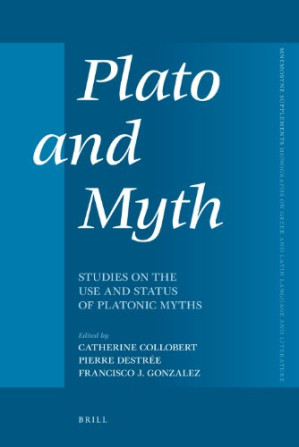
Plato and Myth: Studies on the Use and Status of Platonic Myths (Mnemosyne Supplements, 337) 🔍
edited by Catherine Collobert, Pierre Destrée, Francisco J. Gonzalez
Brill Academic Pub, Mnemosyne Supplements: Monographs on Greek and Latin Language and Literature 337, 2012
英语 [en] · PDF · 2.3MB · 2012 · 📘 非小说类图书 · 🚀/lgli/lgrs/upload/zlib · Save
描述
This volume seeks to show how the philosophy of Plato relates to the literary form of his discourse. Myth is one aspect of this relation whose importance for the study of Plato is only now beginning to be recognized. Reflection on this topic is essential not only for understanding Plato s conception of philosophy and its methods, but also for understanding more broadly the relation between philosophy and literature. The twenty chapters of this volume, contributed by scholars of diverse backgrounds and approaches, elucidate the various uses and statuses of Platonic myths in the first place by reflecting on myth per se and in the second place by focusing on a specific myth in the Platonic corpus.
备用文件名
upload/cgiym_more/PBooks Collection 2023/Classics Archive/Mnemosyne Supplements/(Mnemosyne Supplements 337) Catherine Collobert, Pierre Destre__e, Francisco J. Gonzalez - Plato and Myth_ Studies on the Use and Status of Platonic Myths-Brill (2012).pdf
备用文件名
lgli/BCB337_Collobert,Destrée_amp;Gonzales_Plato and Myth - Studies on the Use and Status of Platonic Myths.pdf
备用文件名
lgrsnf/BCB337_Collobert,Destrée_amp;Gonzales_Plato and Myth - Studies on the Use and Status of Platonic Myths.pdf
备用文件名
zlib/Poetry/American Poetry/Catherine Collobert, Pierre Destrée, Francisco J. Gonzalez/Plato and Myth: Studies on the Use and Status of Platonic Myths_2041896.pdf
备选作者
TeX
备用出版商
Koninklijke Brill N.V.
备用版本
Mnemosyne. Supplements -- v. 337, Leiden, Boston, Netherlands, 2012
备用版本
Mnemosyne : Bibliotheca Classica Batava, 337, Leiden, 2012
备用版本
Brill Academic Publishers, Leiden, 2012
备用版本
Netherlands, Netherlands
备用版本
Bilingual, PS, 2012
元数据中的注释
0
元数据中的注释
lg887609
元数据中的注释
producers:
pdfTeX-1.40.11; modified using iText 2.1.7 by 1T3XT
pdfTeX-1.40.11; modified using iText 2.1.7 by 1T3XT
元数据中的注释
Based chiefly on a conference held in May 2008 at the University of Ottawa.
Includes bibliographical references (p. ) and index.
Includes bibliographical references (p. ) and index.
备用描述
Plato and Myth: Studies on the Use and Status of Platonic Myths 4
Contents 6
List of Contributors 8
Acknowledgements 10
Note 12
Catherine Collobert, Pierre Destrée and Francisco J. Gonzalez: Introduction 14
Part I. Reflections on the Nature of Platonic Myths 24
1. Glenn W. Most: Plato's Exoteric Myths 26
2. Monique Dixsaut: Myth and Interpretation 38
1. On the Interpretation of Myths 41
2. On Myths as Interpretations 48
2.1. The Interpreter Must Know Himself 48
2.2. To Understand the Meaning of a Myth Is to Identify Whom the Myth Is About 51
2.3. The Message of a Myth Is Prescriptive, Not Cognitive 58
3. Harold Tarrant: Literal and Deeper Meanings in Platonic Myths 60
1. The Hermeneutics of Myth among Later Platonists 60
2. How to Recognize a Myth: Some Clues in the Protagoras 63
3. The Meno and Gorgias 67
4. The Timaeus-Critias 72
A Phaedran Conclusion 75
4. G.R.F. Ferrari: The Freedom of Platonic Myth 80
1. The Philosopher’s Freedom 81
2. Socratic Storytelling 83
3. Platonic Fiction-Writing 86
4. Divine Artistry 92
5. The Diversity of Platonic Myth 98
5. Catherine Collobert: The Platonic Art of Myth-Making: Myth As Informative Phantasma 100
1. Images and Verbal Images 101
1.1. The Non-Substantiality of Images 101
1.2. The Iconicity of Logos and Verbal Images 103
2. How to Copy and What to Copy 104
2.1. Eikastikê and Phantastikê 104
2.2. Doxastic and Informative Phantasmata 107
3. Platonic Myth-Making as Historike Mimesis 111
3.1. Myth as a Transfer of a Skhêma of Truth 111
3.2. Platonic Myths as Trompe-l’Oeil 113
4. Why the Making of Philosophical Phantasma: The Cognitive Power of Images 116
4.1. The Puzzling Trompe-l’Oeil: The Heuristic Property of Myth 116
4.2. The Didactic and Persuasive Properties of Myth 119
Conclusion 120
6. Pierre Destrée: Spectacles from Hades. On Plato's Myths and Allegories in the Republic 122
1. The Myth of Gyges 125
2. The Allegory of the Cave 130
3. The Myth of Er 133
Part II. Approaches to Platonic Myths 138
7. Claude Calame: The Pragmatics of "Myth" in Plato's Dialogues: The Story of Prometheus in the Protagoras 140
1. The Mythological Freedom of the Homeric Poems 140
2. ‘Plato’s Myths’: Enunciative Aspects 142
3. The Prometheus Story in the Protagoras: Narrative and Semantic Logic 144
4. Differential Comparison: The Prometheus of Aeschylus 147
5. Enunciative Structure and Semantic Slides: The Immediate Context 149
6. The Pragmatics of Aporia: The Wider Context 151
To Conclude: Pro-mêtheia 155
8. Gerd Van Riel: Religion and Morality. Elements of Plato's Anthropology in the Myth of Prometheus (Protagoras, 320d-322d) 158
1. The Protagoras: Can Virtue Be Taught? 159
2. The Myth 161
3. The Anthropological Basis of Morality 165
4. The Anthropological Foundation of Religion 172
5. The Function of the Myth in the Protagoras 175
Conclusion 176
9. Radcliffe G. Edmonds III: Whip Scars on the Naked Soul: Myth and Elenchos in Plato's Gorgias 178
1. The Elenchos 179
2. Judicial Reform 181
3. Medical Metaphors 184
3.1. Diagnosis 185
3.2. Prescriptions for Corrective Treatment 186
3.3. Avoiding Treatment 188
4. The Incurables 191
5. The Advantages of Myth 195
6. Plato’s Elenchos 197
10. Christopher Rowe: The Status of the Myth of the Gorgias, or: Taking Plato Seriously 200
11. Elizabeth Pender: The Rivers of Tartarus: Plato's Geography of Dying and Coming-back-to-Life 212
1. The Place of the Myth in Phaedo 213
1.1. Life and Death before the Myth 213
1.2. The Myth as Second Conclusion 216
2. The Geography of the Afterlife 221
2.1. To Hades and Back (107d–108c) 221
2.2. The Geography of the Earth (108c–111c) 221
2.3. Tartarus and the Rivers (111c–113c) 223
2.4. The Judgement and Transit of Souls (113d–114c) 227
3. An Unsteady Core 230
3.1. Tartarus and the Affinity Argument 230
3.2. Tartarus as ‘Super-Body’ 233
3.3. The Judges and Universal Order 236
3.4. The Absence of Philosophy in Tartarus 238
3.5. Tartarus and Reincarnation 242
Conclusion 245
12. Annie Larivée: Choice of Life and Self-Transformation in the Myth of Er 248
1. That Which Is the Object of Choice According to the Myth 249
2. On the Complex Relation between Life Conditions, Actions, and Disposition of the Soul 253
3. The Possible Uses of the Myth of Er 259
3.1. Preliminary Hermeneutic Remarks: Literal or Allegorical Interpretation? 259
3.2. The Protreptic Aim 262
3.3. The Myth of Er as a Retrospective Thought Experiment 265
3.4. On Having Chosen One’s Life: Facticity and Self-Transformation 266
13. Francisco J. Gonzalez: Combating Oblivion: The Myth of Er as Both Philosophy's Challenge and Inspiration 272
1. A Worldly Myth 273
2. Myth and Philosophical Discourse 287
14. Christopher Moore: The Myth of Theuth in the Phaedrus 292
1. The Grammatophilic Phaedrus 294
2. Socrates’ Conversation with Phaedrus 296
3. The Myth of Theuth 297
4. Reading the Myth Seriously 301
4.1. The Improvement in Memory 302
4.2. The Drug of Memory 305
4.3. Forgetfulness in the Soul 306
4.4. The Neglect of Memory 307
4.5. Alien Marks 308
4.6. A Drug for Being Reminded 310
4.7. Wisdom and Apparent Wisdom 311
4.8. Being Difficult to Be With 312
4.9. Summary 313
5. Explanations for the Use of (This) Myth 314
15. Franco Trabattoni: Myth and Truth in Plato's Phaedrus 318
1. Myth and Truth: The Case of the Phaedrus 318
2. The Wrong Way: Myth as an Alternative to Philosophy 322
3. The Metaphysical Meaning of Truth: The ‘True’ Reality 324
4. Myth as a Prosecution of Logos Beyond the Boundaries of Dialectics 328
5. What Does ‘Metaphysical Reality’ Means? 329
6. Dialectics as a Condition of Possibility of Philosophical Myth 332
16. Kathryn Morgan: Theriomorphism and the Composite Soul in Plato 336
1. Men and Beasts 337
2. Mythological Monsters 339
3. The Chariot Team 346
Conclusion 354
17. Elsa Grasso: Myth, Image and Likeness in Plato's Timaeus 356
1. Eikôn, Eikos, Muthos 357
2. The Myth’s Object and Model 364
3. Logos, Muthos, Mimesis 370
18. Luc Brisson: Why Is the Timaeus Called an Eikos Muthos and an Eikos Logos? 382
1. Eikôs muthos 384
2. Muthos 387
3. Eikôs 392
4. Eikôs logos 395
19. Christoph Horn: Why Two Epochs of Human History? On the Myth of the Statesman 406
1. Which Cognitive Function Does Plato Ascribe to Myths? 408
2. How Many Epochs Are Involved in the Myth of the Statesman? 418
3. What Role Might the Myth of the Statesman Play in Plato’s Political Philosophy? 426
20. Louis-André Dorion: The Delphic Oracle on Socrates' Wisdom: a Myth? 432
1. The Apology as a Logos Sokratikos 432
2. The Story of the Oracle Seen as a Fictitious Story 434
3. The Oracle Story as a Myth of Origin 437
Conclusion 445
References 448
Index locorum 468
Contents 6
List of Contributors 8
Acknowledgements 10
Note 12
Catherine Collobert, Pierre Destrée and Francisco J. Gonzalez: Introduction 14
Part I. Reflections on the Nature of Platonic Myths 24
1. Glenn W. Most: Plato's Exoteric Myths 26
2. Monique Dixsaut: Myth and Interpretation 38
1. On the Interpretation of Myths 41
2. On Myths as Interpretations 48
2.1. The Interpreter Must Know Himself 48
2.2. To Understand the Meaning of a Myth Is to Identify Whom the Myth Is About 51
2.3. The Message of a Myth Is Prescriptive, Not Cognitive 58
3. Harold Tarrant: Literal and Deeper Meanings in Platonic Myths 60
1. The Hermeneutics of Myth among Later Platonists 60
2. How to Recognize a Myth: Some Clues in the Protagoras 63
3. The Meno and Gorgias 67
4. The Timaeus-Critias 72
A Phaedran Conclusion 75
4. G.R.F. Ferrari: The Freedom of Platonic Myth 80
1. The Philosopher’s Freedom 81
2. Socratic Storytelling 83
3. Platonic Fiction-Writing 86
4. Divine Artistry 92
5. The Diversity of Platonic Myth 98
5. Catherine Collobert: The Platonic Art of Myth-Making: Myth As Informative Phantasma 100
1. Images and Verbal Images 101
1.1. The Non-Substantiality of Images 101
1.2. The Iconicity of Logos and Verbal Images 103
2. How to Copy and What to Copy 104
2.1. Eikastikê and Phantastikê 104
2.2. Doxastic and Informative Phantasmata 107
3. Platonic Myth-Making as Historike Mimesis 111
3.1. Myth as a Transfer of a Skhêma of Truth 111
3.2. Platonic Myths as Trompe-l’Oeil 113
4. Why the Making of Philosophical Phantasma: The Cognitive Power of Images 116
4.1. The Puzzling Trompe-l’Oeil: The Heuristic Property of Myth 116
4.2. The Didactic and Persuasive Properties of Myth 119
Conclusion 120
6. Pierre Destrée: Spectacles from Hades. On Plato's Myths and Allegories in the Republic 122
1. The Myth of Gyges 125
2. The Allegory of the Cave 130
3. The Myth of Er 133
Part II. Approaches to Platonic Myths 138
7. Claude Calame: The Pragmatics of "Myth" in Plato's Dialogues: The Story of Prometheus in the Protagoras 140
1. The Mythological Freedom of the Homeric Poems 140
2. ‘Plato’s Myths’: Enunciative Aspects 142
3. The Prometheus Story in the Protagoras: Narrative and Semantic Logic 144
4. Differential Comparison: The Prometheus of Aeschylus 147
5. Enunciative Structure and Semantic Slides: The Immediate Context 149
6. The Pragmatics of Aporia: The Wider Context 151
To Conclude: Pro-mêtheia 155
8. Gerd Van Riel: Religion and Morality. Elements of Plato's Anthropology in the Myth of Prometheus (Protagoras, 320d-322d) 158
1. The Protagoras: Can Virtue Be Taught? 159
2. The Myth 161
3. The Anthropological Basis of Morality 165
4. The Anthropological Foundation of Religion 172
5. The Function of the Myth in the Protagoras 175
Conclusion 176
9. Radcliffe G. Edmonds III: Whip Scars on the Naked Soul: Myth and Elenchos in Plato's Gorgias 178
1. The Elenchos 179
2. Judicial Reform 181
3. Medical Metaphors 184
3.1. Diagnosis 185
3.2. Prescriptions for Corrective Treatment 186
3.3. Avoiding Treatment 188
4. The Incurables 191
5. The Advantages of Myth 195
6. Plato’s Elenchos 197
10. Christopher Rowe: The Status of the Myth of the Gorgias, or: Taking Plato Seriously 200
11. Elizabeth Pender: The Rivers of Tartarus: Plato's Geography of Dying and Coming-back-to-Life 212
1. The Place of the Myth in Phaedo 213
1.1. Life and Death before the Myth 213
1.2. The Myth as Second Conclusion 216
2. The Geography of the Afterlife 221
2.1. To Hades and Back (107d–108c) 221
2.2. The Geography of the Earth (108c–111c) 221
2.3. Tartarus and the Rivers (111c–113c) 223
2.4. The Judgement and Transit of Souls (113d–114c) 227
3. An Unsteady Core 230
3.1. Tartarus and the Affinity Argument 230
3.2. Tartarus as ‘Super-Body’ 233
3.3. The Judges and Universal Order 236
3.4. The Absence of Philosophy in Tartarus 238
3.5. Tartarus and Reincarnation 242
Conclusion 245
12. Annie Larivée: Choice of Life and Self-Transformation in the Myth of Er 248
1. That Which Is the Object of Choice According to the Myth 249
2. On the Complex Relation between Life Conditions, Actions, and Disposition of the Soul 253
3. The Possible Uses of the Myth of Er 259
3.1. Preliminary Hermeneutic Remarks: Literal or Allegorical Interpretation? 259
3.2. The Protreptic Aim 262
3.3. The Myth of Er as a Retrospective Thought Experiment 265
3.4. On Having Chosen One’s Life: Facticity and Self-Transformation 266
13. Francisco J. Gonzalez: Combating Oblivion: The Myth of Er as Both Philosophy's Challenge and Inspiration 272
1. A Worldly Myth 273
2. Myth and Philosophical Discourse 287
14. Christopher Moore: The Myth of Theuth in the Phaedrus 292
1. The Grammatophilic Phaedrus 294
2. Socrates’ Conversation with Phaedrus 296
3. The Myth of Theuth 297
4. Reading the Myth Seriously 301
4.1. The Improvement in Memory 302
4.2. The Drug of Memory 305
4.3. Forgetfulness in the Soul 306
4.4. The Neglect of Memory 307
4.5. Alien Marks 308
4.6. A Drug for Being Reminded 310
4.7. Wisdom and Apparent Wisdom 311
4.8. Being Difficult to Be With 312
4.9. Summary 313
5. Explanations for the Use of (This) Myth 314
15. Franco Trabattoni: Myth and Truth in Plato's Phaedrus 318
1. Myth and Truth: The Case of the Phaedrus 318
2. The Wrong Way: Myth as an Alternative to Philosophy 322
3. The Metaphysical Meaning of Truth: The ‘True’ Reality 324
4. Myth as a Prosecution of Logos Beyond the Boundaries of Dialectics 328
5. What Does ‘Metaphysical Reality’ Means? 329
6. Dialectics as a Condition of Possibility of Philosophical Myth 332
16. Kathryn Morgan: Theriomorphism and the Composite Soul in Plato 336
1. Men and Beasts 337
2. Mythological Monsters 339
3. The Chariot Team 346
Conclusion 354
17. Elsa Grasso: Myth, Image and Likeness in Plato's Timaeus 356
1. Eikôn, Eikos, Muthos 357
2. The Myth’s Object and Model 364
3. Logos, Muthos, Mimesis 370
18. Luc Brisson: Why Is the Timaeus Called an Eikos Muthos and an Eikos Logos? 382
1. Eikôs muthos 384
2. Muthos 387
3. Eikôs 392
4. Eikôs logos 395
19. Christoph Horn: Why Two Epochs of Human History? On the Myth of the Statesman 406
1. Which Cognitive Function Does Plato Ascribe to Myths? 408
2. How Many Epochs Are Involved in the Myth of the Statesman? 418
3. What Role Might the Myth of the Statesman Play in Plato’s Political Philosophy? 426
20. Louis-André Dorion: The Delphic Oracle on Socrates' Wisdom: a Myth? 432
1. The Apology as a Logos Sokratikos 432
2. The Story of the Oracle Seen as a Fictitious Story 434
3. The Oracle Story as a Myth of Origin 437
Conclusion 445
References 448
Index locorum 468
备用描述
Through The Contributions Of Specialists In The Field, This Volume Addresses The Still Open Question Of The Role And Status Of Myth In Plato's Dialogues And Thereby Speaks To The Broader Problem Of The Relation Between Philosophy And Poetic Discourse. Plato's Exoteric Myths / Glenn W. Most -- Myth And Interpretation / Monique Dixsaut -- Literal And Deeper Meanings In Platonic Myths / Harold Tarrant -- The Freedom Of Platonic Myth / G.r.f. Ferrari -- The Platonic Art Of Myth-making: Myth As Informative Phantasma / Catherine Collobert -- Spectacles From Hades. On Plato's Myths And Allegories In The Republic / Pierre Destrée -- The Pragmatics Of Myth In Plato's Dialogues: The Story Of Prometheus In The Protagoras / Claude Calame -- Religion And Morality. Elements Of Plato's Anthropology In The Myth Of Prometheus (protagoras, 320d-322d) / Gerd Van Riel -- Whip Scars On The Naked Soul: Myth And Elenchos In Plato's Gorgias / Radcliffe G. Edmonds -- The Status Of The Myth Of The Gorgias, Or: Taking Plato Seriously / Christopher Rowe -- The Rivers Of Tartarus: Plato's Geography Of Dying And Coming-back-to-life / Elizabeth Pender -- Choice Of Lire And Self-transformation In The Myth Of Er / Annie Larivée -- Combating Oblivion: The Myth Of Er As Both Philosophy's Challenge And Inspiration / Francisco J. Gonzalez -- The Myth Of Theuth In The Phaedrus / Christopher Moore -- Myth And Truth In Plato's Phaedrus / Franco Trabattoni -- Theriomorphism And The Composite Soul In Plato / Kathryn Morgan -- Myth, Image And Likeness In Plato's Timaeus / Elsa Grasso -- Why Is The Timaeus Called An Eikôs Muthos And An Eikôs Logos? / Luc Brisson -- Why Two Epochs Of Human History? On The Myth Of The Statesman / Christoph Horn -- The Delphic Oracle On Socrates' Wisdom: A Myth? / Louis-andré Dorion. Edited By Catherine Collobert, Pierre Destrée, Francisco J. Gonzalez. Based Chiefly On A Conference Held In May 2008 At The University Of Ottawa. Includes Bibliographical References (p. [435]-453) And Index.
开源日期
2013-03-23
🚀 快速下载
成为会员以支持书籍、论文等的长期保存。为了感谢您对我们的支持,您将获得高速下载权益。❤️
🐢 低速下载
由可信的合作方提供。 更多信息请参见常见问题解答。 (可能需要验证浏览器——无限次下载!)
- 低速服务器(合作方提供) #1 (稍快但需要排队)
- 低速服务器(合作方提供) #2 (稍快但需要排队)
- 低速服务器(合作方提供) #3 (稍快但需要排队)
- 低速服务器(合作方提供) #4 (稍快但需要排队)
- 低速服务器(合作方提供) #5 (无需排队,但可能非常慢)
- 低速服务器(合作方提供) #6 (无需排队,但可能非常慢)
- 低速服务器(合作方提供) #7 (无需排队,但可能非常慢)
- 低速服务器(合作方提供) #8 (无需排队,但可能非常慢)
- 低速服务器(合作方提供) #9 (无需排队,但可能非常慢)
- 下载后: 在我们的查看器中打开
所有选项下载的文件都相同,应该可以安全使用。即使这样,从互联网下载文件时始终要小心。例如,确保您的设备更新及时。
外部下载
-
对于大文件,我们建议使用下载管理器以防止中断。
推荐的下载管理器:JDownloader -
您将需要一个电子书或 PDF 阅读器来打开文件,具体取决于文件格式。
推荐的电子书阅读器:Anna的档案在线查看器、ReadEra和Calibre -
使用在线工具进行格式转换。
推荐的转换工具:CloudConvert和PrintFriendly -
您可以将 PDF 和 EPUB 文件发送到您的 Kindle 或 Kobo 电子阅读器。
推荐的工具:亚马逊的“发送到 Kindle”和djazz 的“发送到 Kobo/Kindle” -
支持作者和图书馆
✍️ 如果您喜欢这个并且能够负担得起,请考虑购买原版,或直接支持作者。
📚 如果您当地的图书馆有这本书,请考虑在那里免费借阅。
下面的文字仅以英文继续。
总下载量:
“文件的MD5”是根据文件内容计算出的哈希值,并且基于该内容具有相当的唯一性。我们这里索引的所有影子图书馆都主要使用MD5来标识文件。
一个文件可能会出现在多个影子图书馆中。有关我们编译的各种数据集的信息,请参见数据集页面。
有关此文件的详细信息,请查看其JSON 文件。 Live/debug JSON version. Live/debug page.