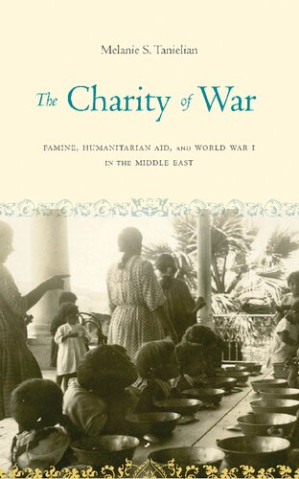
The Charity of War : Famine, Humanitarian Aid, and World War I in the Middle East 🔍
Melanie S. Tanielian
Stanford University Press, Stanford, California, 2017
英语 [en] · PDF · 4.3MB · 2017 · 📘 非小说类图书 · 🚀/lgli/lgrs/nexusstc/upload/zlib · Save
描述
With the exception of a few targeted aerial bombardments of the city's port, Beirut and Mount Lebanon did not see direct combat in World War I. Yet civilian casualties in this part of the Ottoman Empire reached shocking heights, possibly numbering half a million people. No war, in its usual understanding, took place there, but Lebanon was incontestably war-stricken. As a food crisis escalated into famine, it was the bloodless incursion of starvation and the silent assault of fatal disease that defined everyday life.
__The Charity of War__ tells how the Ottoman home front grappled with total war and how it sought to mitigate starvation and sickness through relief activities. Melanie S. Tanielian examines the wartime famine's reverberations throughout the community: in Beirut's municipal institutions, in its philanthropic and religious organizations, in international agencies, and in the homes of the city's residents. Her local history reveals a dynamic politics of provisioning that was central to civilian experiences in the war, as well as to the Middle Eastern political landscape that emerged post-war. By tracing these responses to the conflict, she demonstrates World War I's immediacy far from the European trenches, in a place where war was a socio-economic and political process rather than a military event.
__The Charity of War__ tells how the Ottoman home front grappled with total war and how it sought to mitigate starvation and sickness through relief activities. Melanie S. Tanielian examines the wartime famine's reverberations throughout the community: in Beirut's municipal institutions, in its philanthropic and religious organizations, in international agencies, and in the homes of the city's residents. Her local history reveals a dynamic politics of provisioning that was central to civilian experiences in the war, as well as to the Middle Eastern political landscape that emerged post-war. By tracing these responses to the conflict, she demonstrates World War I's immediacy far from the European trenches, in a place where war was a socio-economic and political process rather than a military event.
备用文件名
upload/motw_shc_2025_10/shc/The Charity of War_ Famine, Hum - Melanie S. Tanielian.pdf
备用文件名
motw/The Charity of War_ Famine, Hum - Melanie S. Tanielian.epub
备用文件名
motw/The Charity of War_ Famine, Hum - Melanie S. Tanielian.pdf
备用文件名
nexusstc/The Charity of War: Famine, Humanitarian Aid, and World War I in the Middle East/59fac97617fe7f36c24551359d9d8419.pdf
备用文件名
lgrsnf/The Charity of War_ Famine, Hum - Melanie S. Tanielian.pdf
备用文件名
zlib/History/Melanie S. Tanielian/The Charity of War: Famine, Humanitarian Aid, and World War I in the Middle East_5672260.pdf
备选作者
Tanielian, Melanie S.;
备用版本
Stanford University Press, Stanford, California, 2018
备用版本
United States, United States of America
备用版本
Stanford, CA, 2020
备用版本
1, 2017
元数据中的注释
lg2713584
元数据中的注释
{"isbns":["1503603776","9781503603776"],"last_page":368,"publisher":"Stanford University Press"}
元数据中的注释
Memory of the World Librarian: Slowrotation
备用描述
With the exception of a few targeted aerial bombardments of the city's port, Beirut and Mount Lebanon did not see direct combat in World War I. Yet civilian casualties in this part of the Ottoman Empire reached shocking heights, possibly numbering half a million people. No war, in its usual understanding, took place there, but Lebanon was incontestably war-stricken. As a food crisis escalated into famine, it was the bloodless incursion of starvation and the silent assault of fatal disease that defined everyday life.
The Charity of War tells how the Ottoman home front grappled with total war and how it sought to mitigate starvation and sickness through relief activities. Melanie S. Tanielian examines the wartime famine's reverberations throughout the community: in Beirut's municipal institutions, in its philanthropic and religious organizations, in international agencies, and in the homes of the city's residents. Her local history reveals a dynamic politics of provisioning that was central to civilian experiences in the war, as well as to the Middle Eastern political landscape that emerged post-war. By tracing these responses to the conflict, she demonstrates World War I's immediacy far from the European trenches, in a place where war was a socio-economic and political process rather than a military event.
**
Review
"Melanie S. Tanielian's The Charity of War is an important work that contributes to our broader understanding of the origins of modern humanitarianism in the Middle East and beyond. Built on both a solid archival foundation and broad reading in famine and food insecurity, the book is a critical text in the emerging literature on the global history of humanitarian organizations, relief work, and development." (Keith David Watenpaugh University of California, Davis, and author of Bread from Stones: The Middle East and the Making of Modern Humanitarianism**)
"Deeply felt, thoughtfully considered, and impressively researched, The Charity of War places Beirut at the cutting edge of World War I history, alongside the local histories of wartime Paris, London, and Berlin. With an eye for the telling anecdote and the skill of a social analyst, Melanie Tanielian brings the reader into the heart of a city under siege, and reconstructs the complex web of social norms and political structures that converged toward catastrophe." (Elizabeth F. Thompson American University )
"Melanie Tanielian provides us with an honest history of the miseries in Lebanon during the Great War, as well as the humanitarian efforts to relieve them. The Charity of War offers a unique story, neglected until now in other histories of the region. A highly original and important contribution." (M. Talha Çiçek Istanbul Medeniyet University )
About the Author
Melanie S. Tanielian is Assistant Professor of History at the University of Michigan.
The Charity of War tells how the Ottoman home front grappled with total war and how it sought to mitigate starvation and sickness through relief activities. Melanie S. Tanielian examines the wartime famine's reverberations throughout the community: in Beirut's municipal institutions, in its philanthropic and religious organizations, in international agencies, and in the homes of the city's residents. Her local history reveals a dynamic politics of provisioning that was central to civilian experiences in the war, as well as to the Middle Eastern political landscape that emerged post-war. By tracing these responses to the conflict, she demonstrates World War I's immediacy far from the European trenches, in a place where war was a socio-economic and political process rather than a military event.
**
Review
"Melanie S. Tanielian's The Charity of War is an important work that contributes to our broader understanding of the origins of modern humanitarianism in the Middle East and beyond. Built on both a solid archival foundation and broad reading in famine and food insecurity, the book is a critical text in the emerging literature on the global history of humanitarian organizations, relief work, and development." (Keith David Watenpaugh University of California, Davis, and author of Bread from Stones: The Middle East and the Making of Modern Humanitarianism**)
"Deeply felt, thoughtfully considered, and impressively researched, The Charity of War places Beirut at the cutting edge of World War I history, alongside the local histories of wartime Paris, London, and Berlin. With an eye for the telling anecdote and the skill of a social analyst, Melanie Tanielian brings the reader into the heart of a city under siege, and reconstructs the complex web of social norms and political structures that converged toward catastrophe." (Elizabeth F. Thompson American University )
"Melanie Tanielian provides us with an honest history of the miseries in Lebanon during the Great War, as well as the humanitarian efforts to relieve them. The Charity of War offers a unique story, neglected until now in other histories of the region. A highly original and important contribution." (M. Talha Çiçek Istanbul Medeniyet University )
About the Author
Melanie S. Tanielian is Assistant Professor of History at the University of Michigan.
备用描述
A “captivating” account of the starvation and disease that wracked far-from-the-front Beirut during WWI, and the relief efforts that followed ( Middle East Journal ).
With the exception of a few targeted aerial bombardments of the city’s port, Beirut and Mount Lebanon did not see direct combat in World War I. Yet civilian casualties in this part of the Ottoman Empire reached shocking heights, possibly numbering half a million people. No war, in its usual understanding, took place there, but Lebanon was incontestably war-stricken. As a food crisis escalated into famine, it was the bloodless incursion of starvation and the silent assault of fatal disease that defined everyday life.
The Charity of War tells how the Ottoman home front grappled with total war and how it sought to mitigate starvation and sickness through relief activities. Melanie S. Tanielian examines the wartime famine’s reverberations throughout the community: in Beirut’s municipal institutions, in its philanthropic and religious organizations, in international agencies, and in the homes of the city’s residents.
Her local history reveals a dynamic politics of provisioning that was central to civilian experiences in the war, as well as to the Middle Eastern political landscape that emerged post-war. By tracing these responses to the conflict, she demonstrates World War I's immediacy far from the European trenches, in a place where war was a socio-economic and political process rather than a military event.
With the exception of a few targeted aerial bombardments of the city’s port, Beirut and Mount Lebanon did not see direct combat in World War I. Yet civilian casualties in this part of the Ottoman Empire reached shocking heights, possibly numbering half a million people. No war, in its usual understanding, took place there, but Lebanon was incontestably war-stricken. As a food crisis escalated into famine, it was the bloodless incursion of starvation and the silent assault of fatal disease that defined everyday life.
The Charity of War tells how the Ottoman home front grappled with total war and how it sought to mitigate starvation and sickness through relief activities. Melanie S. Tanielian examines the wartime famine’s reverberations throughout the community: in Beirut’s municipal institutions, in its philanthropic and religious organizations, in international agencies, and in the homes of the city’s residents.
Her local history reveals a dynamic politics of provisioning that was central to civilian experiences in the war, as well as to the Middle Eastern political landscape that emerged post-war. By tracing these responses to the conflict, she demonstrates World War I's immediacy far from the European trenches, in a place where war was a socio-economic and political process rather than a military event.
备用描述
Cover 1
Contents 8
Acknowledgments 10
Note on Transliteration 16
Introduction: Total War: Politics, Power, and Benevolence 20
1. A City and Its Mountain, a Mountain and Its City 42
2. Wartime Famine: Strategies, Logistics, and Catastrophe 70
3. The Politics of Food: Wartime Provisioning for Civilians 98
4. Prayers and Patrons: The Politics of Neutrality 128
5. Rats, Lice, and Microbes: The Struggle against Infectious Diseases 160
6. Local Relief Initiatives: Civil Society, Women, and the State 192
7. Beneficial Benevolence: International Wartime Relief Efforts 220
Conclusion Beirut 1919: The Chaos of Memory and Politics 254
Notes 278
Bibliography 328
Index 346
A 346
B 347
C 350
D 351
E 352
F 353
G 354
H 355
I 356
J 357
K 357
L 357
M 358
N 362
O 362
P 363
Q 364
R 364
S 365
T 367
U 367
V 368
W 368
Y 369
Z 369
Contents 8
Acknowledgments 10
Note on Transliteration 16
Introduction: Total War: Politics, Power, and Benevolence 20
1. A City and Its Mountain, a Mountain and Its City 42
2. Wartime Famine: Strategies, Logistics, and Catastrophe 70
3. The Politics of Food: Wartime Provisioning for Civilians 98
4. Prayers and Patrons: The Politics of Neutrality 128
5. Rats, Lice, and Microbes: The Struggle against Infectious Diseases 160
6. Local Relief Initiatives: Civil Society, Women, and the State 192
7. Beneficial Benevolence: International Wartime Relief Efforts 220
Conclusion Beirut 1919: The Chaos of Memory and Politics 254
Notes 278
Bibliography 328
Index 346
A 346
B 347
C 350
D 351
E 352
F 353
G 354
H 355
I 356
J 357
K 357
L 357
M 358
N 362
O 362
P 363
Q 364
R 364
S 365
T 367
U 367
V 368
W 368
Y 369
Z 369
开源日期
2020-07-30
🚀 快速下载
成为会员以支持书籍、论文等的长期保存。为了感谢您对我们的支持,您将获得高速下载权益。❤️
如果您在本月捐款,您将获得双倍的快速下载次数。
🐢 低速下载
由可信的合作方提供。 更多信息请参见常见问题解答。 (可能需要验证浏览器——无限次下载!)
- 低速服务器(合作方提供) #1 (稍快但需要排队)
- 低速服务器(合作方提供) #2 (稍快但需要排队)
- 低速服务器(合作方提供) #3 (稍快但需要排队)
- 低速服务器(合作方提供) #4 (稍快但需要排队)
- 低速服务器(合作方提供) #5 (无需排队,但可能非常慢)
- 低速服务器(合作方提供) #6 (无需排队,但可能非常慢)
- 低速服务器(合作方提供) #7 (无需排队,但可能非常慢)
- 低速服务器(合作方提供) #8 (无需排队,但可能非常慢)
- 低速服务器(合作方提供) #9 (无需排队,但可能非常慢)
- 下载后: 在我们的查看器中打开
所有选项下载的文件都相同,应该可以安全使用。即使这样,从互联网下载文件时始终要小心。例如,确保您的设备更新及时。
外部下载
-
对于大文件,我们建议使用下载管理器以防止中断。
推荐的下载管理器:JDownloader -
您将需要一个电子书或 PDF 阅读器来打开文件,具体取决于文件格式。
推荐的电子书阅读器:Anna的档案在线查看器、ReadEra和Calibre -
使用在线工具进行格式转换。
推荐的转换工具:CloudConvert和PrintFriendly -
您可以将 PDF 和 EPUB 文件发送到您的 Kindle 或 Kobo 电子阅读器。
推荐的工具:亚马逊的“发送到 Kindle”和djazz 的“发送到 Kobo/Kindle” -
支持作者和图书馆
✍️ 如果您喜欢这个并且能够负担得起,请考虑购买原版,或直接支持作者。
📚 如果您当地的图书馆有这本书,请考虑在那里免费借阅。
下面的文字仅以英文继续。
总下载量:
“文件的MD5”是根据文件内容计算出的哈希值,并且基于该内容具有相当的唯一性。我们这里索引的所有影子图书馆都主要使用MD5来标识文件。
一个文件可能会出现在多个影子图书馆中。有关我们编译的各种数据集的信息,请参见数据集页面。
有关此文件的详细信息,请查看其JSON 文件。 Live/debug JSON version. Live/debug page.