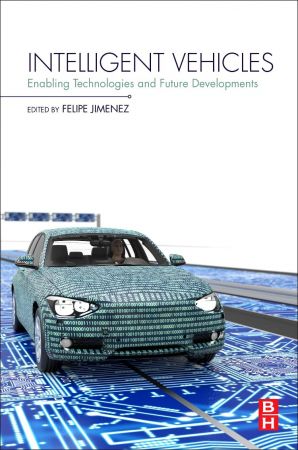
nexusstc/Intelligent Vehicles: Enabling Technologies and Future Developments/5bf755527637eb158c24069f4d7d6e1d.pdf
Intelligent Vehicles : Enabling Technologies and Future Developments 🔍
Felipe Jiménez
Butterworth-Heinemann, an imprint of Elsevier, San Diego, 2017
英语 [en] · PDF · 22.0MB · 2017 · 📘 非小说类图书 · 🚀/lgli/lgrs/nexusstc/zlib · Save
描述
Intelligent Road Vehicles examines specific aspects of intelligent vehicles such as enabling technologies, human factors and an analysis of social and economic impacts. The book is an invaluable resource for those pursuing deeper knowledge in the intelligent vehicles field, providing readers with an idea of current and future technologies, current projects and developments and the future of intelligent vehicles. Intelligent road vehicles are becoming a challenging area of research worldwide. Apart from the final applications and systems in vehicles, there are many enabling technologies that should be introduced. Communications and automation are two key areas for future automobiles. This book benefits from collaboration on the Thematic Network on Intelligent Vehicles led by Felipe Jimenez. Provides a general overview of different aspects related to intelligent road vehicles (sensors, applications, communications, automation, human factors, etc.) Addresses the different components and building blocks of intelligent vehicles in a single, comprehensive reference Explains how sensors are interpreted, including how different sensor readings are fused Addresses issues involved with avoiding collisions and other factors such as pot holes, unclear road lines or markings, and unexpected weather conditions
备用文件名
lgrsnf/Intelligent Vehicles - Enabling Technologies and Future Developments.pdf
备用文件名
zlib/Engineering/Felipe Jimenez/Intelligent Vehicles: Enabling Technologies and Future Developments_13374783.pdf
备选作者
Felipe Jiménez
备用出版商
Elsevier Science & Technology Books
备用出版商
Academic Press, Incorporated
备用出版商
Morgan Kaufmann Publishers
备用出版商
Brooks/Cole
备用版本
Elsevier Ltd., Oxford, United Kingdom, 2018
备用版本
United States, United States of America
备用版本
1, 2017
元数据中的注释
lg3005442
元数据中的注释
{"isbns":["0128128003","9780128128008"],"last_page":504,"publisher":"Butterworth-Heinemann"}
备用描述
Front-matter_2018_Intelligent-Vehicles
Intelligent Vehicles
Copyright_2018_Intelligent-Vehicles
Copyright
List-of-Contributors_2018_Intelligent-Vehicles
List of Contributors
Preface_2018_Intelligent-Vehicles
Preface
Chapter-1---Introduction_2018_Intelligent-Vehicles
1 Introduction
1.1 Intelligent Transport Systems (ITS)
1.2 Early Initiatives
1.2.1 Europe
1.2.2 United States
1.2.3 Japan
1.3 Services
1.3.1 Provision of Information to the User
1.3.2 Traffic Management
1.3.3 Freight Transportation Operation
1.3.4 Public Transport Operation
1.3.5 Electronic Payment
1.3.6 Emergencies
1.4 Intelligent Vehicles
1.5 Book Structure
References
Further Reading
Chapter-2---Environmental-Perception-for-Intelligent-_2018_Intelligent-Vehic
2 Environmental Perception for Intelligent Vehicles
2.1 Vision-Based Road Information
2.1.1 Environmental Variability
2.1.2 Lane Detection
2.1.2.1 Preprocessing
2.1.2.2 Postprocessing
2.1.3 Traffic Signs Recognition
2.1.3.1 Sign Detection
2.1.3.2 Sign Classification
2.1.4 Commercial Systems
2.2 Vision-Based Perception
2.2.1 Vision-Based Object Detection and Semantic Segmentation
2.2.2 Onboard Vision-Based Object Detection
2.2.3 Onboard Vision-Based Semantic Segmentation
2.2.4 Onboard Vision Based on Deep Learning
2.3 Lidar-Based Perception
2.3.1 Surroundings Recognition
2.3.1.1 Obstacles Detection
2.3.1.2 Path Boundaries Detection
2.4 Sensing From the Infrastructure
2.4.1 Autonomous Traffic Sensors
2.4.1.1 Intrusive Sensors
2.4.1.1.1 Magnetic Loops
2.4.1.1.2 Pneumatic Tubes
2.4.1.1.3 Piezoelectric Sensors
2.4.1.1.4 Fiber Optic Sensors
2.4.1.1.5 Geomagnetic Sensors
2.4.1.1.6 Wireless Sensor Networks (Motes)
2.4.1.2 Nonintrusive Sensors
2.4.1.2.1 Microwave Radars
2.4.1.2.2 Laser Sensors (Active Infrareds)
2.4.1.2.3 Ultrasonic Sensors
2.4.1.2.4 Passive Infrared Sensors
2.4.1.2.5 Acoustic Sensors
2.4.1.2.6 Video Cameras
2.4.1.3 Summary of Strengths and Weaknesses of Autonomous Traffic Sensors
2.4.2 Dependant Traffic Sensors
2.4.2.1 Vehicle Identification by RFID (RFID Radio Frequency Identification)
2.4.2.1.1 Onboard Equipment (Tag)
2.4.2.1.2 Equipment in the Infrastructure (TRX)
2.4.2.2 Bluetooth Sensing
2.4.3 Conclusions and Recommendations
2.5 Data Fusion
2.5.1 Data Fusion Levels
2.5.1.1 Data Fusion Definition
2.5.2 Architectures
2.5.3 Data Fusion in Intelligent Transport Systems
2.5.3.1 Other Approaches
References
Further Reading
Chapter-3---Vehicular-Communications_2018_Intelligent-Vehicles
3 Vehicular Communications
3.1 Standardization in Vehicular Communications
3.1.1 Introduction
3.1.2 The ISO CALM Framework
3.1.2.1 The ISO CALM Communications Reference Architecture
3.1.2.2 The ISO CALM Access Media
3.1.2.2.1 IEEE WAVE
3.1.2.2.2 CEN DSRC
3.1.2.2.3 ETSI ITS G5
3.1.2.2.4 ISO CALM M5
3.1.2.2.5 IEEE 802.11
3.1.2.2.6 IEEE 802.11p
3.1.2.2.7 IEEE 802.16 WiMAX
3.1.2.3 The ISO CALM Network Layer
3.1.2.3.1 IETF IPv4
3.1.2.3.2 IETF/ISO IPv6 Networking and Mobility
3.1.2.3.3 Mobility in IPv6 Networks
3.1.2.3.4 IEEE 1609.3 WAVE WSMP
3.1.2.3.5 GeoNetworking
3.1.3 Vehicular Communications in a Mobile Communications Scenario
3.1.4 Conclusions
3.2 Technology
3.2.1 Introduction
3.2.2 Reference Architecture
3.2.3 Operative Technologies
3.2.3.1 Dedicated Short Range Communications
3.2.3.2 3/4G Mobile Telephony.
3.2.3.3 5G Mobile Telephony
3.2.3.4 RFID
3.2.3.5 Bluetooth
3.2.4 Hybrid Communication Approach
3.2.5 Services
3.2.6 Security and Privacy
3.2.7 Interoperability
References
Related standards
Chapter-4---Positioning-and-Digital-Maps_2018_Intelligent-Vehicles
4 Positioning and Digital Maps
4.1 Positioning Based Systems for Intelligent Vehicles
4.1.1 Definitions
4.1.2 Location Based Services and Applications Based on Position
4.2 GNSS-Based Positioning
4.2.1 Motivation, Requirements and Working Principles
4.2.1.1 Motivation
4.2.1.2 Requirements
4.2.1.3 Working Principle
4.2.2 Performance Parameters
4.2.3 Satellite Positioning in ITS Domain and Applications
4.2.4 Future of GNSS in ITS
4.3 GNSS Aiding and Hybridized Positioning Systems
4.3.1 Technologies for GNSS-Aided Positioning and Navigation
4.3.2 GNSS/DR Positioning
4.3.2.1 Principle
4.3.2.2 Vehicle Models
4.3.2.3 Architecture
4.3.2.4 Fusion Techniques
4.4 Digital Maps
4.4.1 Importance and Utility
4.4.2 Specifications
4.4.3 Digital Map Development
4.4.4 Map Quality Assessment
4.4.5 Map-Matching
4.4.6 Map-Assisted GNSS Positioning
4.5 Alternatives to GNSS Positioning
4.5.1 Visual Odometry as Vehicle’s Movement Estimator
4.5.1.1 Visual Odometry Algorithms Using Computer Vision
4.5.1.2 Visual Odometry Algorithms Using LIDAR
4.5.2 Wireless Networks
4.5.3 RFID
References
Chapter-5---Big-Data-in-Road-Transport-and-Mobility-R_2018_Intelligent-Vehic
5 Big Data in Road Transport and Mobility Research
5.1 Data and Information Sources
5.2 Data Preprocessing
5.2.1 Feature Engineering
5.2.2 Dimensionality Reduction
5.3 Data Normalization
5.3.1 Data Cleaning
5.3.2 Formats and Standards
5.3.3 Ontologies
5.4 Supervised Learning
5.4.1 Predictive Versus Descriptive
5.4.2 Classification Versus Regression
5.4.3 Learners
5.4.4 Real Time Application
5.4.5 Concept Drift Handling
5.5 Nonsupervised Learning
5.6 Processing Architectures
5.7 Applications
5.7.1 Transport Demand Modeling
5.7.2 Short-Term Traffic State Prediction
5.7.3 Planning/Routing
References
Further Reading
Chapter-6---Driver-Assistance-Systems-and-Safety-Sys_2018_Intelligent-Vehicl
6 Driver Assistance Systems and Safety Systems
6.1 Integrated Safety Model
6.2 Systems for Improving Driving Task
6.2.1 Assistance Systems Aim
6.2.2 Classification
6.3 Electronic Aids for Reducing Accidents Consequences
6.3.1 Secondary Safety Systems
6.3.2 Interaction Between Primary and Secondary Safety Systems
6.3.3 Tertiary Safety Systems
6.4 Future Evolution of Assistance and Safety Systems
References
Chapter-7---Cooperative-Systems_2018_Intelligent-Vehicles
7 Cooperative Systems
7.1 Introduction
7.2 C-ITS Framework
7.2.1 General Architecture
7.2.2 Support Technologies
7.2.3 Public Land Mobile Networks (Cellular Networks)
7.2.4 ITS G5 (Vehicular Wi-Fi)
7.2.5 Standardization Level
7.3 Services
7.3.1 Introduction
7.3.2 Systems Oriented to Information Provision
7.3.3 Systems Oriented to Improve Safety
7.3.4 Systems Oriented to Improve Efficiency
7.4 Challenges Toward Deployment
7.4.1 Technical Issues
7.4.2 Implementation Issues
7.5 Main Related Initiatives at European Level
7.5.1 Interurban Mobility Pilots
7.5.1.1 DRIVE C2X—DRIVing Implementation and Evaluation of C2X Communication Technology in Europe
7.5.1.2 FOTsis—European Field Operational Test on Safe, Intelligent, and Sustainable Road Operation
7.5.2 Urban Mobility Pilots
7.5.2.1 COMPASS4D—Cooperative Mobility Pilot on Safety and Sustainability
7.5.2.2 CO-GISTICS—Cooperative Logistics for Sustainable Mobility of Goods
7.5.3 Collaborative Platforms and Supporting Initiatives
7.5.3.1 Car2Car Communication Consortium
7.5.3.2 C-ITS Platform
7.5.3.3 The Amsterdam Group
7.5.3.4 CODECS—COoperative ITS DEployment Coordination Support
7.5.3.5 C-Roads Platform
7.5.3.6 Cooperative ITS Corridor
7.5.3.7 Intercor—North Sea–Mediterranean Corridor
7.5.3.8 SCOOP@F (France)
7.5.3.9 SISCOGA Corridor (Spain)
7.6 Next Steps
References
Further Reading
Chapter-8---Automated-Driving_2018_Intelligent-Vehicles
8 Automated Driving
8.1 Fundamentals
8.2 Technology Bricks
8.2.1 Control Architectures
8.2.2 Situation Awareness and Risk Assessment
8.2.3 Decision Making
8.2.3.1 Simulation and Software tools for IDMS
8.2.4 Driver–Vehicle Interaction
8.2.5 Motion Planning
8.2.5.1 Path Planning
8.2.5.1.1 Costmap Generation
8.2.5.1.2 Global Planner
8.2.5.1.3 Local Planner
8.2.5.2 Speed Planning
8.2.6 Vehicle Control
8.2.6.1 Longitudinal Motion Control
8.2.6.2 Lateral Motion Control
8.3 Cooperative Automated Driving
8.3.1 Platooning
8.3.2 Urban Road Transport
8.4 Verification and Validation
8.5 Main Initiatives and Applications
8.5.1 Prototypes
8.5.1.1 Relevant Prototypes at International Level
8.5.1.2 Relevant Prototypes in Spain
8.5.2 Projects
8.5.3 Special Applications
8.6 Socioregulatory Aspects
8.6.1 Legal Pathways
8.6.1.1 General Framework: Vienna and Amsterdam
8.6.1.2 Legal Framework and Regulation About Autonomous Vehicles
8.6.2 Ethical Aspects
References
Chapter-9---Human-Factors_2018_Intelligent-Vehicles
9 Human Factors
Subchapter 9.1 Human Driver Behaviors
9.1.1 Introduction
9.1.2 Driving Style: Definitions
9.1.3 Measures for Driving Style Modeling
9.1.3.1 Driver Biological Measures
9.1.3.2 Driver Physical Measures
9.1.3.3 Vehicle Dynamics Measures
9.1.3.4 Sociodemographic Measures
9.1.3.5 Hybrid Measures
9.1.4 Driving Style Classification
9.1.4.1 Discrete Classes
9.1.4.2 Continuous Scoring
9.1.5 Algorithms for Driving Style Modeling
9.1.5.1 Unsupervised Learning Techniques
9.1.5.2 Supervised Learning Techniques
9.1.5.3 General Observations
9.1.6 Datasets for Driving Style Modeling
9.1.7 Applications for Intelligent Vehicles
9.1.7.1 Level 1
9.1.7.1.1 Driver–Vehicle Interface (DVI)
9.1.7.1.2 ADAS Performance Enhancement
9.1.7.1.3 Trust and Use of the Technology
9.1.7.2 Level 2
9.1.7.2.1 Driver–Vehicle Interface
9.1.7.2.2 Driver as Supervisor
9.1.7.2.3 Trust and Use of the Technology
9.1.7.3 Level 3
9.1.7.3.1 Driver–Vehicle Interface
9.1.7.3.2 Trust and Use of the Technology
9.1.7.3.3 Driver Skill Over Time
9.1.7.4 Level 4
9.1.7.5 Applications for Consumption Efficiency
References
Subchapter 9.2 User Interface
9.2.1 Introduction: Feedback Channels
9.2.1.1 Visual Channel
9.2.1.2 Acoustic Channel
9.2.1.3 Speech Recognition
9.2.1.4 Haptic Output
9.2.1.5 Multimodality
9.2.2 Cognitive Load and Work Load
9.2.3 Information Classification and Prioritization
9.2.4 Implementation Issues
9.2.5 Guidelines and Standards
References
Chapter-10---Simulation-Tools_2018_Intelligent-Vehicles
10 Simulation Tools
Subchapter 10.1 Driving Simulators
10.1.1 Introduction
10.1.2 Architecture of Driving Simulators
10.1.3 Applications
References
Subchapter 10.2 Traffic Simulation
10.2.1 What is Traffic Simulation and Why is it Needed
10.2.2 Classic Traffic Simulation Paradigms
10.2.2.1 Macroscopic Simulation
10.2.2.2 Microscopic Simulation
10.2.2.3 Mesoscopic Simulation
10.2.3 Some (Traditional) Simulation Frameworks
10.2.3.1 CORSIM
10.2.3.2 MATSIM
10.2.3.3 AIMSUM2
10.2.4 Open Traffic Simulation: SUMO
10.2.5 Future Trends and Hopes
References
Subchapter 10.3 Data for Training Models, Domain Adaptation
10.3.1 Training Data and Ground Truth
10.3.2 Virtual Worlds and Domain Adaptation
References
Chapter-11---The-Socioeconomic-Impact-of-the-Intelligent-V_2018_Intelligent-
11 The Socioeconomic Impact of the Intelligent Vehicles: Implementation Strategies
11.1 Introduction
11.2 From Connected to Autonomous Vehicle
11.3 Social Issues
11.3.1 Acceptance of the Innovations
11.3.2 Safety
11.3.3 Effects on Employment
11.4 Legal Issues
11.4.1 Liability/Insurance
11.4.2 Test and Validation
11.5 Privacy and Hacking
11.5.1 Privacy
11.6 Hacking
11.7 Economic Aspects
11.7.1 Congestion
11.7.2 Fuel
11.7.3 Infrastructure Costs
11.7.4 Vehicle Cost
11.7.5 Insurance Costs
11.8 Liveability
11.9 Conclusions
References
Further Reading
Chapter-12---Future-Perspectives-and-Research-Areas_2018_Intelligent-Vehicle
12 Future Perspectives and Research Areas
12.1 Introduction
12.2 Current Trends
12.3 Current Research Areas
12.4 Main Expected Technological Leaps
12.5 Other Expected and/or Necessary Changes
12.6 Conclusions
References
Index_2018_Intelligent-Vehicles
Index
Intelligent Vehicles
Copyright_2018_Intelligent-Vehicles
Copyright
List-of-Contributors_2018_Intelligent-Vehicles
List of Contributors
Preface_2018_Intelligent-Vehicles
Preface
Chapter-1---Introduction_2018_Intelligent-Vehicles
1 Introduction
1.1 Intelligent Transport Systems (ITS)
1.2 Early Initiatives
1.2.1 Europe
1.2.2 United States
1.2.3 Japan
1.3 Services
1.3.1 Provision of Information to the User
1.3.2 Traffic Management
1.3.3 Freight Transportation Operation
1.3.4 Public Transport Operation
1.3.5 Electronic Payment
1.3.6 Emergencies
1.4 Intelligent Vehicles
1.5 Book Structure
References
Further Reading
Chapter-2---Environmental-Perception-for-Intelligent-_2018_Intelligent-Vehic
2 Environmental Perception for Intelligent Vehicles
2.1 Vision-Based Road Information
2.1.1 Environmental Variability
2.1.2 Lane Detection
2.1.2.1 Preprocessing
2.1.2.2 Postprocessing
2.1.3 Traffic Signs Recognition
2.1.3.1 Sign Detection
2.1.3.2 Sign Classification
2.1.4 Commercial Systems
2.2 Vision-Based Perception
2.2.1 Vision-Based Object Detection and Semantic Segmentation
2.2.2 Onboard Vision-Based Object Detection
2.2.3 Onboard Vision-Based Semantic Segmentation
2.2.4 Onboard Vision Based on Deep Learning
2.3 Lidar-Based Perception
2.3.1 Surroundings Recognition
2.3.1.1 Obstacles Detection
2.3.1.2 Path Boundaries Detection
2.4 Sensing From the Infrastructure
2.4.1 Autonomous Traffic Sensors
2.4.1.1 Intrusive Sensors
2.4.1.1.1 Magnetic Loops
2.4.1.1.2 Pneumatic Tubes
2.4.1.1.3 Piezoelectric Sensors
2.4.1.1.4 Fiber Optic Sensors
2.4.1.1.5 Geomagnetic Sensors
2.4.1.1.6 Wireless Sensor Networks (Motes)
2.4.1.2 Nonintrusive Sensors
2.4.1.2.1 Microwave Radars
2.4.1.2.2 Laser Sensors (Active Infrareds)
2.4.1.2.3 Ultrasonic Sensors
2.4.1.2.4 Passive Infrared Sensors
2.4.1.2.5 Acoustic Sensors
2.4.1.2.6 Video Cameras
2.4.1.3 Summary of Strengths and Weaknesses of Autonomous Traffic Sensors
2.4.2 Dependant Traffic Sensors
2.4.2.1 Vehicle Identification by RFID (RFID Radio Frequency Identification)
2.4.2.1.1 Onboard Equipment (Tag)
2.4.2.1.2 Equipment in the Infrastructure (TRX)
2.4.2.2 Bluetooth Sensing
2.4.3 Conclusions and Recommendations
2.5 Data Fusion
2.5.1 Data Fusion Levels
2.5.1.1 Data Fusion Definition
2.5.2 Architectures
2.5.3 Data Fusion in Intelligent Transport Systems
2.5.3.1 Other Approaches
References
Further Reading
Chapter-3---Vehicular-Communications_2018_Intelligent-Vehicles
3 Vehicular Communications
3.1 Standardization in Vehicular Communications
3.1.1 Introduction
3.1.2 The ISO CALM Framework
3.1.2.1 The ISO CALM Communications Reference Architecture
3.1.2.2 The ISO CALM Access Media
3.1.2.2.1 IEEE WAVE
3.1.2.2.2 CEN DSRC
3.1.2.2.3 ETSI ITS G5
3.1.2.2.4 ISO CALM M5
3.1.2.2.5 IEEE 802.11
3.1.2.2.6 IEEE 802.11p
3.1.2.2.7 IEEE 802.16 WiMAX
3.1.2.3 The ISO CALM Network Layer
3.1.2.3.1 IETF IPv4
3.1.2.3.2 IETF/ISO IPv6 Networking and Mobility
3.1.2.3.3 Mobility in IPv6 Networks
3.1.2.3.4 IEEE 1609.3 WAVE WSMP
3.1.2.3.5 GeoNetworking
3.1.3 Vehicular Communications in a Mobile Communications Scenario
3.1.4 Conclusions
3.2 Technology
3.2.1 Introduction
3.2.2 Reference Architecture
3.2.3 Operative Technologies
3.2.3.1 Dedicated Short Range Communications
3.2.3.2 3/4G Mobile Telephony.
3.2.3.3 5G Mobile Telephony
3.2.3.4 RFID
3.2.3.5 Bluetooth
3.2.4 Hybrid Communication Approach
3.2.5 Services
3.2.6 Security and Privacy
3.2.7 Interoperability
References
Related standards
Chapter-4---Positioning-and-Digital-Maps_2018_Intelligent-Vehicles
4 Positioning and Digital Maps
4.1 Positioning Based Systems for Intelligent Vehicles
4.1.1 Definitions
4.1.2 Location Based Services and Applications Based on Position
4.2 GNSS-Based Positioning
4.2.1 Motivation, Requirements and Working Principles
4.2.1.1 Motivation
4.2.1.2 Requirements
4.2.1.3 Working Principle
4.2.2 Performance Parameters
4.2.3 Satellite Positioning in ITS Domain and Applications
4.2.4 Future of GNSS in ITS
4.3 GNSS Aiding and Hybridized Positioning Systems
4.3.1 Technologies for GNSS-Aided Positioning and Navigation
4.3.2 GNSS/DR Positioning
4.3.2.1 Principle
4.3.2.2 Vehicle Models
4.3.2.3 Architecture
4.3.2.4 Fusion Techniques
4.4 Digital Maps
4.4.1 Importance and Utility
4.4.2 Specifications
4.4.3 Digital Map Development
4.4.4 Map Quality Assessment
4.4.5 Map-Matching
4.4.6 Map-Assisted GNSS Positioning
4.5 Alternatives to GNSS Positioning
4.5.1 Visual Odometry as Vehicle’s Movement Estimator
4.5.1.1 Visual Odometry Algorithms Using Computer Vision
4.5.1.2 Visual Odometry Algorithms Using LIDAR
4.5.2 Wireless Networks
4.5.3 RFID
References
Chapter-5---Big-Data-in-Road-Transport-and-Mobility-R_2018_Intelligent-Vehic
5 Big Data in Road Transport and Mobility Research
5.1 Data and Information Sources
5.2 Data Preprocessing
5.2.1 Feature Engineering
5.2.2 Dimensionality Reduction
5.3 Data Normalization
5.3.1 Data Cleaning
5.3.2 Formats and Standards
5.3.3 Ontologies
5.4 Supervised Learning
5.4.1 Predictive Versus Descriptive
5.4.2 Classification Versus Regression
5.4.3 Learners
5.4.4 Real Time Application
5.4.5 Concept Drift Handling
5.5 Nonsupervised Learning
5.6 Processing Architectures
5.7 Applications
5.7.1 Transport Demand Modeling
5.7.2 Short-Term Traffic State Prediction
5.7.3 Planning/Routing
References
Further Reading
Chapter-6---Driver-Assistance-Systems-and-Safety-Sys_2018_Intelligent-Vehicl
6 Driver Assistance Systems and Safety Systems
6.1 Integrated Safety Model
6.2 Systems for Improving Driving Task
6.2.1 Assistance Systems Aim
6.2.2 Classification
6.3 Electronic Aids for Reducing Accidents Consequences
6.3.1 Secondary Safety Systems
6.3.2 Interaction Between Primary and Secondary Safety Systems
6.3.3 Tertiary Safety Systems
6.4 Future Evolution of Assistance and Safety Systems
References
Chapter-7---Cooperative-Systems_2018_Intelligent-Vehicles
7 Cooperative Systems
7.1 Introduction
7.2 C-ITS Framework
7.2.1 General Architecture
7.2.2 Support Technologies
7.2.3 Public Land Mobile Networks (Cellular Networks)
7.2.4 ITS G5 (Vehicular Wi-Fi)
7.2.5 Standardization Level
7.3 Services
7.3.1 Introduction
7.3.2 Systems Oriented to Information Provision
7.3.3 Systems Oriented to Improve Safety
7.3.4 Systems Oriented to Improve Efficiency
7.4 Challenges Toward Deployment
7.4.1 Technical Issues
7.4.2 Implementation Issues
7.5 Main Related Initiatives at European Level
7.5.1 Interurban Mobility Pilots
7.5.1.1 DRIVE C2X—DRIVing Implementation and Evaluation of C2X Communication Technology in Europe
7.5.1.2 FOTsis—European Field Operational Test on Safe, Intelligent, and Sustainable Road Operation
7.5.2 Urban Mobility Pilots
7.5.2.1 COMPASS4D—Cooperative Mobility Pilot on Safety and Sustainability
7.5.2.2 CO-GISTICS—Cooperative Logistics for Sustainable Mobility of Goods
7.5.3 Collaborative Platforms and Supporting Initiatives
7.5.3.1 Car2Car Communication Consortium
7.5.3.2 C-ITS Platform
7.5.3.3 The Amsterdam Group
7.5.3.4 CODECS—COoperative ITS DEployment Coordination Support
7.5.3.5 C-Roads Platform
7.5.3.6 Cooperative ITS Corridor
7.5.3.7 Intercor—North Sea–Mediterranean Corridor
7.5.3.8 SCOOP@F (France)
7.5.3.9 SISCOGA Corridor (Spain)
7.6 Next Steps
References
Further Reading
Chapter-8---Automated-Driving_2018_Intelligent-Vehicles
8 Automated Driving
8.1 Fundamentals
8.2 Technology Bricks
8.2.1 Control Architectures
8.2.2 Situation Awareness and Risk Assessment
8.2.3 Decision Making
8.2.3.1 Simulation and Software tools for IDMS
8.2.4 Driver–Vehicle Interaction
8.2.5 Motion Planning
8.2.5.1 Path Planning
8.2.5.1.1 Costmap Generation
8.2.5.1.2 Global Planner
8.2.5.1.3 Local Planner
8.2.5.2 Speed Planning
8.2.6 Vehicle Control
8.2.6.1 Longitudinal Motion Control
8.2.6.2 Lateral Motion Control
8.3 Cooperative Automated Driving
8.3.1 Platooning
8.3.2 Urban Road Transport
8.4 Verification and Validation
8.5 Main Initiatives and Applications
8.5.1 Prototypes
8.5.1.1 Relevant Prototypes at International Level
8.5.1.2 Relevant Prototypes in Spain
8.5.2 Projects
8.5.3 Special Applications
8.6 Socioregulatory Aspects
8.6.1 Legal Pathways
8.6.1.1 General Framework: Vienna and Amsterdam
8.6.1.2 Legal Framework and Regulation About Autonomous Vehicles
8.6.2 Ethical Aspects
References
Chapter-9---Human-Factors_2018_Intelligent-Vehicles
9 Human Factors
Subchapter 9.1 Human Driver Behaviors
9.1.1 Introduction
9.1.2 Driving Style: Definitions
9.1.3 Measures for Driving Style Modeling
9.1.3.1 Driver Biological Measures
9.1.3.2 Driver Physical Measures
9.1.3.3 Vehicle Dynamics Measures
9.1.3.4 Sociodemographic Measures
9.1.3.5 Hybrid Measures
9.1.4 Driving Style Classification
9.1.4.1 Discrete Classes
9.1.4.2 Continuous Scoring
9.1.5 Algorithms for Driving Style Modeling
9.1.5.1 Unsupervised Learning Techniques
9.1.5.2 Supervised Learning Techniques
9.1.5.3 General Observations
9.1.6 Datasets for Driving Style Modeling
9.1.7 Applications for Intelligent Vehicles
9.1.7.1 Level 1
9.1.7.1.1 Driver–Vehicle Interface (DVI)
9.1.7.1.2 ADAS Performance Enhancement
9.1.7.1.3 Trust and Use of the Technology
9.1.7.2 Level 2
9.1.7.2.1 Driver–Vehicle Interface
9.1.7.2.2 Driver as Supervisor
9.1.7.2.3 Trust and Use of the Technology
9.1.7.3 Level 3
9.1.7.3.1 Driver–Vehicle Interface
9.1.7.3.2 Trust and Use of the Technology
9.1.7.3.3 Driver Skill Over Time
9.1.7.4 Level 4
9.1.7.5 Applications for Consumption Efficiency
References
Subchapter 9.2 User Interface
9.2.1 Introduction: Feedback Channels
9.2.1.1 Visual Channel
9.2.1.2 Acoustic Channel
9.2.1.3 Speech Recognition
9.2.1.4 Haptic Output
9.2.1.5 Multimodality
9.2.2 Cognitive Load and Work Load
9.2.3 Information Classification and Prioritization
9.2.4 Implementation Issues
9.2.5 Guidelines and Standards
References
Chapter-10---Simulation-Tools_2018_Intelligent-Vehicles
10 Simulation Tools
Subchapter 10.1 Driving Simulators
10.1.1 Introduction
10.1.2 Architecture of Driving Simulators
10.1.3 Applications
References
Subchapter 10.2 Traffic Simulation
10.2.1 What is Traffic Simulation and Why is it Needed
10.2.2 Classic Traffic Simulation Paradigms
10.2.2.1 Macroscopic Simulation
10.2.2.2 Microscopic Simulation
10.2.2.3 Mesoscopic Simulation
10.2.3 Some (Traditional) Simulation Frameworks
10.2.3.1 CORSIM
10.2.3.2 MATSIM
10.2.3.3 AIMSUM2
10.2.4 Open Traffic Simulation: SUMO
10.2.5 Future Trends and Hopes
References
Subchapter 10.3 Data for Training Models, Domain Adaptation
10.3.1 Training Data and Ground Truth
10.3.2 Virtual Worlds and Domain Adaptation
References
Chapter-11---The-Socioeconomic-Impact-of-the-Intelligent-V_2018_Intelligent-
11 The Socioeconomic Impact of the Intelligent Vehicles: Implementation Strategies
11.1 Introduction
11.2 From Connected to Autonomous Vehicle
11.3 Social Issues
11.3.1 Acceptance of the Innovations
11.3.2 Safety
11.3.3 Effects on Employment
11.4 Legal Issues
11.4.1 Liability/Insurance
11.4.2 Test and Validation
11.5 Privacy and Hacking
11.5.1 Privacy
11.6 Hacking
11.7 Economic Aspects
11.7.1 Congestion
11.7.2 Fuel
11.7.3 Infrastructure Costs
11.7.4 Vehicle Cost
11.7.5 Insurance Costs
11.8 Liveability
11.9 Conclusions
References
Further Reading
Chapter-12---Future-Perspectives-and-Research-Areas_2018_Intelligent-Vehicle
12 Future Perspectives and Research Areas
12.1 Introduction
12.2 Current Trends
12.3 Current Research Areas
12.4 Main Expected Technological Leaps
12.5 Other Expected and/or Necessary Changes
12.6 Conclusions
References
Index_2018_Intelligent-Vehicles
Index
备用描述
Front Cover -- Intelligent Vehicles -- Copyright Page -- Contents -- List of Contributors -- Preface -- 1 Introduction -- 1.1 Intelligent Transport Systems (ITS) -- 1.2 Early Initiatives -- 1.2.1 Europe -- 1.2.2 United States -- 1.2.3 Japan -- 1.3 Services -- 1.3.1 Provision of Information to the User -- 1.3.2 Traffic Management -- 1.3.3 Freight Transportation Operation -- 1.3.4 Public Transport Operation -- 1.3.5 Electronic Payment -- 1.3.6 Emergencies -- 1.4 Intelligent Vehicles -- 1.5 Book Structure -- References -- Further Reading -- I. Enabling Technologies -- 2 Environmental Perception for Intelligent Vehicles -- 2.1 Vision-Based Road Information -- 2.1.1 Environmental Variability -- 2.1.2 Lane Detection -- 2.1.2.1 Preprocessing -- 2.1.2.2 Postprocessing -- 2.1.3 Traffic Signs Recognition -- 2.1.3.1 Sign Detection -- 2.1.3.2 Sign Classification -- 2.1.4 Commercial Systems -- 2.2 Vision-Based Perception -- 2.2.1 Vision-Based Object Detection and Semantic Segmentation -- 2.2.2 Onboard Vision-Based Object Detection -- 2.2.3 Onboard Vision-Based Semantic Segmentation -- 2.2.4 Onboard Vision Based on Deep Learning -- 2.3 Lidar-Based Perception -- 2.3.1 Surroundings Recognition -- 2.3.1.1 Obstacles Detection -- 2.3.1.2 Path Boundaries Detection -- 2.4 Sensing From the Infrastructure -- 2.4.1 Autonomous Traffic Sensors -- 2.4.1.1 Intrusive Sensors -- 2.4.1.1.1 Magnetic Loops -- 2.4.1.1.2 Pneumatic Tubes -- 2.4.1.1.3 Piezoelectric Sensors -- 2.4.1.1.4 Fiber Optic Sensors -- 2.4.1.1.5 Geomagnetic Sensors -- 2.4.1.1.6 Wireless Sensor Networks (Motes) -- 2.4.1.2 Nonintrusive Sensors -- 2.4.1.2.1 Microwave Radars -- 2.4.1.2.2 Laser Sensors (Active Infrareds) -- 2.4.1.2.3 Ultrasonic Sensors -- 2.4.1.2.4 Passive Infrared Sensors -- 2.4.1.2.5 Acoustic Sensors -- 2.4.1.2.6 Video Cameras
备用描述
__Intelligent Road Vehicles__ examines specific aspects of intelligent vehicles such as enabling technologies, human factors and an analysis of social and economic impacts. The book is an invaluable resource for those pursuing deeper knowledge in the intelligent vehicles field, providing readers with an idea of current and future technologies, current projects and developments and the future of intelligent vehicles.
Intelligent road vehicles are becoming a challenging area of research worldwide. Apart from the final applications and systems in vehicles, there are many enabling technologies that should be introduced. Communications and automation are two key areas for future automobiles. This book benefits from collaboration on theThematic Network on Intelligent Vehicles led by Felipe Jimenez.
Intelligent road vehicles are becoming a challenging area of research worldwide. Apart from the final applications and systems in vehicles, there are many enabling technologies that should be introduced. Communications and automation are two key areas for future automobiles. This book benefits from collaboration on theThematic Network on Intelligent Vehicles led by Felipe Jimenez.
开源日期
2021-05-10
🚀 快速下载
成为会员以支持书籍、论文等的长期保存。为了感谢您对我们的支持,您将获得高速下载权益。❤️
如果您在本月捐款,您将获得双倍的快速下载次数。
🐢 低速下载
由可信的合作方提供。 更多信息请参见常见问题解答。 (可能需要验证浏览器——无限次下载!)
- 低速服务器(合作方提供) #1 (稍快但需要排队)
- 低速服务器(合作方提供) #2 (稍快但需要排队)
- 低速服务器(合作方提供) #3 (稍快但需要排队)
- 低速服务器(合作方提供) #4 (稍快但需要排队)
- 低速服务器(合作方提供) #5 (无需排队,但可能非常慢)
- 低速服务器(合作方提供) #6 (无需排队,但可能非常慢)
- 低速服务器(合作方提供) #7 (无需排队,但可能非常慢)
- 低速服务器(合作方提供) #8 (无需排队,但可能非常慢)
- 低速服务器(合作方提供) #9 (无需排队,但可能非常慢)
- 下载后: 在我们的查看器中打开
所有选项下载的文件都相同,应该可以安全使用。即使这样,从互联网下载文件时始终要小心。例如,确保您的设备更新及时。
外部下载
-
对于大文件,我们建议使用下载管理器以防止中断。
推荐的下载管理器:JDownloader -
您将需要一个电子书或 PDF 阅读器来打开文件,具体取决于文件格式。
推荐的电子书阅读器:Anna的档案在线查看器、ReadEra和Calibre -
使用在线工具进行格式转换。
推荐的转换工具:CloudConvert和PrintFriendly -
您可以将 PDF 和 EPUB 文件发送到您的 Kindle 或 Kobo 电子阅读器。
推荐的工具:亚马逊的“发送到 Kindle”和djazz 的“发送到 Kobo/Kindle” -
支持作者和图书馆
✍️ 如果您喜欢这个并且能够负担得起,请考虑购买原版,或直接支持作者。
📚 如果您当地的图书馆有这本书,请考虑在那里免费借阅。
下面的文字仅以英文继续。
总下载量:
“文件的MD5”是根据文件内容计算出的哈希值,并且基于该内容具有相当的唯一性。我们这里索引的所有影子图书馆都主要使用MD5来标识文件。
一个文件可能会出现在多个影子图书馆中。有关我们编译的各种数据集的信息,请参见数据集页面。
有关此文件的详细信息,请查看其JSON 文件。 Live/debug JSON version. Live/debug page.