upload/motw_a1d_2025_10/a1d/anybody/Walter Benjamin/The Writer of Modern Life_ Essays on Charles Baudelaire (685)/The Writer of Modern Life_ Essays on Charl - Walter Benjamin.pdf
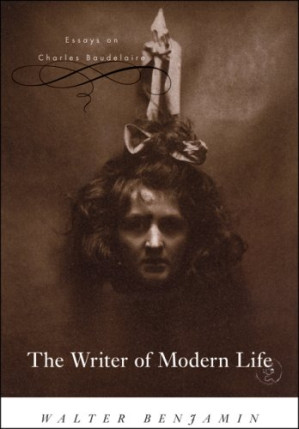
The writer of modern life : essays on Charles Baudelaire 🔍
Walter Benjamin; Rodney Livingstone; Michael W. Jennings; Edmund Jephcott; Harry Zohn; Howard Eiland
Belknap Press: An Imprint of Harvard University Press, Cambridge, Mass, Massachusetts, 2006
英语 [en] · PDF · 6.5MB · 2006 · 📘 非小说类图书 · 🚀/lgli/lgrs/nexusstc/upload/zlib · Save
描述
Walter Benjamin's essays on the great French lyric poet Charles Baudelaire revolutionized not just the way we think about Baudelaire, but our understanding of modernity and modernism as well. In these essays, Benjamin challenges the image of Baudelaire as late-Romantic dreamer, and evokes instead the modern poet caught in a life-or-death struggle with the forces of the urban commodity capitalism that had emerged in Paris around 1850. The Baudelaire who steps forth from these pages is the flâneur who affixes images as he strolls through mercantile Paris, the ragpicker who collects urban detritus only to turn it into poetry, the modern hero willing to be marked by modern life in its contradictions and paradoxes. He is in every instance the modern artist forced to commodify his literary production: "Baudelaire knew how it stood with the poet: as a flâneur he went to the market; to look it over, as he thought, but in reality to find a buyer." Benjamin reveals Baudelaire as a social poet of the very first rank.
The introduction to this volume presents each of Benjamin's essays on Baudelaire in chronological order. The introduction, intended for an undergraduate audience, aims to articulate and analyze the major motifs and problems in these essays, and to reveal the relationship between the essays and Benjamin's other central statements on literature, its criticism, and its relation to the society that produces it.
**
Review
In these essays, written in the 1930s, German critic Benjamin masterfully succeeds in changing our perception of French poet Charles Baudelaire as a late Romantic dreamer. Instead, he shows Baudelaire to be a thoroughly modern writer involved in a life-and-death struggle with that urban commodity, capitalism, which had begun to emerge in Paris in the 1850s. Benjamin portrays Baudelaire as a flaneur--a stroller who roamed the lonely Paris streets lost in the faceless crowd--as well as a lone modern hero searching for a means of selling his poetry. In the urban crowds, all traces of individuality are erased, and Baudelaire's famed "spleen" is actually disgust at that defining aspect of the modern condition. Indeed, in "The Painter of Modern Life," an essay Baudelaire wrote in 1863, he makes several acute observations about his sense of alienation that definitely establish him as a modern writer. Stimulating reading. (Bob T. Ivey Library Journal 2006-09-15)
Brilliant essays. (Richard Wolin The Nation 2006-10-16)
It's depressing to be a critic within a hundred years of Benjamin: he got there first on so many things. The poet Charles Baudelaire died twenty-five years before Benjamin was born, in 1892, but Benjamin writes about him as if they were there together in nineteen-twenties Berlin, making a ruckus. For Benjamin, Baudelaire represented 'the modern.' That doesn't mean that he claims Baudelaire wrote 'about' modernity but that his poetry embodies it. For example, Benjamin notes the influence on Baudelaire of new technologies such as photography, and writes that 'Baudelaire was his own impresario,' an artist who knew that his poems were commodities even before they were done. (Sasha Frere-Jones New Yorker 2006-10-30)
Now comes The Writer of Modern Life: Essays on Charles Baudelaire , edited by Princeton University professor Michael Jennings, and based on the writings of Walter Benjamin, a long dead German genius. Benjamin dissects the author of Les Fleurs du Mal ( The Flowers of Evil ) with a Marxist scalpel, among other unusual literary procedures. Why is all this happening? Maybe because in a unique way we fearful and confused souls recognize that Baudelaire's mordant and yet often exquisitely beautiful poetry and screwed-up life are a kind of mirror noir of our own teetering times. The same violent deaths, political treacheries, religious confrontations--and yet brief Roman candle bursts of loveliness are there. (Leslie H. Whitten Jr. Washington Times )
This is an excellent collection of essays by one of the greatest critics of the first half of the 20th century about one of the greatest poets of the 19th century. In presenting Baudelaire in these landmark studies, Benjamin situates the first truly modern poet against the backdrop of the first truly modern city. From wide brushstrokes about the figure of the flaneur to close readings of specific poems, Benjamin's acumen makes clear that he was that rare breed of critic who could deftly weave the macro and the micro in seamless discussions. (S. Whidden Choice 2007-03-01)
This is an excellent collection of essays by one of the greatest critics of the first half of the 20th century about one of the greatest poets of the 19th century. In presenting Baudelaire in these landmark studies, Benjamin situates the first truly modern poet against the backdrop of the first truly modern city. From wide brushstrokes about the figure of the flaneur to close readings of specific poems, Benjamin's acumen makes clear that he was that rare breed of critic who could deftly weave the macro and the micro in seamless discussions...Jennings' supporting critical apparatus, complete with useful notes at every turn, frames these important texts in a way that reveals not only Benjamin and Baudelaire but also the intersections of modernity, poetry, history, urbanism, and many other fields. (S. Whidden Choice 2007-03-01)
Benjamin planned to write a book on Baudelaire, but it never materialized. With the exception of 'On Some Motifs in Baudelaire,' which appeared in a journal edited by Max Horkheimer and Adorno in 1939, his Baudelaire essays were published posthumously. In the past thirty years, some of them have surfaced in English translations, but all of them have now been retranslated and brought together in a single volume entitled The Writer of Modern Life: Essays on Charles Baudelaire , complete with a valuable introduction and notes by Michael W. Jennings. (Eric Bulson Times Literary Supplement 2007-04-20)
Benjamin's work continues to fascinate and delight because it has something for everyone: the literary critic, art historian, philosopher, urban theorist and architect. Whether he is talking about children's toys, Mickey Mouse, Surrealism, photography, or Kafka, Benjamin has a knack for figuring out what they can tell us about the wider world that produced them. (Eric Bulson Times Literary Supplement 2007-04-20)
About the Author
Walter Benjamin (1892–1940) was the author of many works of literary and cultural analysis.
Michael W. Jennings is Class of 1900 Professor of Modern Languages at Princeton University.
Howard Eiland teaches literature at the Massachusetts Institute of Technology.
Rodney Livingstone is Professor Emeritus in German Studies at the University of Southampton. He is well known as a translator of books by Walter Benjamin, Theodor W. Adorno, and Max Weber, among others.
The introduction to this volume presents each of Benjamin's essays on Baudelaire in chronological order. The introduction, intended for an undergraduate audience, aims to articulate and analyze the major motifs and problems in these essays, and to reveal the relationship between the essays and Benjamin's other central statements on literature, its criticism, and its relation to the society that produces it.
**
Review
In these essays, written in the 1930s, German critic Benjamin masterfully succeeds in changing our perception of French poet Charles Baudelaire as a late Romantic dreamer. Instead, he shows Baudelaire to be a thoroughly modern writer involved in a life-and-death struggle with that urban commodity, capitalism, which had begun to emerge in Paris in the 1850s. Benjamin portrays Baudelaire as a flaneur--a stroller who roamed the lonely Paris streets lost in the faceless crowd--as well as a lone modern hero searching for a means of selling his poetry. In the urban crowds, all traces of individuality are erased, and Baudelaire's famed "spleen" is actually disgust at that defining aspect of the modern condition. Indeed, in "The Painter of Modern Life," an essay Baudelaire wrote in 1863, he makes several acute observations about his sense of alienation that definitely establish him as a modern writer. Stimulating reading. (Bob T. Ivey Library Journal 2006-09-15)
Brilliant essays. (Richard Wolin The Nation 2006-10-16)
It's depressing to be a critic within a hundred years of Benjamin: he got there first on so many things. The poet Charles Baudelaire died twenty-five years before Benjamin was born, in 1892, but Benjamin writes about him as if they were there together in nineteen-twenties Berlin, making a ruckus. For Benjamin, Baudelaire represented 'the modern.' That doesn't mean that he claims Baudelaire wrote 'about' modernity but that his poetry embodies it. For example, Benjamin notes the influence on Baudelaire of new technologies such as photography, and writes that 'Baudelaire was his own impresario,' an artist who knew that his poems were commodities even before they were done. (Sasha Frere-Jones New Yorker 2006-10-30)
Now comes The Writer of Modern Life: Essays on Charles Baudelaire , edited by Princeton University professor Michael Jennings, and based on the writings of Walter Benjamin, a long dead German genius. Benjamin dissects the author of Les Fleurs du Mal ( The Flowers of Evil ) with a Marxist scalpel, among other unusual literary procedures. Why is all this happening? Maybe because in a unique way we fearful and confused souls recognize that Baudelaire's mordant and yet often exquisitely beautiful poetry and screwed-up life are a kind of mirror noir of our own teetering times. The same violent deaths, political treacheries, religious confrontations--and yet brief Roman candle bursts of loveliness are there. (Leslie H. Whitten Jr. Washington Times )
This is an excellent collection of essays by one of the greatest critics of the first half of the 20th century about one of the greatest poets of the 19th century. In presenting Baudelaire in these landmark studies, Benjamin situates the first truly modern poet against the backdrop of the first truly modern city. From wide brushstrokes about the figure of the flaneur to close readings of specific poems, Benjamin's acumen makes clear that he was that rare breed of critic who could deftly weave the macro and the micro in seamless discussions. (S. Whidden Choice 2007-03-01)
This is an excellent collection of essays by one of the greatest critics of the first half of the 20th century about one of the greatest poets of the 19th century. In presenting Baudelaire in these landmark studies, Benjamin situates the first truly modern poet against the backdrop of the first truly modern city. From wide brushstrokes about the figure of the flaneur to close readings of specific poems, Benjamin's acumen makes clear that he was that rare breed of critic who could deftly weave the macro and the micro in seamless discussions...Jennings' supporting critical apparatus, complete with useful notes at every turn, frames these important texts in a way that reveals not only Benjamin and Baudelaire but also the intersections of modernity, poetry, history, urbanism, and many other fields. (S. Whidden Choice 2007-03-01)
Benjamin planned to write a book on Baudelaire, but it never materialized. With the exception of 'On Some Motifs in Baudelaire,' which appeared in a journal edited by Max Horkheimer and Adorno in 1939, his Baudelaire essays were published posthumously. In the past thirty years, some of them have surfaced in English translations, but all of them have now been retranslated and brought together in a single volume entitled The Writer of Modern Life: Essays on Charles Baudelaire , complete with a valuable introduction and notes by Michael W. Jennings. (Eric Bulson Times Literary Supplement 2007-04-20)
Benjamin's work continues to fascinate and delight because it has something for everyone: the literary critic, art historian, philosopher, urban theorist and architect. Whether he is talking about children's toys, Mickey Mouse, Surrealism, photography, or Kafka, Benjamin has a knack for figuring out what they can tell us about the wider world that produced them. (Eric Bulson Times Literary Supplement 2007-04-20)
About the Author
Walter Benjamin (1892–1940) was the author of many works of literary and cultural analysis.
Michael W. Jennings is Class of 1900 Professor of Modern Languages at Princeton University.
Howard Eiland teaches literature at the Massachusetts Institute of Technology.
Rodney Livingstone is Professor Emeritus in German Studies at the University of Southampton. He is well known as a translator of books by Walter Benjamin, Theodor W. Adorno, and Max Weber, among others.
备用文件名
upload/newsarch_ebooks/2017/02/10/0674022874.pdf
备用文件名
upload/aaaaarg/part_011/walter-benjamin-the-writer-of-modern-life-essays-on-charles-baudelaire.pdf
备用文件名
upload/motw_shc_2025_10/shc/The Writer of Modern Life_ Essays on Charl - Walter Benjamin.pdf
备用文件名
motw/The Writer of Modern Life_ Essays on Charl - Walter Benjamin.pdf
备用文件名
nexusstc/The writer of modern life: essays on Charles Baudelaire/5ff452cc5e672b35bef6bb82a912dbb5.pdf
备用文件名
lgli/_502476.5ff452cc5e672b35bef6bb82a912dbb5.pdf
备用文件名
lgrsnf/_502476.5ff452cc5e672b35bef6bb82a912dbb5.pdf
备用文件名
zlib/Poetry/European Poetry/Walter Benjamin/The Writer of Modern Life: Essays on Charles Baudelaire_1184597.pdf
备选标题
Charles Baudelaire. Ein Lyriker im Zeitalter des Hochkapitalismus
备选作者
Walter Benjamin; edited by Michael W. Jennings; translated by Howard Eiland ... [et al.]
备选作者
Walter Benjamin; Michael William Jennings; et al
备选作者
Adobe Acrobat 10.0
备用出版商
Harvard University, Department of Sanskrit & Indian Studies
备用版本
United States, United States of America
备用版本
Cambridge Mass. ; London, 2006
备用版本
November 15, 2006
备用版本
n, PS, 2006
元数据中的注释
2011 12 30
元数据中的注释
lg746579
元数据中的注释
producers:
Adobe Acrobat Pro 10.0.0
Adobe Acrobat Pro 10.0.0
元数据中的注释
{"isbns":["0674022874","9780674022874"],"last_page":317,"publisher":"Belknap Press of Harvard University Press"}
元数据中的注释
Memory of the World Librarian: George Luis Bataille
元数据中的注释
Memory of the World Librarian: any body
元数据中的注释
Selected essays from Walter Benjamin's Gesammelte Schriften
Translated from the German
Includes bibliographical references (p. [213]-291) and index
Translated from the German
Includes bibliographical references (p. [213]-291) and index
备用描述
Walter Benjamin's essays on the great French lyric poet Charles Baudelaire revolutionized not just the way we think about Baudelaire, but our understanding of modernity and modernism as well. In these essays, Benjamin challenges the image of Baudelaire as late-Romantic dreamer, and evokes instead the modern poet caught in a life-or-death struggle with the forces of the urban commodity capitalism that had emerged in Paris around 1850. The Baudelaire who steps forth from these pages is the flâneur who affixes images as he strolls through mercantile Paris, the ragpicker who collects urban detritus only to turn it into poetry, the modern hero willing to be marked by modern life in its contradictions and paradoxes. He is in every instance the modern artist forced to commodify his literary production: "Baudelaire knew how it stood with the poet: as a flâneur he went to the market; to look it over, as he thought, but in reality to find a buyer." Benjamin reveals Baudelaire as a social poet of the very first rank.
The introduction to this volume presents each of Benjamin's essays on Baudelaire in chronological order. The introduction, intended for an undergraduate audience, aims to articulate and analyze the major motifs and problems in these essays, and to reveal the relationship between the essays and Benjamin's other central statements on literature, its criticism, and its relation to the society that produces it.
**
Literary Criticism
European
German
Reference
Contents 7
lntroduttion 11
Baudelaire 37
Paris, the Capital of the Nineteenth Century 40
The Paris of the Second Empire in Baudelaire 56
Central Park 144
On Some Motifs in Baudelaire 180
Notes 223
Index 303
The introduction to this volume presents each of Benjamin's essays on Baudelaire in chronological order. The introduction, intended for an undergraduate audience, aims to articulate and analyze the major motifs and problems in these essays, and to reveal the relationship between the essays and Benjamin's other central statements on literature, its criticism, and its relation to the society that produces it.
**
Literary Criticism
European
German
Reference
Contents 7
lntroduttion 11
Baudelaire 37
Paris, the Capital of the Nineteenth Century 40
The Paris of the Second Empire in Baudelaire 56
Central Park 144
On Some Motifs in Baudelaire 180
Notes 223
Index 303
备用描述
<p>Walter Benjamin's essays on the great French lyric poet Charles Baudelaire revolutionized not just the way we think about Baudelaire, but our understanding of modernity and modernism as well. In these essays, Benjamin challenges the image of Baudelaire as late-Romantic dreamer, and evokes instead the modern poet caught in a life-or-death struggle with the forces of the urban commodity capitalism that had emerged in Paris around 1850. The Baudelaire who steps forth from these pages is the flâneur who affixes images as he strolls through mercantile Paris, the ragpicker who collects urban detritus only to turn it into poetry, the modern hero willing to be marked by modern life in its contradictions and paradoxes. He is in every instance the modern artist forced to commodify his literary production: "Baudelaire knew how it stood with the poet: as a flâneur he went to the market; to look it over, as he thought, but in reality to find a buyer." Benjamin reveals Baudelaire as a social poet of the very first rank.</p>
<p>The introduction to this volume presents each of Benjamin's essays on Baudelaire in chronological order. The introduction, intended for an undergraduate audience, aims to articulate and analyze the major motifs and problems in these essays, and to reveal the relationship between the essays and Benjamin's other central statements on literature, its criticism, and its relation to the society that produces it.</p>
<p>The introduction to this volume presents each of Benjamin's essays on Baudelaire in chronological order. The introduction, intended for an undergraduate audience, aims to articulate and analyze the major motifs and problems in these essays, and to reveal the relationship between the essays and Benjamin's other central statements on literature, its criticism, and its relation to the society that produces it.</p>
备用描述
Walter Benjamin's essays on the great French lyric poet Charles Baudelaire revolutionized not just the way we think about Baudelaire, but our understanding of modernity and modernism as well. In these essays, Benjamin challenges the image of Baudelaire as late-Romantic dreamer, and evokes instead the modern poet caught in a life-or-death struggle with the forces of the urban commodity capitalism that had emerged in Paris around 1850. The Baudelaire who steps forth from these pages is the flAneur who affixes images as he strolls through mercantile Paris, the ragpicker who collects urban detritus only to turn it into poetry, the modern hero willing to be marked by modern life in its contradictions and paradoxes. He is in every instance the modern artist forced to commodify his literary production: "Baudelaire knew how it stood with the poet: as a flAneur he went to the market; to look it over, as he thought, but in reality to find a buyer." Benjamin reveals Baudelaire as a social poet of the very first rank.
The introduction to this volume presents each of Benjamin's essays on Baudelaire in chronological order. The introduction, intended for an undergraduate audience, aims to articulate and analyze the major motifs and problems in these essays, and to reveal the relationship between the essays and Benjamin's other central statements on literature, its criticism, and its relation to the society that produces it.
The introduction to this volume presents each of Benjamin's essays on Baudelaire in chronological order. The introduction, intended for an undergraduate audience, aims to articulate and analyze the major motifs and problems in these essays, and to reveal the relationship between the essays and Benjamin's other central statements on literature, its criticism, and its relation to the society that produces it.
备用描述
Contents......Page 7
lntroduttion......Page 11
Baudelaire......Page 37
Paris, the Capital of the Nineteenth Century......Page 40
The Paris of the Second Empire in Baudelaire......Page 56
Central Park......Page 144
On Some Motifs in Baudelaire......Page 180
Notes......Page 223
Index......Page 303
lntroduttion......Page 11
Baudelaire......Page 37
Paris, the Capital of the Nineteenth Century......Page 40
The Paris of the Second Empire in Baudelaire......Page 56
Central Park......Page 144
On Some Motifs in Baudelaire......Page 180
Notes......Page 223
Index......Page 303
开源日期
2012-02-04
🚀 快速下载
成为会员以支持书籍、论文等的长期保存。为了感谢您对我们的支持,您将获得高速下载权益。❤️
如果您在本月捐款,您将获得双倍的快速下载次数。
🐢 低速下载
由可信的合作方提供。 更多信息请参见常见问题解答。 (可能需要验证浏览器——无限次下载!)
- 低速服务器(合作方提供) #1 (稍快但需要排队)
- 低速服务器(合作方提供) #2 (稍快但需要排队)
- 低速服务器(合作方提供) #3 (稍快但需要排队)
- 低速服务器(合作方提供) #4 (稍快但需要排队)
- 低速服务器(合作方提供) #5 (无需排队,但可能非常慢)
- 低速服务器(合作方提供) #6 (无需排队,但可能非常慢)
- 低速服务器(合作方提供) #7 (无需排队,但可能非常慢)
- 低速服务器(合作方提供) #8 (无需排队,但可能非常慢)
- 低速服务器(合作方提供) #9 (无需排队,但可能非常慢)
- 下载后: 在我们的查看器中打开
所有选项下载的文件都相同,应该可以安全使用。即使这样,从互联网下载文件时始终要小心。例如,确保您的设备更新及时。
外部下载
-
对于大文件,我们建议使用下载管理器以防止中断。
推荐的下载管理器:JDownloader -
您将需要一个电子书或 PDF 阅读器来打开文件,具体取决于文件格式。
推荐的电子书阅读器:Anna的档案在线查看器、ReadEra和Calibre -
使用在线工具进行格式转换。
推荐的转换工具:CloudConvert和PrintFriendly -
您可以将 PDF 和 EPUB 文件发送到您的 Kindle 或 Kobo 电子阅读器。
推荐的工具:亚马逊的“发送到 Kindle”和djazz 的“发送到 Kobo/Kindle” -
支持作者和图书馆
✍️ 如果您喜欢这个并且能够负担得起,请考虑购买原版,或直接支持作者。
📚 如果您当地的图书馆有这本书,请考虑在那里免费借阅。
下面的文字仅以英文继续。
总下载量:
“文件的MD5”是根据文件内容计算出的哈希值,并且基于该内容具有相当的唯一性。我们这里索引的所有影子图书馆都主要使用MD5来标识文件。
一个文件可能会出现在多个影子图书馆中。有关我们编译的各种数据集的信息,请参见数据集页面。
有关此文件的详细信息,请查看其JSON 文件。 Live/debug JSON version. Live/debug page.