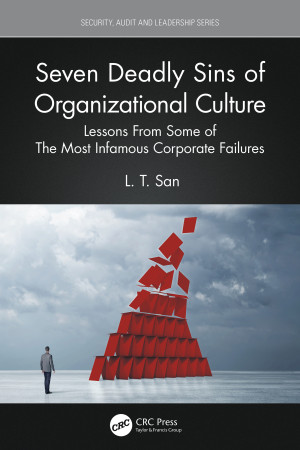
Seven Deadly Sins of Organizational Culture : Lessons From Some of The Most Infamous Corporate Failures 🔍
L. T. San
CRC Press, CRC Press (Unlimited), Boca Raton, 2023
英语 [en] · EPUB · 2.0MB · 2023 · 📗 未知类型的图书 · 🚀/zlib · Save
描述
This book is about the primary symptoms present in a dysfunctional culture that could have devastating outcomes for any organization. The book outlines each of the seven sins in each chapter. Each of the first seven chapters (Chapter 1, Chapter 2, Chapter 3, Chapter 4, Chapter 5, Chapter 6 and Chapter 7) starts with a famous quote related to each of the sins and then immediately recounts stories ripped from the headlines describing well-known corporate failures but with a personal touch from former employees who experienced those stories from inside the company (The sources for these stories are all cited in their Bibliographies). The seven sins of organizational culture are linked with seven different corporate scandals that serve as a “lesson learned” as well as seven stories of organizations that have been successful with each respective organizational attribute as follows: In Chapter 8, the author offers an approach for assessing an organization’s culture by providing seven ways to measure the different drivers of organizational culture. The ideas for how to measure corporate culture is original content, with some references to existing frameworks (all cited in the Bibliography). Finally, in Chapter 9, the author offers a step-by-step outline for transforming the culture. The chapter starts with a story about how Korean Air suffered multiple crashes due to their corporate culture but were able to successfully transform their culture (The source for the Korean Air story is cited in the Bibliograhy). There are seven appendices, most of which are by the author except for the maturity of risk management, which references an OECD (government entity) risk management maturity framework.
备选作者
San, L. T.
备用出版商
Taylor & Francis Ltd
备用出版商
Routledge
备用版本
Security, Audit and Leadership Series, 2023
备用版本
United Kingdom and Ireland, United Kingdom
备用描述
This book is about the primary symptoms present in a dysfunctional culture that could have devastating outcomes for any organization. The book outlines each of the seven sins in each chapter.
Each of the first seven chapters (Chapters 1–7) starts with a famous quote related to each of the sins and then immediately recounts stories ripped from the headlines describing well-known corporate failures but with a personal touch from former employees who experienced those stories from inside the company. (The sources for these stories are all cited in their Bibliographies).
The seven sins of organizational culture are linked with seven different corporate scandals that serve as a "lesson learned" as well as seven stories of organizations that have been successful with each respective organizational attribute as follows:
Flawed Mission and Misaligned Values uses WorldCom as the lesson learned and Patagonia as the success case
Flawed Incentives uses Wells Fargo as the lesson learned and Bridgeport Financial as the success case
Lack of Accountability uses HSBC as the lesson learned and McDonald's as the success case
Ineffective Talent Management uses Enron as the lesson learned and Southwest Airlines as the success case
Lack of Transparency uses Theranos as the lesson learned and Zappos as the success case
Ineffective Risk Management uses the 2008 mortgage industry collapse as the lesson learned and Michael Burry as the success case
Ineffective Leadership summarizes all of the foregoing sins as failures of Leadership
In each chapter and for each organizational sin, the author offers seven attributes of a healthy culture to counter the cultural dysfunction. The seven healthy attributes for each of the seven sins are all original content.
In Chapter 8, the author offers an approach for assessing an organization's culture by providing seven ways to measure the different drivers of organizational culture. The ideas for how to measure corporate culture is original content, with some references to existing frameworks (all cited in the Bibliography),
Finally, in Chapter 9, the author offers a step-by-step outline for transforming the culture. The chapter starts with a story about how Korean Air suffered multiple crashes due to their corporate culture but were able to successfully transform their culture. (The source for the Korean Air story is cited in the Bibliography).
There are seven appendices, most of which are by the author except for the maturity of risk management, which references an OECD (government entity) risk management maturity framework.
Each of the first seven chapters (Chapters 1–7) starts with a famous quote related to each of the sins and then immediately recounts stories ripped from the headlines describing well-known corporate failures but with a personal touch from former employees who experienced those stories from inside the company. (The sources for these stories are all cited in their Bibliographies).
The seven sins of organizational culture are linked with seven different corporate scandals that serve as a "lesson learned" as well as seven stories of organizations that have been successful with each respective organizational attribute as follows:
Flawed Mission and Misaligned Values uses WorldCom as the lesson learned and Patagonia as the success case
Flawed Incentives uses Wells Fargo as the lesson learned and Bridgeport Financial as the success case
Lack of Accountability uses HSBC as the lesson learned and McDonald's as the success case
Ineffective Talent Management uses Enron as the lesson learned and Southwest Airlines as the success case
Lack of Transparency uses Theranos as the lesson learned and Zappos as the success case
Ineffective Risk Management uses the 2008 mortgage industry collapse as the lesson learned and Michael Burry as the success case
Ineffective Leadership summarizes all of the foregoing sins as failures of Leadership
In each chapter and for each organizational sin, the author offers seven attributes of a healthy culture to counter the cultural dysfunction. The seven healthy attributes for each of the seven sins are all original content.
In Chapter 8, the author offers an approach for assessing an organization's culture by providing seven ways to measure the different drivers of organizational culture. The ideas for how to measure corporate culture is original content, with some references to existing frameworks (all cited in the Bibliography),
Finally, in Chapter 9, the author offers a step-by-step outline for transforming the culture. The chapter starts with a story about how Korean Air suffered multiple crashes due to their corporate culture but were able to successfully transform their culture. (The source for the Korean Air story is cited in the Bibliography).
There are seven appendices, most of which are by the author except for the maturity of risk management, which references an OECD (government entity) risk management maturity framework.
开源日期
2025-07-15
We strongly recommend that you support the author by buying or donating on their personal website, or borrowing in your local library.
🚀 快速下载
成为会员以支持书籍、论文等的长期保存。为了感谢您对我们的支持,您将获得高速下载权益。❤️
🐢 低速下载
由可信的合作方提供。 更多信息请参见常见问题解答。 (可能需要验证浏览器——无限次下载!)
- 低速服务器(合作方提供) #1 (稍快但需要排队)
- 低速服务器(合作方提供) #2 (稍快但需要排队)
- 低速服务器(合作方提供) #3 (稍快但需要排队)
- 低速服务器(合作方提供) #4 (稍快但需要排队)
- 低速服务器(合作方提供) #5 (无需排队,但可能非常慢)
- 低速服务器(合作方提供) #6 (无需排队,但可能非常慢)
- 低速服务器(合作方提供) #7 (无需排队,但可能非常慢)
- 低速服务器(合作方提供) #8 (无需排队,但可能非常慢)
- 低速服务器(合作方提供) #9 (无需排队,但可能非常慢)
- 下载后: 在我们的查看器中打开
所有选项下载的文件都相同,应该可以安全使用。即使这样,从互联网下载文件时始终要小心。例如,确保您的设备更新及时。
外部下载
-
对于大文件,我们建议使用下载管理器以防止中断。
推荐的下载管理器:JDownloader -
您将需要一个电子书或 PDF 阅读器来打开文件,具体取决于文件格式。
推荐的电子书阅读器:Anna的档案在线查看器、ReadEra和Calibre -
使用在线工具进行格式转换。
推荐的转换工具:CloudConvert和PrintFriendly -
您可以将 PDF 和 EPUB 文件发送到您的 Kindle 或 Kobo 电子阅读器。
推荐的工具:亚马逊的“发送到 Kindle”和djazz 的“发送到 Kobo/Kindle” -
支持作者和图书馆
✍️ 如果您喜欢这个并且能够负担得起,请考虑购买原版,或直接支持作者。
📚 如果您当地的图书馆有这本书,请考虑在那里免费借阅。
下面的文字仅以英文继续。
总下载量:
“文件的MD5”是根据文件内容计算出的哈希值,并且基于该内容具有相当的唯一性。我们这里索引的所有影子图书馆都主要使用MD5来标识文件。
一个文件可能会出现在多个影子图书馆中。有关我们编译的各种数据集的信息,请参见数据集页面。
有关此文件的详细信息,请查看其JSON 文件。 Live/debug JSON version. Live/debug page.