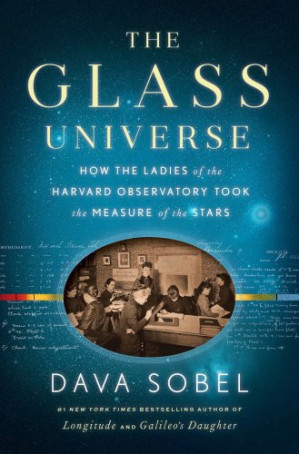
The Glass Universe : How the Ladies of the Harvard Observatory Took the Measure of the Stars 🔍
Harvard College Observatory.;Sobel, Dava
Penguin Publishing Group;Penguin Random House LLC, 1st, First Edition, PS, 2016
英语 [en] · EPUB · 11.3MB · 2016 · 📘 非小说类图书 · 🚀/lgli/lgrs/nexusstc/zlib · Save
描述
Part one: The colors of starlight. Mrs. Draper's intent ; What Miss Maury saw ; Miss Bruce's largesse ; Stella nova ; Bailey's picture from Peru -- Part two: Oh, be a fine girl, kiss me!. Mrs. Fleming's title ; Pickering's "harem" ; Lingua franca ; Miss Leavitt's relationship ; The Pickering fellows -- Part three: In the depths above. Shapley's "kilo-girl" hours ; Miss Payne's thesis ; The Observatory Pinafore ; Miss Cannon's prize ; The lifetimes of stars -- Some highlights in the history of the Harvard College Observatory -- A catalogue of Harvard astronomers, assistants, and associates.;The little-known true story of the unexpected and remarkable contributions to astronomy made by a group of women working in the Harvard College Observatory from the late 1800s through the mid-1900s. --
备用文件名
lgrsnf/Z:\Bibliotik_\9\156.34.80.41\Dava Sobel-The Glass Universe_4532.epub
备用文件名
nexusstc/The Glass Universe: how the ladies of the Harvard Observatory took the measure of the stars/6dbf0098de513ea087d5898049a87fd4.epub
备用文件名
zlib/History/American Studies/Harvard College Observatory.;Sobel, Dava/The glass universe: how the ladies of the Harvard Observatory took the measure of the stars_5934524.epub
备选作者
Dava Sobel
备用出版商
Putnam Publishing Group, The
备用出版商
Viking Children's Books
备用出版商
Penguin Books
备用出版商
Puffin Books
备用出版商
4th Estate
备用版本
Penguin Random House LLC, How the ladies of the Harvard Observatory took the measure of the stars, 2016
备用版本
Place of publication not identified, 2016
备用版本
United States, United States of America
备用版本
New York, New York, 2016
备用版本
Illustrated, 2016
备用版本
Reprint, 2016
备用版本
London, 2016
元数据中的注释
lg2634627
元数据中的注释
{"edition":"1","isbns":["0670016950","069814869X","9780670016952","9780698148697"],"last_page":280,"publisher":"Penguin Group"}
备用描述
From #1 New York Times bestselling author Dava Sobel, t he "inspiring" ( People ), little-known true story of women's landmark contributions to astronomy
A New York Times Book Review Notable Book of 2017
Named one of the best books of the year by NPR, The Economist, Smithsonian, Nature, and NPR's Science Friday
Nominated for the PEN/E.O. Wilson Literary Science Writing Award
"A joy to read.” — The Wall Street Journal
In the mid-nineteenth century, the Harvard College Observatory began employing women as calculators, or “human computers,” to interpret the observations their male counterparts made via telescope each night. At the outset this group included the wives, sisters, and daughters of the resident astronomers, but soon the female corps included graduates of the new women's colleges—Vassar, Wellesley, and Smith. As photography transformed the practice of astronomy, the ladies turned from computation to studying the stars captured nightly on glass photographic plates.
The “glass universe” of half a million plates that Harvard amassed over the ensuing decades—through the generous support of Mrs. Anna Palmer Draper, the widow of a pioneer in stellar photography—enabled the women to make extraordinary discoveries that attracted worldwide acclaim. They helped discern what stars were made of, divided the stars into meaningful categories for further research, and found a way to measure distances across space by starlight. Their ranks included Williamina Fleming, a Scottish woman originally hired as a maid who went on to identify ten novae and more than three hundred variable stars; Annie Jump Cannon, who designed a stellar classification system that was adopted by astronomers the world over and is still in use; and Dr. Cecilia Helena Payne, who in 1956 became the first ever woman professor of astronomy at Harvard—and Harvard’s first female department chair.
Elegantly written and enriched by excerpts from letters, diaries, and memoirs, The Glass Universe is the hidden history of the women whose contributions to the burgeoning field of astronomy forever changed our understanding of the stars and our place in the universe.
A New York Times Book Review Notable Book of 2017
Named one of the best books of the year by NPR, The Economist, Smithsonian, Nature, and NPR's Science Friday
Nominated for the PEN/E.O. Wilson Literary Science Writing Award
"A joy to read.” — The Wall Street Journal
In the mid-nineteenth century, the Harvard College Observatory began employing women as calculators, or “human computers,” to interpret the observations their male counterparts made via telescope each night. At the outset this group included the wives, sisters, and daughters of the resident astronomers, but soon the female corps included graduates of the new women's colleges—Vassar, Wellesley, and Smith. As photography transformed the practice of astronomy, the ladies turned from computation to studying the stars captured nightly on glass photographic plates.
The “glass universe” of half a million plates that Harvard amassed over the ensuing decades—through the generous support of Mrs. Anna Palmer Draper, the widow of a pioneer in stellar photography—enabled the women to make extraordinary discoveries that attracted worldwide acclaim. They helped discern what stars were made of, divided the stars into meaningful categories for further research, and found a way to measure distances across space by starlight. Their ranks included Williamina Fleming, a Scottish woman originally hired as a maid who went on to identify ten novae and more than three hundred variable stars; Annie Jump Cannon, who designed a stellar classification system that was adopted by astronomers the world over and is still in use; and Dr. Cecilia Helena Payne, who in 1956 became the first ever woman professor of astronomy at Harvard—and Harvard’s first female department chair.
Elegantly written and enriched by excerpts from letters, diaries, and memoirs, The Glass Universe is the hidden history of the women whose contributions to the burgeoning field of astronomy forever changed our understanding of the stars and our place in the universe.
备用描述
New from #1 New York Times bestselling author Dava Sobel, the'inspiring'(People), little-known true story of women's landmark contributions to astronomy'A joy to read."--The Wall Street Journal. Named one of the best books of the year by NPR, The Economist, Smithsonian, Nature, and NPR's Science Friday. Nominated for the PEN/E.O. Wilson Literary Science Writing Award In the mid-nineteenth century, the Harvard College Observatory began employing women as calculators, or "human computers," to interpret the observations their male counterparts made via telescope each night. At the outset this group included the wives, sisters, and daughters of the resident astronomers, but soon the female corps included graduates of the new women's colleges--Vassar, Wellesley, and Smith. As photography transformed the practice of astronomy, the ladies turned from computation to studying the stars captured nightly on glass photographic plates. The "glass universe" of half a million plates that Harvard amassed over the ensuing decades--through the generous support of Mrs. Anna Palmer Draper, the widow of a pioneer in stellar photography--enabled the women to make extraordinary discoveries that attracted worldwide acclaim. They helped discern what stars were made of, divided the stars into meaningful categories for further research, and found a way to measure distances across space by starlight. Their ranks included Williamina Fleming, a Scottish woman originally hired as a maid who went on to identify ten novae and more than three hundred variable stars; Annie Jump Cannon, who designed a stellar classification system that was adopted by astronomers the world over and is still in use; and Dr. Cecilia Helena Payne, who in 1956 became the first ever woman professor of astronomy at Harvard--and Harvard's first female department chair. Elegantly written and enriched by excerpts from letters, diaries, and memoirs, The Glass Universe is the hidden history of the women whose contributions to the burgeoning field of astronomy forever changed our understanding of the stars and our place in the universe
备用描述
-- The Sixth Extinction? In the mid-nineteenth century, the Harvard College Observatory began employing women as calculators, or "human computers," to interpret the observations their male counterparts?made via telescope each night. At the outset this group included the wives, sisters, and daughters of the resident astronomers, but soon the female corps included graduates of the new women's colleges?Vassar, Wellesley, and Smith. As photography transformed the practice of astronomy, the ladies turned from computation to studying the stars captured nightly on glass photographic plates. The "glass universe" of half a million plates that Harvard amassed over the ensuing decades?through the generous support of Mrs. Anna Palmer Draper, the widow of a pioneer in stellar photography?enabled the women to make extraordinary discoveries that attracted worldwide acclaim. They helped discern what stars were made of, divided the stars into meaningful categories for further research, and found a way to measure distances across space by starlight. Their ranks included Williamina Fleming, a Scottish woman originally hired as a maid who went on to identify ten novae and more than three hundred variable stars; Annie Jump Cannon, who designed a stellar classification system that was adopted by astronomers the world over and is still in use; and Dr. Cecilia Helena Payne,?who in 1956 became the first ever woman professor of astronomy at Harvard?and Harvard?s first female department chair. Elegantly written and enriched by excerpts from letters, diaries, and memoirs, The Glass Universe?is the hidden history of the women whose contributions to the burgeoning field of astronomy forever changed our understanding of the stars and our place in the universe
备用描述
In the mid-nineteenth century, the Harvard College Observatory began employing women as calculators, or "human computers," to interpret the observations their male counterparts made via telescope each night. At the outset this group included the wives, sisters, and daughters of the resident astronomers, but soon the female corps included graduates of the new women's colleges -- Vassar, Wellesley, and Smith. As photography transformed the practice of astronomy, the ladies turned from computation to studying the stars captured nightly on glass photographic plates. The "glass universe" of half a million plates that Harvard amassed over the ensuing decades -- through the generous support of Mrs. Anna Palmer Draper, the widow of a pioneer in stellar photography -- enabled the women to make extraordinary discoveries that attracted worldwide acclaim. They helped discern what stars were made of, divided the stars into meaningful categories for further research, and found a way to measure distances across space by starlight. Their ranks included Williamina Fleming, a Scottish woman originally hired as a maid who went on to identify ten novae and more than three hundred variable stars; Annie Jump Cannon, who designed a stellar classification system that was adopted by astronomers the world over and is still in use; and Dr. Cecilia Helena Payne, who in 1956 became the first ever woman professor of astronomy at Harvard -- and Harvard's first female department chair
备用描述
The Little-known True Story Of The Unexpected And Remarkable Contributions To Astronomy Made By A Group Of Women Working In The Harvard College Observatory From The Late 1800s Through The Mid-1900s. -- Part One: The Colors Of Starlight. Mrs. Draper's Intent ; What Miss Maury Saw ; Miss Bruce's Largesse ; Stella Nova ; Bailey's Picture From Peru -- Part Two: Oh, Be A Fine Girl, Kiss Me!. Mrs. Fleming's Title ; Pickering's Harem ; Lingua Franca ; Miss Leavitt's Relationship ; The Pickering Fellows -- Part Three: In The Depths Above. Shapley's Kilo-girl Hours ; Miss Payne's Thesis ; The Observatory Pinafore ; Miss Cannon's Prize ; The Lifetimes Of Stars -- Some Highlights In The History Of The Harvard College Observatory -- A Catalogue Of Harvard Astronomers, Assistants, And Associates. Dava Sobel. Includes Bibliographical References (pages 299-305) And Index.
备用描述
In the mid-nineteenth century, the Harvard College Observatory began employing women as "human computers" to interpret the observations their male counterparts made via telescope each night. As photography transformed the practice of astronomy, the ladies turned from computation to studying the stars captured nightly on glass photographic plates. The support of Mrs. Anna Palmer Draper, the widow of a pioneer in stellar photography, enabled the women to discern what stars were made of, divide the stars into meaningful categories for further research, and find a way to measure distances across space by starlight. Sobel tells the hidden history of the women whose contributions to the burgeoning field of astronomy forever changed our understanding of the stars and our place in the universe
备用描述
Shares the story of the scientific contributions of a group of women working at the Harvard College Observatory from the late 1800s through the mid-twentieth century, tracing their collection of star observations captured nightly on glass photographic plates
备用描述
The little-known true story of the unexpected and remarkable contributions to astronomy made by a group of women working in the Harvard College Observatory from the late 1800s through the mid-1900s. -- Provided by publisher
备用描述
xii, 324 pages, 16 unnumbered pages of plates : illustrations (some color) ; 24 cm1330L Lexile
开源日期
2020-07-26
🚀 快速下载
成为会员以支持书籍、论文等的长期保存。为了感谢您对我们的支持,您将获得高速下载权益。❤️
如果您在本月捐款,您将获得双倍的快速下载次数。
🐢 低速下载
由可信的合作方提供。 更多信息请参见常见问题解答。 (可能需要验证浏览器——无限次下载!)
- 低速服务器(合作方提供) #1 (稍快但需要排队)
- 低速服务器(合作方提供) #2 (稍快但需要排队)
- 低速服务器(合作方提供) #3 (稍快但需要排队)
- 低速服务器(合作方提供) #4 (稍快但需要排队)
- 低速服务器(合作方提供) #5 (无需排队,但可能非常慢)
- 低速服务器(合作方提供) #6 (无需排队,但可能非常慢)
- 低速服务器(合作方提供) #7 (无需排队,但可能非常慢)
- 低速服务器(合作方提供) #8 (无需排队,但可能非常慢)
- 低速服务器(合作方提供) #9 (无需排队,但可能非常慢)
- 下载后: 在我们的查看器中打开
所有选项下载的文件都相同,应该可以安全使用。即使这样,从互联网下载文件时始终要小心。例如,确保您的设备更新及时。
外部下载
-
对于大文件,我们建议使用下载管理器以防止中断。
推荐的下载管理器:JDownloader -
您将需要一个电子书或 PDF 阅读器来打开文件,具体取决于文件格式。
推荐的电子书阅读器:Anna的档案在线查看器、ReadEra和Calibre -
使用在线工具进行格式转换。
推荐的转换工具:CloudConvert和PrintFriendly -
您可以将 PDF 和 EPUB 文件发送到您的 Kindle 或 Kobo 电子阅读器。
推荐的工具:亚马逊的“发送到 Kindle”和djazz 的“发送到 Kobo/Kindle” -
支持作者和图书馆
✍️ 如果您喜欢这个并且能够负担得起,请考虑购买原版,或直接支持作者。
📚 如果您当地的图书馆有这本书,请考虑在那里免费借阅。
下面的文字仅以英文继续。
总下载量:
“文件的MD5”是根据文件内容计算出的哈希值,并且基于该内容具有相当的唯一性。我们这里索引的所有影子图书馆都主要使用MD5来标识文件。
一个文件可能会出现在多个影子图书馆中。有关我们编译的各种数据集的信息,请参见数据集页面。
有关此文件的详细信息,请查看其JSON 文件。 Live/debug JSON version. Live/debug page.