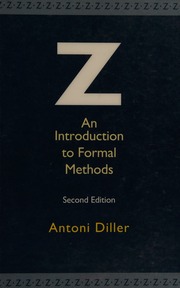
Z: An Introduction to Formal Methods, 2nd Edition 🔍
Diller, Antoni
Chichester, West Sussex, England ; New York : Wiley & Sons, 2nd ed., Chichester, West Sussex, England, New York, England, 1994
英语 [en] · PDF · 16.2MB · 1994 · 📗 未知类型的图书 · 🚀/ia/zlib · Save
描述
xix, 374 pages : 25 cm
This tutorial introduction to Z takes as its starting point the practical uses of this formal specification language. Case studies are used throughout the text to illustrate all aspects of Z. This edition includes new information on how to relate Z specifications to actual program codes
Includes bibliographical references (pages 357-362) and index
1. Introduction. 1.1. What is Z? 1.2. Specification Foretaste. 1.3. Numbers -- 2. First-order Logic. 2.1. Propositional Calculus. 2.2. Predicate Calculus -- 3. Set Theory. 3.1. Ways of Making Sets. 3.2. Relations between Sets (and their Members). 3.3. Some Special Sets. 3.4. Operations on Sets -- 4. Internal Telephone Directory. 4.2. Cartesian Products and Relations. 4.3. The State Space. 4.4. Adding an Entry to the Database. 4.5. Interrogating the Database by Person. 4.6. Interrogating the Database by Number. 4.7. Removing an Entry from the Database. 4.8. Someone Joining the University. 4.9. Someone Leaving the University. 4.10. Specifying a User-interface. 4.11. Presenting a Formal Specification -- 5. More about Relations and Schemas. 5.1. Relations. 5.2. Schemas -- 6. Functions. 6.2. Specifying a Weather Map. 6.3. Constrained Functions. 6.4. Function Definition. 6.5. Modelling Arrays -- 7. Sequences. 7.1. Fundamental Ideas. 7.2. Defining Sequences. 7.3. Sequence Manipulating Functions
8. Bags. 8.2. Bag Manipulating Functions. 8.3. A Specification of Sorting. 8.4. The Specification of a Vending Machine -- 9. Free Types. 9.2. Lists as a Free Type. 9.3. Specifying Sequence Proofs. 9.4. The Formal Treatment of Free Types -- 10. Formal Proof. 10.1. Propositional Calculus. 10.2. Predicate Calculus. 10.3. Theorems, Sequents and Themata -- 11. Rigorous Proof. 11.2. Reasoning about Sets. 11.3. Reasoning about Tuples. 11.4. Mathematical Induction. 11.5. Induction for Sequences -- 12. Immanent Reasoning. 12.2. Specifying a Classroom. 12.3. Schemas and Formulas. 12.4. The Initiation Proof Obligation. 12.5. Constructing Theories about Specifications. 12.6. Investigating Preconditions. 12.7. Totality. 12.8. Operation Refinement -- 13. Reification and Decomposition. 13.2. Modelling Sets by Sequences. 13.3. Reification and Decomposition using Schemas -- 14. Floyd-Hoare Logic. 14.2. Hoare Triples. 14.3. Start Sequents and Themata. 14.4. Total Correctness. 14.5. Using Mathematical Variables
14.6. Verification Conditions -- 15. Getting to Program Code. 15.1. The Transformation Recipe. 15.2. Modelling a Simple Bank Account. 15.3. A Sales Database -- 16. Two Small Case Studies. 16.1. The Bill of Materials Problem. 16.2. A Route Planner -- 17. Wing's Library Problem. 17.2. Basic Types and User-defined Sets. 17.3. The State of the System. 17.4. The Operations -- 18. Partial Specification of a Text-editor. 18.2. Basic Types. 18.3. The State Space. 18.4. The Operations. 18.5. The Doc2 State. 18.6. The Doc3 Model -- 19. Animation using Miranda. 19.2. The Animation -- 20. Methods of Definition. 20.1. Axiomatic Description. 20.2. Generic Definition. 20.3. Schema Definition -- 21. Formal Definitions. 21.1. Sets. 21.2. Relations. 21.3. Functions. 21.4. Sequences. 21.5. Bags -- 22. Rules and Obligations. 22.1. First-order Logic. 22.2. Reasoning about Sets. 22.3. Reasoning about Tuples. 22.4. Floyd-Hoare Logic. 22.5. Induction. 22.6. Proof Obligations for Refinement
App. A Variable Conventions -- App. B Answers to Exercises -- App. C Glossary of Terms -- App. D Glossary of Symbols
Legacy 2018
This tutorial introduction to Z takes as its starting point the practical uses of this formal specification language. Case studies are used throughout the text to illustrate all aspects of Z. This edition includes new information on how to relate Z specifications to actual program codes
Includes bibliographical references (pages 357-362) and index
1. Introduction. 1.1. What is Z? 1.2. Specification Foretaste. 1.3. Numbers -- 2. First-order Logic. 2.1. Propositional Calculus. 2.2. Predicate Calculus -- 3. Set Theory. 3.1. Ways of Making Sets. 3.2. Relations between Sets (and their Members). 3.3. Some Special Sets. 3.4. Operations on Sets -- 4. Internal Telephone Directory. 4.2. Cartesian Products and Relations. 4.3. The State Space. 4.4. Adding an Entry to the Database. 4.5. Interrogating the Database by Person. 4.6. Interrogating the Database by Number. 4.7. Removing an Entry from the Database. 4.8. Someone Joining the University. 4.9. Someone Leaving the University. 4.10. Specifying a User-interface. 4.11. Presenting a Formal Specification -- 5. More about Relations and Schemas. 5.1. Relations. 5.2. Schemas -- 6. Functions. 6.2. Specifying a Weather Map. 6.3. Constrained Functions. 6.4. Function Definition. 6.5. Modelling Arrays -- 7. Sequences. 7.1. Fundamental Ideas. 7.2. Defining Sequences. 7.3. Sequence Manipulating Functions
8. Bags. 8.2. Bag Manipulating Functions. 8.3. A Specification of Sorting. 8.4. The Specification of a Vending Machine -- 9. Free Types. 9.2. Lists as a Free Type. 9.3. Specifying Sequence Proofs. 9.4. The Formal Treatment of Free Types -- 10. Formal Proof. 10.1. Propositional Calculus. 10.2. Predicate Calculus. 10.3. Theorems, Sequents and Themata -- 11. Rigorous Proof. 11.2. Reasoning about Sets. 11.3. Reasoning about Tuples. 11.4. Mathematical Induction. 11.5. Induction for Sequences -- 12. Immanent Reasoning. 12.2. Specifying a Classroom. 12.3. Schemas and Formulas. 12.4. The Initiation Proof Obligation. 12.5. Constructing Theories about Specifications. 12.6. Investigating Preconditions. 12.7. Totality. 12.8. Operation Refinement -- 13. Reification and Decomposition. 13.2. Modelling Sets by Sequences. 13.3. Reification and Decomposition using Schemas -- 14. Floyd-Hoare Logic. 14.2. Hoare Triples. 14.3. Start Sequents and Themata. 14.4. Total Correctness. 14.5. Using Mathematical Variables
14.6. Verification Conditions -- 15. Getting to Program Code. 15.1. The Transformation Recipe. 15.2. Modelling a Simple Bank Account. 15.3. A Sales Database -- 16. Two Small Case Studies. 16.1. The Bill of Materials Problem. 16.2. A Route Planner -- 17. Wing's Library Problem. 17.2. Basic Types and User-defined Sets. 17.3. The State of the System. 17.4. The Operations -- 18. Partial Specification of a Text-editor. 18.2. Basic Types. 18.3. The State Space. 18.4. The Operations. 18.5. The Doc2 State. 18.6. The Doc3 Model -- 19. Animation using Miranda. 19.2. The Animation -- 20. Methods of Definition. 20.1. Axiomatic Description. 20.2. Generic Definition. 20.3. Schema Definition -- 21. Formal Definitions. 21.1. Sets. 21.2. Relations. 21.3. Functions. 21.4. Sequences. 21.5. Bags -- 22. Rules and Obligations. 22.1. First-order Logic. 22.2. Reasoning about Sets. 22.3. Reasoning about Tuples. 22.4. Floyd-Hoare Logic. 22.5. Induction. 22.6. Proof Obligations for Refinement
App. A Variable Conventions -- App. B Answers to Exercises -- App. C Glossary of Terms -- App. D Glossary of Symbols
Legacy 2018
备用文件名
ia/zintroductiontof0000dill.pdf
备选作者
Antoni Diller
备用出版商
Jossey-Bass, Incorporated Publishers
备用出版商
John Wiley & Sons, Incorporated
备用出版商
WILEY COMPUTING Publisher
备用版本
United States, United States of America
备用版本
2nd ed, Chichester [etc, 1994
备用版本
2 Sub edition, June 16, 1994
备用版本
2, PS, 1994
元数据中的注释
Includes bibliographical references (p. 357-362) and index.
备用描述
<p>Offers a thorough and comprehensive tutorial introduction to Z. Uses standard notation with practical exercises and clear descriptions and explanations. Contains information on how to relate Z specifications to actual program code and is enhanced to reflect the most current language standards.</p>
<p>A thorough and comprehensive tutorial introduction to Z. The author uses case studies to vividly illustrate all aspects of Z. With practical exercises and clear descriptions and explanations throughout, this updated edition will be required reading for all students and software engineers learning Z.
</p>
<p>A thorough and comprehensive tutorial introduction to Z. The author uses case studies to vividly illustrate all aspects of Z. With practical exercises and clear descriptions and explanations throughout, this updated edition will be required reading for all students and software engineers learning Z.
</p>
备用描述
Z is a language, but knowing this does not tell you very much about it because there are many different kinds of language, such as natural language and programming language.
开源日期
2023-06-28
🚀 快速下载
成为会员以支持书籍、论文等的长期保存。为了感谢您对我们的支持,您将获得高速下载权益。❤️
如果您在本月捐款,您将获得双倍的快速下载次数。
🐢 低速下载
由可信的合作方提供。 更多信息请参见常见问题解答。 (可能需要验证浏览器——无限次下载!)
- 低速服务器(合作方提供) #1 (稍快但需要排队)
- 低速服务器(合作方提供) #2 (稍快但需要排队)
- 低速服务器(合作方提供) #3 (稍快但需要排队)
- 低速服务器(合作方提供) #4 (稍快但需要排队)
- 低速服务器(合作方提供) #5 (无需排队,但可能非常慢)
- 低速服务器(合作方提供) #6 (无需排队,但可能非常慢)
- 低速服务器(合作方提供) #7 (无需排队,但可能非常慢)
- 低速服务器(合作方提供) #8 (无需排队,但可能非常慢)
- 低速服务器(合作方提供) #9 (无需排队,但可能非常慢)
- 下载后: 在我们的查看器中打开
所有选项下载的文件都相同,应该可以安全使用。即使这样,从互联网下载文件时始终要小心。例如,确保您的设备更新及时。
外部下载
-
对于大文件,我们建议使用下载管理器以防止中断。
推荐的下载管理器:JDownloader -
您将需要一个电子书或 PDF 阅读器来打开文件,具体取决于文件格式。
推荐的电子书阅读器:Anna的档案在线查看器、ReadEra和Calibre -
使用在线工具进行格式转换。
推荐的转换工具:CloudConvert和PrintFriendly -
您可以将 PDF 和 EPUB 文件发送到您的 Kindle 或 Kobo 电子阅读器。
推荐的工具:亚马逊的“发送到 Kindle”和djazz 的“发送到 Kobo/Kindle” -
支持作者和图书馆
✍️ 如果您喜欢这个并且能够负担得起,请考虑购买原版,或直接支持作者。
📚 如果您当地的图书馆有这本书,请考虑在那里免费借阅。
下面的文字仅以英文继续。
总下载量:
“文件的MD5”是根据文件内容计算出的哈希值,并且基于该内容具有相当的唯一性。我们这里索引的所有影子图书馆都主要使用MD5来标识文件。
一个文件可能会出现在多个影子图书馆中。有关我们编译的各种数据集的信息,请参见数据集页面。
有关此文件的详细信息,请查看其JSON 文件。 Live/debug JSON version. Live/debug page.