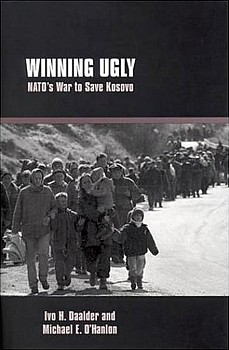
lgli/военная история\[1181191747]Winning Ugly-Natos War to Save Kosovo.- Brookings Institution Press,2000.PDF
Winning Ugly : NATO's War to Save Kosovo 🔍
Ivo H. Daalder, Michael E. O'Hanlon
Brookings Institution Press, 1, 2000
英语 [en] · PDF · 2.6MB · 2000 · 📘 非小说类图书 · 🚀/lgli/lgrs/nexusstc/zlib · Save
描述
After eleven weeks of bombing in the spring of 1999, the United States and NATO ultimately won the war in Kosovo. Serbian troops were forced to withdraw, enabling an international military and political presence to take charge in the region. But was this war inevitable or was it the product of failed western diplomacy prior to the conflict? And once it became necessary to use force, did NATO adopt a sound strategy to achieve its aims of stabilizing Kosovo? In this first in-depth study of the Kosovo crisis, Ivo Daalder and Michael O'Hanlon answer these and other questions about the causes, conduct, and consequences of the war. Based on interviews with many of the key participants, they conclude that notwithstanding important diplomatic mistakes before the conflict, it would have been difficult to avoid the Kosovo war. That being the case, U.S. and NATO conduct of the war left much to be desired. For more than four weeks, the Serbs succeeded where NATO failed, forcefully changing Kosovo's ethnic balance by forcing 1.5 million Albanians from their home and more than 800,000 from the country. Had they chosen to massacre more of their victims, NATO would have been powerless to stop them. In the end, NATO won the war by increasing the scope and intensity of bombing, making serious plans for a ground invasion, and moving diplomacy into full gear in order to convince Belgrade that this was a war Serbia would never win. The Kosovo crisis is a cautionary tale for those who believe force can be used easily and in limited increments to stop genocide, mass killing, and the forceful expulsion of entire populations. Daalder and O'Hanlon conclude that the crisis holds important diplomatic and military lessons that must be learned so that others in the future might avoid the mistakes that were made in this case.
备用文件名
lgrsnf/военная история\[1181191747]Winning Ugly-Natos War to Save Kosovo.- Brookings Institution Press,2000.PDF
备用文件名
nexusstc/Winning Ugly: Nato's War to Save Kosovo/735df341513181e7c935cdd79c6163c3.pdf
备用文件名
zlib/Society, Politics & Philosophy/Government & Politics/Ivo H. Daalder, Michael E. O'Hanlon/Winning Ugly: Nato's War to Save Kosovo_756752.pdf
备选作者
Daalder, Ivo H., O'Hanlon, Michael E.
备用版本
Book collections on Project MUSE, Washington, D.C, ©2000
备用版本
Rowman & Littlefield Publishing, Washington, D.C., 2000
备用版本
United States, United States of America
备用版本
Washington, Unknown, 2000
备用版本
Washington, Jan. 2001
备用版本
First Edition, 2000
备用版本
June 2000
元数据中的注释
1181191747
元数据中的注释
mirknig.com -- 2009
元数据中的注释
lg330884
元数据中的注释
{"edition":"1","isbns":["0815716966","9780815716969"],"last_page":358,"publisher":"Brookings Institution Press"}
元数据中的注释
Библиогр. в примеч.
Указ.
Указ.
元数据中的注释
РГБ
元数据中的注释
Russian State Library [rgb] MARC:
=001 000887589
=003 RuMoRGB
=005 20210127154923.0
=008 010618s2000\\\\xx\||||\|\\\\\|01\u\eng\d
=017 \\ $a И06502-6-01 $b RuMoRGB
=020 \\ $a 0-8157-1696-6 (cloth)
=035 \\ $a (RuMoRGB)CURIK-0040529
=040 \\ $a RuMoRGB $b rus $c RuMoRGB
=041 0\ $a eng
=084 \\ $a Ц35(0)634(4Ю)-4,2(3,8) $2 rubbk
=100 1\ $a Daalder, Ivo H.
=242 00 $a Военное положение и действия ВС НАТО в Косово (1998-1999)
=245 00 $a Winning ugly : $b NATO's war to save Kosovo $c Ivo H. Daalder, Michael E. O'Hanlon
=260 \\ $a Washington $b Brookings institution press $c Cop. 2000
=300 \\ $a XI, 343, [3] с. $b карт. $c 23 см
=504 \\ $a Библиогр. в примеч.
=555 \\ $a Указ.
=650 \7 $a Войны, военная наука и военное искусство -- Югославия -- Вооруженные силы -- НАТО $2 rubbk
=700 1\ $a O'Hanlon, Michael E.
=710 2\ $a North Atlantic treaty organization
=852 \\ $a РГБ $b OVL $j ВО 666/34 $x 90
=001 000887589
=003 RuMoRGB
=005 20210127154923.0
=008 010618s2000\\\\xx\||||\|\\\\\|01\u\eng\d
=017 \\ $a И06502-6-01 $b RuMoRGB
=020 \\ $a 0-8157-1696-6 (cloth)
=035 \\ $a (RuMoRGB)CURIK-0040529
=040 \\ $a RuMoRGB $b rus $c RuMoRGB
=041 0\ $a eng
=084 \\ $a Ц35(0)634(4Ю)-4,2(3,8) $2 rubbk
=100 1\ $a Daalder, Ivo H.
=242 00 $a Военное положение и действия ВС НАТО в Косово (1998-1999)
=245 00 $a Winning ugly : $b NATO's war to save Kosovo $c Ivo H. Daalder, Michael E. O'Hanlon
=260 \\ $a Washington $b Brookings institution press $c Cop. 2000
=300 \\ $a XI, 343, [3] с. $b карт. $c 23 см
=504 \\ $a Библиогр. в примеч.
=555 \\ $a Указ.
=650 \7 $a Войны, военная наука и военное искусство -- Югославия -- Вооруженные силы -- НАТО $2 rubbk
=700 1\ $a O'Hanlon, Michael E.
=710 2\ $a North Atlantic treaty organization
=852 \\ $a РГБ $b OVL $j ВО 666/34 $x 90
备用描述
Annotation After eleven weeks of bombing in the spring of 1999, the United States and NATO ultimately won the war in Kosovo. Serbian troops were forced to withdraw, enabling an international military and political presence to take charge in the region. But was this war inevitable or was it the product of failed western diplomacy prior to the conflict? And once it became necessary to use force, did NATO adopt a sound strategy to achieve its aims of stabilizing Kosovo? In this first in-depth study of the Kosovo crisis, Ivo Daalder and Michael O'Hanlon answer these and other questions about the causes, conduct, and consequences of the war. Based on interviews with many of the key participants, they conclude that notwithstanding important diplomatic mistakes before the conflict, it would have been difficult to avoid the Kosovo war. That being the case, U.S. and NATO conduct of the war left much to be desired. For more than four weeks, the Serbs succeeded where NATO failed, forcefully changing Kosovo's ethnic balance by forcing 1.5 million Albanians from their home and more than 800,000 from the country. Had they chosen to massacre more of their victims, NATO would have been powerless to stop them. In the end, NATO won the war by increasing the scope and intensity of bombing, making serious plans for a ground invasion, and moving diplomacy into full gear in order to convince Belgrade that this was a war Serbia would never win. The Kosovo crisis is a cautionary tale for those who believe force can be used easily and in limited increments to stop genocide, mass killing, and the forceful expulsion of entire populations. Daalder and O'Hanlon conclude that the crisis holds important diplomatic and militarylessons that must be learned so that others in the future might avoid the mistakes that were made in this case
备用描述
"In this first in-depth study of the Kosovo crisis, Ivo Daalder and Michael O'Hanlon answer these and other questions about the causes, conduct, and consequences of the war. Based on interviews with many of the key participants, they conclude that notwithstanding important diplomatic mistakes before the conflict, it would have been difficult to avoid the Kosovo war. That being the case, U.S. and NATO conduct of the war left much to be desired. For more than four weeks, the Serbs succeeded where NATO failed, forcefully changing Kosovo's ethnic balance by driving 1.5 million Albanians from their homes and more than 800,000 from the country. Had they chosen to massacre more of their victims, NATO would have been powerless to stop them." "In the end, NATO won the war by increasing the scope and intensity of bombing, making serious plans for a ground invasion, and moving diplomacy into full gear in order to convince Belgrade that this was a war Serbia would never win." "The Kosovo crisis is a cautionary tale for those who believe force can be used easily and in limited increments to stop genocide, mass killing, and the forceful expulsion of entire populations. Daalder and O'Hanlon conclude that the crisis holds important diplomatic and military lessons that must be learned so that others in the future might avoid the mistakes that were made in this case."--Jacket
备用描述
Publisher Fact Sheet An in-depth study of the Kosovo crisis that explores the causes, conduct, & consequences of the war. Based largely on interviews with many of the key participants, this landmark retrospective is a cautionary tale for those who believe force can be effective against genocide, mass killing, & the forceful expulsion of entire populations
备用描述
Winning Ugly: Nato's War to Save Kosovo КНИГИ ;ВОЕННАЯ ИСТОРИЯ Издательство: Brookings Institution PressАвтор(ы): Ivo H. Daalder, Michael E. O'HanlonЯзык: EnglishГод издания: 2000Количество страниц: 358ISBN: 0-8157-1696-6Формат: pdf (e-book)Размер: 2,48 mb RAPIDили IFOLDER 0
开源日期
2011-01-04
🚀 快速下载
成为会员以支持书籍、论文等的长期保存。为了感谢您对我们的支持,您将获得高速下载权益。❤️
🐢 低速下载
由可信的合作方提供。 更多信息请参见常见问题解答。 (可能需要验证浏览器——无限次下载!)
- 低速服务器(合作方提供) #1 (稍快但需要排队)
- 低速服务器(合作方提供) #2 (稍快但需要排队)
- 低速服务器(合作方提供) #3 (稍快但需要排队)
- 低速服务器(合作方提供) #4 (稍快但需要排队)
- 低速服务器(合作方提供) #5 (无需排队,但可能非常慢)
- 低速服务器(合作方提供) #6 (无需排队,但可能非常慢)
- 低速服务器(合作方提供) #7 (无需排队,但可能非常慢)
- 低速服务器(合作方提供) #8 (无需排队,但可能非常慢)
- 低速服务器(合作方提供) #9 (无需排队,但可能非常慢)
- 下载后: 在我们的查看器中打开
所有选项下载的文件都相同,应该可以安全使用。即使这样,从互联网下载文件时始终要小心。例如,确保您的设备更新及时。
外部下载
-
对于大文件,我们建议使用下载管理器以防止中断。
推荐的下载管理器:JDownloader -
您将需要一个电子书或 PDF 阅读器来打开文件,具体取决于文件格式。
推荐的电子书阅读器:Anna的档案在线查看器、ReadEra和Calibre -
使用在线工具进行格式转换。
推荐的转换工具:CloudConvert和PrintFriendly -
您可以将 PDF 和 EPUB 文件发送到您的 Kindle 或 Kobo 电子阅读器。
推荐的工具:亚马逊的“发送到 Kindle”和djazz 的“发送到 Kobo/Kindle” -
支持作者和图书馆
✍️ 如果您喜欢这个并且能够负担得起,请考虑购买原版,或直接支持作者。
📚 如果您当地的图书馆有这本书,请考虑在那里免费借阅。
下面的文字仅以英文继续。
总下载量:
“文件的MD5”是根据文件内容计算出的哈希值,并且基于该内容具有相当的唯一性。我们这里索引的所有影子图书馆都主要使用MD5来标识文件。
一个文件可能会出现在多个影子图书馆中。有关我们编译的各种数据集的信息,请参见数据集页面。
有关此文件的详细信息,请查看其JSON 文件。 Live/debug JSON version. Live/debug page.