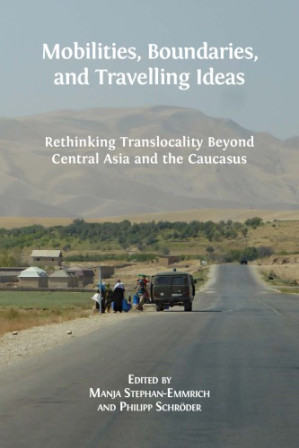
Mobilities, Boundaries, and Travelling Ideas : Rethinking Translocality Beyond Central Asia and the Caucasus 🔍
Schröder, Philipp; Stephan-Emmrich, Manja
Open Books Publishers, Cambridge, England :, 2018
英语 [en] · PDF · 4.2MB · 2018 · 📘 非小说类图书 · 🚀/lgli/lgrs/nexusstc/scihub/upload/zlib · Save
描述
"This collection brings together a variety of anthropological, historical and sociological case studies from Central Asia and the Caucasus to examine the concept of translocality. The chapters scrutinize the capacity of translocality to describe, in new ways, the multiple mobilities, exchange practices and globalizing processes that link places, people and institutions in Central Asia and the Caucasus with others in Russia, China and the United Arab Emirates. Illuminating translocality as a productive concept for studying cross-regional connectivities and networks, this volume is an important contribution to a lively field of academic discourse. Following new directions in Area Studies, the chapters aim to overcome 'territorial containers' such as the nation-state or local community, and instead emphasize the significance of processes of translation and negotiation for understanding how meaningful localities emerge beyond conventional boundaries. Structured by the four themes 'crossing boundaries', 'travelling ideas', 'social and economic movements' and 'pious endeavours', this volume proposes three conceptual approaches to translocality: firstly, to trace how it is embodied, narrated, virtualized or institutionalized within or in reference to physical or imagined localities; secondly, to understand locality as a relational concept rather than a geographically bounded unit; and thirdly, to consider cross-border traders, travelling students, business people and refugees as examples of non-elite mobilities that provide alternative ways to think about what 'global' means today. Mobilities, Boundaries, and Travelling Ideas will be of interest to students and scholars of the anthropology, history and sociology of Central Asia and the Caucasus, as well as for those interested in new approaches to Area Studies." Read more...
备用文件名
nexusstc/Mobilities, Boundaries, and Travelling Ideas: Rethinking Translocality Beyond Central Asia and the Caucasus/7b29491afe87ac06d845d7ff72998234.pdf
备用文件名
lgli/Mobilities, Boundaries, and Travelling Ideas:Rethinking Translocality Beyond Central Asia and the Caucasus.pdf
备用文件名
lgrsnf/Mobilities, Boundaries, and Travelling Ideas:Rethinking Translocality Beyond Central Asia and the Caucasus.pdf
备用文件名
scihub/10.11647/obp.0114.pdf
备用文件名
zlib/no-category/Schröder, Philipp; Stephan-Emmrich, Manja/Mobilities, Boundaries, and Travelling Ideas : Rethinking Translocality Beyond Central Asia and the Caucasus_3676181.pdf
备选标题
What We Believe Understanding and Confessing the Apostles' Creed
备选作者
Stephan-Emmrich, Manja; Schröder, Philipp
备选作者
Manja Stephan-Emmrich; Philipp Schröder
备选作者
Manja Stephan-Emmrich; Phillip Schröder
备选作者
Manja Stephan-Emmrich; Schröder Philipp
备选作者
Philipp Schröder; Manja Stephan-Emmrich
备选作者
Friedrich Schiller, Roger Paulin
备选作者
Adobe InDesign CC 13.0 (Windows)
备用版本
United Kingdom and Ireland, United Kingdom
备用版本
Cambridge, UK, 2018
备用版本
1, 2018-01-01
备用版本
Unknown, 2018
备用版本
Apr 17, 2018
备用版本
PS, 2018
元数据中的注释
0
元数据中的注释
lg2319512
元数据中的注释
producers:
Adobe PDF Library 15.0
Adobe PDF Library 15.0
元数据中的注释
{"isbns":["1783743336","1783743344","1783743352","1783743360","1783743379","9781783743339","9781783743346","9781783743353","9781783743360","9781783743377"],"last_page":382,"publisher":"Open Book Publishers"}
元数据中的注释
Referenced by: doi:10.4324/9781315669298 doi:10.1177/026327690007002017 doi:10.1017/cbo9781139057554 doi:10.1177/1468795x11406032 doi:10.1163/9789004405424 doi:10.1111/j.1471-0374.2006.00139.x doi:10.1111/0004-5608.00266 doi:10.1017/cbo9780511511967 doi:10.1146/annurev.anthro.24.1.75 doi:10.4324/9780203446713 doi:10.1017/cbo9780511523977 doi:10.2307/j.ctt1cc2mxj doi:10.1163/9789047401766 doi:10.1163/ej.9789004181168.i-452.8 doi:10.1525/9780520957220 doi:10.1017/cbo9780511804663.001 doi:10.1525/9780520938694 doi:10.7208/chicago/9780226346861.001.0001 doi:10.4324/9780203818336 doi:10.1163/9789047406990 doi:10.5040/9781472547385 doi:10.1163/9789047401209 doi:10.7208/chicago/9780226190969.001.0001 doi:10.1017/s0021853703008569 doi:10.1017/s0021911808000077 doi:10.1093/acprof:oso/9780190247980.001.0001 doi:10.1017/cbo9780511497407 doi:10.1002/9780470762448 doi:10.1215/1089201x-2010-024 doi:10.1386/cjmc.1.53_1 doi:10.1111/1469-8676.12393 doi:10.5149/9780807899458_steinberg doi:10.1017/cbo9780511800276 doi:10.4159/harvard.9780674736238 doi:10.1080/01419870701599465 doi:10.1017/s0964028299000026 doi:10.1177/026327640602300291 doi:10.1146/annurev.anthro.31.040402.085436 doi:10.1215/9780822392538 doi:10.1007/978-94-007-6821-5_4 doi:10.1080/14781700902937730 doi:10.2307/2645046 doi:10.1080/17450100701381524 doi:10.1080/14781700.2012.701938 doi:10.1093/afraf/100.399.189 doi:10.1215/9780822387640 doi:10.1163/ej.9789004181168.i-452.8 doi:10.1111/gec3.12048 doi:10.1080/02634937.2011.554070 doi:10.1057/978-1-137-59834-9_11 doi:10.1080/02634937.2010.537135 doi:10.1080/1369183x.2013.723260 doi:10.1057/9781137450180 doi:10.1068/a37214 doi:10.1007/978-3-319-23198-3 doi:10.2307/1315162 doi:10.1515/semi.2009.041 doi:10.1093/acprof:oso/9780190247980.001.0001 doi:10.1080/13510340701245785 doi:10.2307/j.ctt1pk85xv doi:10.7591/9780801470899 doi:10.1080/17450101.2014.984939 doi:10.1080/17450100701381565 doi:10.21313/hawaii/9780824833213.003.0002 doi:10.4159/harvard.9780674433748 doi:10.1080/17450101.2013.848606 doi:10.1068/d16s doi:10.1525/as.1992.32.10.00p0207f doi:10.1080/02634938708400571 doi:10.1080/02634938708400582 doi:10.2307/j.ctt2005tk7.6 doi:10.2307/20034428 doi:10.1007/978-94-007-6821-5_4 doi:10.1111/j.1468-2427.2008.00819.x doi:10.1163/ej.9789004181168.i-452 doi:10.7312/hann91086 doi:10.1057/9781137450180 doi:10.1068/a37214 doi:10.1163/9789004249509_022 doi:10.1017/s0026749x14000584 doi:10.1163/9789004249509_007 doi:10.2458/azu_acku_pamphlet_hf3770_6_p384_2005 doi:10.1080/17450101.2014.984939 doi:10.1163/9789004357242_010 doi:10.2307/j.ctt1r6b097.15 doi:10.1215/9780822397533 doi:10.4324/9781315549323 doi:10.1080/02634930601022542 doi:10.1163/146481705793647017 doi:10.5040/9780755620999 doi:10.1080/02634937.2012.649583 doi:10.2307/604731 doi:10.1017/s002074380005707x doi:10.1163/ej.9789004181168.i-452.8 doi:10.1111/gec3.12048 doi:10.1525/can.1992.7.1.02a00020 doi:10.1080/03736245.2005.9713832 doi:10.3167/ame.2017.120206 doi:10.3366/edinburgh/9780748644971.003.0002 doi:10.4324/9781315028293 doi:10.1080/713663070 doi:10.1080/17450101.2014.984939 doi:10.1080/00141844.2011.580356 doi:10.3390/w2010085 doi:10.1525/sp.2006.53.3.294 doi:10.18740/s4f60z doi:10.1080/09668136.2012.691720 doi:10.1111/gec3.12048 doi:10.1177/1463499605059232 doi:10.1080/09603120701834507 doi:10.1080/02634930601022526 doi:10.1525/sp.2009.56.1.2 doi:10.1057/ejdr.2009.3 doi:10.1111/j.1471-0366.2011.00327.x doi:10.3402/egp.v1i4.1892 doi:10.1080/14631360500135716 doi:10.4324/9781315549910 doi:10.1086/674381 doi:10.1163/ej.9789004181168.i-452 doi:10.1163/ej.9789004181168.i-452.8 doi:10.2307/j.ctt1tg5gkz doi:10.1080/02757206.1996.9960889 doi:10.1080/14631360500135765 doi:10.1080/02634937.2016.1151626 doi:10.1080/14649365.2010.521854 doi:10.1111/j.0435-3684.2004.00150.x doi:10.1080/02549948.1977.11745054 doi:10.3828/idpr.2011.19 doi:10.1163/ej.9789004181168.i-452.8 doi:10.1080/02634937.2012.720868 doi:10.3406/slave.2001.6726 doi:10.1080/00905990601124462 doi:10.1353/kri.2008.0005 doi:10.1111/j.1467-9434.2012.00669.x doi:10.2307/1867232 doi:10.1146/annurev.anthro.26.1.163 doi:10.2307/2697272 doi:10.1163/146481701793647732 doi:10.1080/00905990903122834 doi:10.1111/1467-8322.00023 doi:10.1525/eth.2000.28.4.511 doi:10.1215/08992363-12-1-1 doi:10.1017/cbo9780511819582 doi:10.1525/aa.2001.103.1.76 doi:10.1163/ej.9789004181168.i-452.8 doi:10.1017/cbo9780511621659.005 doi:10.18356/0634a775-en doi:10.4324/9780203446713 doi:10.1556/aethn.56.2011.2.5 doi:10.1080/17450101.2012.718426 doi:10.2307/2801710 doi:10.1215/9780822377306 doi:10.3726/978-3-0351-0651-0 doi:10.4337/9781849809290.00013 doi:10.1525/ae.1995.22.2.02a00090 doi:10.1215/9780822394709 doi:10.1017/cbo9780511581380 doi:10.1016/j.polgeo.2012.12.002 doi:10.1017/s0022278x00008089 doi:10.2307/2802901 doi:10.1017/s1537592704040472 doi:10.3726/978-3-0351-0651-0/34 doi:10.1111/j.0309-1317.2004.00549.x doi:10.1080/14672715.2013.829315 doi:10.1146/annurev-anthro-092412-155522 doi:10.5040/9781474215114 doi:10.1515/9781400851805 doi:10.7208/chicago/9780226510217.001.0001 doi:10.4324/9780203106006 doi:10.1017/cbo9780511621659.001 doi:10.4324/9780203740545 doi:10.1108/01443331111177878 doi:10.7591/9780801470899 doi:10.14361/transcript.9783839418222.441 doi:10.1515/9781400847488 doi:10.1080/17450101.2014.984939 doi:10.1080/02634937.2016.1152008 doi:10.1016/j.postcomstud.2014.02.001 doi:10.1007/978-3-531-93273-6_10 doi:10.1080/01419870.2011.535546 doi:10.7208/chicago/9780226467245.003.0010 doi:10.2307/4610913 doi:10.1163/ej.9781906876104.i-220 doi:10.5040/9781474215114.ch-002 doi:10.1080/02634937.2011.607917 doi:10.1080/0263493032000157799 doi:10.1080/1369183x.2013.723260 doi:10.1080/02634937.2016.1155384 doi:10.22582/am.v6i2.97 doi:10.1146/annurev.an.24.100195.000523 doi:10.1353/imp.2004.0146 doi:10.1080/02634937.2011.602563 doi:10.5612/slavicreview.71.2.0331 doi:10.3790/soc.64.2.155 doi:10.1080/17450101.2014.984939 doi:10.1037/h0042769 doi:10.2307/3021137 doi:10.14361/9783839402191 doi:10.1017/cbo9780511819582 doi:10.1080/17450100701381524 doi:10.1515/9780691187785 doi:10.1525/9780520922280 doi:10.1163/ej.9789004181168.i-452 doi:10.1093/oxfordhb/9780195170214.003.0003 doi:10.1525/can.1992.7.1.02a00020 doi:10.1177/1463499605059232 doi:10.1080/17450100500489189 doi:10.1177/14661381030042003 doi:10.4324/9780203718247 doi:10.1017/cbo9781139629133 doi:10.4324/9780203154236 doi:10.1146/annurev.an.24.100195.000523 doi:10.5422/fordham/9780823239450.003.0001 doi:10.1016/j.religion.2010.01.010 doi:10.2307/j.ctt18fs75z doi:10.1177/0261927x04269588 doi:10.1163/ej.9789004181168.i-452.61 doi:10.4324/9780203469392 doi:10.1080/1369183x.2013.723253 doi:10.1080/17450101.2014.984939 doi:10.1525/ae.2006.33.2.210 doi:10.1080/17450100701381565 doi:10.2307/j.ctt1r6b097.15 doi:10.1080/02634937.2016.1152008 doi:10.1080/17450101.2013.848606 doi:10.5117/9789089642981 doi:10.1017/cbo9780511557712 doi:10.1080/02634937.2012.647843 doi:10.1080/0263493042000321371 doi:10.1163/22142290-00301001 doi:10.1111/j.1467-9655.2007.00462.x doi:10.1080/1070289x.2013.831350 doi:10.4324/9781315549910 doi:10.1525/9780520946286 doi:10.1215/9780822389606 doi:10.4324/9780203446713 doi:10.1163/ej.9789004181168.i-452 doi:10.1080/1369183x.2013.723253 doi:10.1111/gec3.12048 doi:10.1017/cbo9781107295636 doi:10.1515/9781400821730 doi:10.1080/09518398.2010.485134 doi:10.1093/socrel/srp027 doi:10.1080/1369183x.2013.723260 doi:10.26530/oapen_464418 doi:10.4324/9781315722306 doi:10.1111/j.1747-7379.2004.tb00227.x doi:10.1086/659353 doi:10.1146/annurev.anthro.24.1.95 doi:10.1086/670388 doi:10.1016/j.geoforum.2010.05.001 doi:10.1007/978-1-349-19059-1_20 doi:10.2307/j.ctt7s1xk doi:10.1080/725289021
元数据中的注释
English.
元数据中的注释
Source title: Mobilities, Boundaries, and Travelling Ideas: Rethinking Translocality Beyond Central Asia and the Caucasus
备用描述
This collection brings together a variety of anthropological, historical and sociological case studies from Central Asia and the Caucasus to examine the concept of translocality. The chapters scrutinize the capacity of translocality to describe, in new ways, the multiple mobilities, exchange practices and globalizing processes that link places, people and institutions in Central Asia and the Caucasus with others in Russia, China and the United Arab Emirates.
Illuminating translocality as a productive concept for studying crossregional connectivities and networks, this volume is an important contribution to a lively field of academic discourse. Following new directions in Area Studies, the chapters aim to overcome territorial containers such as the nationstate or local community, and instead emphasize the significance of processes of translation and negotiation for understanding how meaningful localities emerge beyond conventional boundaries.
Structured by the four themes crossing boundaries, travelling ideas, social and economic movements and pious endeavours, this volume proposes three conceptual approaches to translocality: firstly, to trace how it is embodied, narrated, virtualized or institutionalized within or in reference to physical or imagined localities; secondly, to understand locality as a relational concept rather than a geographically bounded unit; and thirdly, to consider crossborder traders, travelling students, business people and refugees as examples of non-elite mobilities that provide alternative ways to think about what global means today.
Mobilities, Boundaries, and Travelling Ideas will be of interest to students and scholars of the anthropology, history and sociology of Central Asia and the Caucasus, as well as for those interested in new approaches to Area Studies.
The VolkswagenStiftung (Volkswagen Foundation) has generously contributed towards the publication of this volume.
Illuminating translocality as a productive concept for studying crossregional connectivities and networks, this volume is an important contribution to a lively field of academic discourse. Following new directions in Area Studies, the chapters aim to overcome territorial containers such as the nationstate or local community, and instead emphasize the significance of processes of translation and negotiation for understanding how meaningful localities emerge beyond conventional boundaries.
Structured by the four themes crossing boundaries, travelling ideas, social and economic movements and pious endeavours, this volume proposes three conceptual approaches to translocality: firstly, to trace how it is embodied, narrated, virtualized or institutionalized within or in reference to physical or imagined localities; secondly, to understand locality as a relational concept rather than a geographically bounded unit; and thirdly, to consider crossborder traders, travelling students, business people and refugees as examples of non-elite mobilities that provide alternative ways to think about what global means today.
Mobilities, Boundaries, and Travelling Ideas will be of interest to students and scholars of the anthropology, history and sociology of Central Asia and the Caucasus, as well as for those interested in new approaches to Area Studies.
The VolkswagenStiftung (Volkswagen Foundation) has generously contributed towards the publication of this volume.
备用描述
"This collection brings together a variety of anthropological, historical and sociological case studies from Central Asia and the Caucasus to examine the concept of translocality. The chapters scrutinize the capacity of translocality to describe, in new ways, the multiple mobilities, exchange practices and globalizing processes that link places, people and institutions in Central Asia and the Caucasus with others in Russia, China and the United Arab Emirates. Illuminating translocality as a productive concept for studying cross-regional connectivities and networks, this volume is an important contribution to a lively field of academic discourse. Following new directions in Area Studies, the chapters aim to overcome 'territorial containers' such as the nation-state or local community, and instead emphasize the significance of processes of translation and negotiation for understanding how meaningful localities emerge beyond conventional boundaries. Structured by the four themes 'crossing boundaries', 'travelling ideas', 'social and economic movements' and 'pious endeavours', this volume proposes three conceptual approaches to translocality: firstly, to trace how it is embodied, narrated, virtualized or institutionalized within or in reference to physical or imagined localities; secondly, to understand locality as a relational concept rather than a geographically bounded unit; and thirdly, to consider cross-border traders, travelling students, business people and refugees as examples of non-elite mobilities that provide alternative ways to think about what 'global' means today. Mobilities, Boundaries, and Travelling Ideas will be of interest to students and scholars of the anthropology, history and sociology of Central Asia and the Caucasus, as well as for those interested in new approaches to Area Studies."--Publisher's website
备用描述
<p>"This collection brings together a variety of anthropological, historical and sociological case studies from Central Asia and the Caucasus to examine the concept of translocality. The chapters scrutinize the capacity of translocality to describe, in new ways, the multiple mobilities, exchange practices and globalizing processes that link places, people and institutions in Central Asia and the Caucasus with others in Russia, China and the United Arab Emirates. Illuminating translocality as a productive concept for studying cross?regional connectivities and networks, this volume is an important contribution to a lively field of academic discourse. Following new directions in Area Studies, the chapters aim to overcome 'territorial containers' such as the nation?state or local community, and instead emphasize the significance of processes of translation and negotiation for understanding how meaningful localities emerge beyond conventional boundaries. Structured by the four themes 'crossing boundaries', 'travelling ideas', 'social and economic movements' and 'pious endeavours', this volume proposes three conceptual approaches to translocality: firstly, to trace how it is embodied, narrated, virtualized or institutionalized within or in reference to physical or imagined localities; secondly, to understand locality as a relational concept rather than a geographically bounded unit; and thirdly, to consider cross?border traders, travelling students, business people and refugees as examples of non-elite mobilities that provide alternative ways to think about what 'global' means today. Mobilities, Boundaries, and Travelling Ideas will be of interest to students and scholars of the anthropology, history and sociology of Central Asia and the Caucasus, as well as for those interested in new approaches to Area Studies."<br></p>
备用描述
Contents 6
Preface 8
Foreword 12
Introduction – Mobilities, Boundaries, and Travelling Ideas Beyond Central Asia and the Caucasus: A Translocal Perspective 34
PART 1 – CROSSING BOUNDARIES: MOBILITIES THEN AND NOW 66
1. Emigration Within, Across, and Beyond Central Asia in the Early Soviet Period from a Perspective of Translocality 68
2. Crossing Economic and Cultural Boundaries: Tajik Middlemen in the Translocal Dubai Business Sector 96
PART 2 – TRAVELLING IDEAS: SACRED AND SECULAR 126
3. Sacred Lineages in Central Asia: Translocality and Identity 128
4. Explicating Translocal Organization of Everyday Life: Stories from Rural Uzbekistan 158
5. A Sense of Multiple Belonging: Translocal Relations and Narratives of Change Within a Dungan Community 184
PART 3 – MOVEMENTS FROM BELOW: ECONOMIC AND SOCIAL 210
6. ‘New History’ as a Translocal Field 212
7. Informal Trade and Globalization in the Caucasus and Post-Soviet Eurasia 236
8. The Economics of Translocality – Epistemographic Observations from Fieldwork In(-Between) Russia, China, and Kyrgyzstan 270
PART 4 – PIOUS ENDEAVOURS: NEAR AND FAR 296
9. iPhones, Emotions, Mediations: Tracing Translocality in the Pious Endeavours of Tajik Migrants in the United Arab Emirates 298
10. Translocality and the Folding of Post-Soviet Urban Space in Bishkek: Hijrah from ‘Botanika’ to ‘Botanicheskii Jamaat’ 326
Afterword: On Transitive Concepts and Local Imaginations – Studying Mobilities from a Translocal Perspective 356
Notes on Contributors 368
Index 372
Preface 8
Foreword 12
Introduction – Mobilities, Boundaries, and Travelling Ideas Beyond Central Asia and the Caucasus: A Translocal Perspective 34
PART 1 – CROSSING BOUNDARIES: MOBILITIES THEN AND NOW 66
1. Emigration Within, Across, and Beyond Central Asia in the Early Soviet Period from a Perspective of Translocality 68
2. Crossing Economic and Cultural Boundaries: Tajik Middlemen in the Translocal Dubai Business Sector 96
PART 2 – TRAVELLING IDEAS: SACRED AND SECULAR 126
3. Sacred Lineages in Central Asia: Translocality and Identity 128
4. Explicating Translocal Organization of Everyday Life: Stories from Rural Uzbekistan 158
5. A Sense of Multiple Belonging: Translocal Relations and Narratives of Change Within a Dungan Community 184
PART 3 – MOVEMENTS FROM BELOW: ECONOMIC AND SOCIAL 210
6. ‘New History’ as a Translocal Field 212
7. Informal Trade and Globalization in the Caucasus and Post-Soviet Eurasia 236
8. The Economics of Translocality – Epistemographic Observations from Fieldwork In(-Between) Russia, China, and Kyrgyzstan 270
PART 4 – PIOUS ENDEAVOURS: NEAR AND FAR 296
9. iPhones, Emotions, Mediations: Tracing Translocality in the Pious Endeavours of Tajik Migrants in the United Arab Emirates 298
10. Translocality and the Folding of Post-Soviet Urban Space in Bishkek: Hijrah from ‘Botanika’ to ‘Botanicheskii Jamaat’ 326
Afterword: On Transitive Concepts and Local Imaginations – Studying Mobilities from a Translocal Perspective 356
Notes on Contributors 368
Index 372
备用描述
Intro
Contents
Preface
Foreword
Introduction --
Mobilities, Boundaries, and Travelling Ideas Beyond Central Asia and the Caucasus: A Translocal Perspective
PART 1 --
CROSSING BOUNDARIES: MOBILITIES THEN AND NOW
1. Emigration Within, Across, and Beyond Central Asia in the Early Soviet Period from a Perspective of Translocality
2. Crossing Economic and Cultural Boundaries: Tajik Middlemen in the Translocal Dubai Business Sector
PART 2 --
TRAVELLING IDEAS: SACRED AND SECULAR
3. Sacred Lineages in Central Asia: Translocality and Identity. 4. Explicating Translocal Organization of Everyday Life: Stories from Rural Uzbekistan5. A Sense of Multiple Belonging: Translocal Relations and Narratives of Change Within a Dungan Community
PART 3 --
MOVEMENTS FROM BELOW: ECONOMIC AND SOCIAL
6. 'New History' as a Translocal Field
7. Informal Trade and Globalization in the Caucasus and Post-Soviet Eurasia
8. The Economics of Translocality --
Epistemographic Observations from Fieldwork In( -Between) Russia, China, and Kyrgyzstan
PART 4 --
PIOUS ENDEAVOURS: NEAR AND FAR. 9. iPhones, Emotions, Mediations: Tracing Translocality in the Pious Endeavours of Tajik Migrants in the United Arab Emirates10. Translocality and the Folding of Post-Soviet Urban Space in Bishkek: Hijrah from 'Botanika' to 'Botanicheskii Jamaat'
Afterword: On Transitive Concepts and Local Imaginations --
Studying Mobilities from a Translocal Perspective
Notes on Contributors
Index.
Contents
Preface
Foreword
Introduction --
Mobilities, Boundaries, and Travelling Ideas Beyond Central Asia and the Caucasus: A Translocal Perspective
PART 1 --
CROSSING BOUNDARIES: MOBILITIES THEN AND NOW
1. Emigration Within, Across, and Beyond Central Asia in the Early Soviet Period from a Perspective of Translocality
2. Crossing Economic and Cultural Boundaries: Tajik Middlemen in the Translocal Dubai Business Sector
PART 2 --
TRAVELLING IDEAS: SACRED AND SECULAR
3. Sacred Lineages in Central Asia: Translocality and Identity. 4. Explicating Translocal Organization of Everyday Life: Stories from Rural Uzbekistan5. A Sense of Multiple Belonging: Translocal Relations and Narratives of Change Within a Dungan Community
PART 3 --
MOVEMENTS FROM BELOW: ECONOMIC AND SOCIAL
6. 'New History' as a Translocal Field
7. Informal Trade and Globalization in the Caucasus and Post-Soviet Eurasia
8. The Economics of Translocality --
Epistemographic Observations from Fieldwork In( -Between) Russia, China, and Kyrgyzstan
PART 4 --
PIOUS ENDEAVOURS: NEAR AND FAR. 9. iPhones, Emotions, Mediations: Tracing Translocality in the Pious Endeavours of Tajik Migrants in the United Arab Emirates10. Translocality and the Folding of Post-Soviet Urban Space in Bishkek: Hijrah from 'Botanika' to 'Botanicheskii Jamaat'
Afterword: On Transitive Concepts and Local Imaginations --
Studying Mobilities from a Translocal Perspective
Notes on Contributors
Index.
开源日期
2019-01-21
🚀 快速下载
成为会员以支持书籍、论文等的长期保存。为了感谢您对我们的支持,您将获得高速下载权益。❤️
如果您在本月捐款,您将获得双倍的快速下载次数。
🐢 低速下载
由可信的合作方提供。 更多信息请参见常见问题解答。 (可能需要验证浏览器——无限次下载!)
- 低速服务器(合作方提供) #1 (稍快但需要排队)
- 低速服务器(合作方提供) #2 (稍快但需要排队)
- 低速服务器(合作方提供) #3 (稍快但需要排队)
- 低速服务器(合作方提供) #4 (稍快但需要排队)
- 低速服务器(合作方提供) #5 (无需排队,但可能非常慢)
- 低速服务器(合作方提供) #6 (无需排队,但可能非常慢)
- 低速服务器(合作方提供) #7 (无需排队,但可能非常慢)
- 低速服务器(合作方提供) #8 (无需排队,但可能非常慢)
- 低速服务器(合作方提供) #9 (无需排队,但可能非常慢)
- 下载后: 在我们的查看器中打开
所有选项下载的文件都相同,应该可以安全使用。即使这样,从互联网下载文件时始终要小心。例如,确保您的设备更新及时。
外部下载
-
对于大文件,我们建议使用下载管理器以防止中断。
推荐的下载管理器:JDownloader -
您将需要一个电子书或 PDF 阅读器来打开文件,具体取决于文件格式。
推荐的电子书阅读器:Anna的档案在线查看器、ReadEra和Calibre -
使用在线工具进行格式转换。
推荐的转换工具:CloudConvert和PrintFriendly -
您可以将 PDF 和 EPUB 文件发送到您的 Kindle 或 Kobo 电子阅读器。
推荐的工具:亚马逊的“发送到 Kindle”和djazz 的“发送到 Kobo/Kindle” -
支持作者和图书馆
✍️ 如果您喜欢这个并且能够负担得起,请考虑购买原版,或直接支持作者。
📚 如果您当地的图书馆有这本书,请考虑在那里免费借阅。
下面的文字仅以英文继续。
总下载量:
“文件的MD5”是根据文件内容计算出的哈希值,并且基于该内容具有相当的唯一性。我们这里索引的所有影子图书馆都主要使用MD5来标识文件。
一个文件可能会出现在多个影子图书馆中。有关我们编译的各种数据集的信息,请参见数据集页面。
有关此文件的详细信息,请查看其JSON 文件。 Live/debug JSON version. Live/debug page.