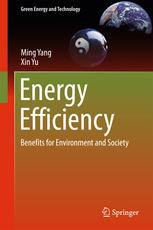
Energy Efficiency: Benefits for Environment and Society (Green Energy and Technology) 🔍
Ming Yang, Xin Yu (auth.)
Springer-Verlag London, Green Energy and Technology, Green Energy and Technology, 1, 2015
英语 [en] · PDF · 4.7MB · 2015 · 📘 非小说类图书 · 🚀/lgli/lgrs/nexusstc/scihub/zlib · Save
描述
This Book Discusses How Energy Efficiency Benefits The Global Environment, National Energy Security, Local Pollution Mitigation, Natural Resource Conservation, And Utility Bill Reduction. In Addition, This Book Provides Many Hands-on Skills And Knowledge To Identify And Develop Energy Efficiency Projects. The Literature Review Shows That Energy Efficiency Has Become The First Fuel In The World Energy Supply. With Empirical Analyses, This Book Indicates That Without Continued Investment In Energy Efficiency, Neither China Nor The U.s. Could Achieve Their Carbon Emission Reduction Targets That Were Announced On November 13, 2014 During The Beijing 2014 Apec Meeting. The Authors Argue That Energy Efficiency Will Become The First Tool To Mitigate Climate Change. These Include (1) Identifying Energy Efficiency Barriers, (2) Developing Energy Policies, (3) Investing In Energy Efficient Technologies, (4) Undertaking Project Cost-effectiveness Analysis, (5) De-risking And Financing Energy Efficiency Projects; (6) Developing And Managing Energy Service Companies, And (7) Promoting Urban Transport Efficiency. Two Case Studies In Energy Efficiency Improvement In Electrical Motors And Industrial Boilers Are Also Presented. This Book Is Written For College And University Students, Practitioners, Researchers, Consultants, Project Developers, And Policy Makers Who Want To Dedicate Their Professional Careers In Global Energy Efficiency Improvement, Climate Change Mitigation, Local Clean Air Initiatives, And Energy Bill Reduction. Foreword -- Introduction -- Energy Efficiency Becomes First Fuel -- Energy Efficiency Becomes First Tool For Climate Change Mitigation -- Market Barriers To Energy Efficiency -- Overall Methodology In This Study -- Energy Efficiency Policies -- Energy Efficiency Cost-effectiveness Test -- Energy Efficiency Project Finance -- Energy Service Company Development -- Energy Efficient Technologies -- Energy Efficient Urban Transport -- Case Studies -- Conclusions. By Ming Yang, Xin Yu.
备用文件名
lgrsnf/G:\!genesis\_add\!woodhead\Springer\bok%3A978-1-4471-6666-5.pdf
备用文件名
nexusstc/Energy Efficiency: Benefits for Environment and Society/e2d57467da702bb7c162df88ede104d0.pdf
备用文件名
scihub/10.1007/978-1-4471-6666-5.pdf
备用文件名
zlib/Engineering/Ming Yang, Xin Yu (auth.)/Energy Efficiency: Benefits for Environment and Society_2526617.pdf
备选作者
Yang, Ming, Yu, Xin
备用出版商
Springer London : Imprint Springer, Springer London, Imprint Springer
备用出版商
Springer London, Limited
备用版本
Green energy and technology, 1st ed. 2015, London, London, 2015
备用版本
Green Energy and Technology, Online-ausg, Dordrecht, 2015
备用版本
Green Energy and Technology, Aufl. 2015, London, 2015
备用版本
United Kingdom and Ireland, United Kingdom
备用版本
Feb 21, 2015
元数据中的注释
sm37482211
元数据中的注释
{"container_title":"Green Energy and Technology","edition":"1","isbns":["1447166655","1447166663","9781447166658","9781447166665"],"issns":["1865-3529","1865-3537"],"last_page":180,"publisher":"Springer-Verlag London","series":"Green Energy and Technology"}
元数据中的注释
Source title: Energy Efficiency: Benefits for Environment and Society (Green Energy and Technology)
备用描述
"This book discusses how energy efficiency benefits the global environment, national energy security, local pollution mitigation, natural resource conservation, and utility bill reduction. In addition, this book provides many hands-on skills and knowledge to identify and develop energy efficiency projects. The literature review shows that energy efficiency has become the first fuel in the world energy supply. With empirical analyses, this book indicates that without continued investment in energy efficiency, neither China nor the U.S. could achieve their carbon emission reduction targets that were announced on November 13, 2014 during the Beijing 2014 APEC meeting. The authors argue that energy efficiency will become the first tool to mitigate climate change. These include (1) identifying energy efficiency barriers, (2) developing energy policies, (3) investing in energy efficient technologies, (4) undertaking project cost-effectiveness analysis, (5) de-risking and financing energy efficiency projects; (6) developing and managing energy service companies, and (7) promoting urban transport efficiency. Two case studies in energy efficiency improvement in electrical motors and industrial boilers are also presented. This book is written for college and university students, practitioners, researchers, consultants, project developers, and policy makers who want to dedicate their professional careers in global energy efficiency improvement, climate change mitigation, local clean air initiatives, and energy bill reduction."--Publisher's description
备用描述
"This book discusses how energy efficiency benefits the global environment, national energy security, local pollution mitigation, natural resource conservation, and utility bill reduction. In addition, this book provides many hands-on skills and knowledge to identify and develop energy efficiency projects. The literature review shows that energy efficiency has become the first fuel in the world energy supply. With empirical analyses, this book indicates that without continued investment in energy efficiency, neither China nor the U.S. could achieve their carbon emission reduction targets that were announced on November 13, 2014 during the Beijing 2014 APEC meeting. The authors argue that energy efficiency will become the first tool to mitigate climate change. These include (1) identifying energy efficiency barriers, (2) developing energy policies, (3) investing in energy efficient technologies, (4) undertaking project cost-effectiveness analysis, (5) de-risking and financing energy efficiency projects; (6) developing and managing energy service companies, and (7) promoting urban transport efficiency. Two case studies in energy efficiency improvement in electrical motors and industrial boilers are also presented. This book is written for college and university students, practitioners, researchers, consultants, project developers, and policy makers who want to dedicate their professional careers in global energy efficiency improvement, climate change mitigation, local clean air initiatives, and energy bill reduction."--Amazon.com
备用描述
Front Matter....Pages i-xxviii
Introduction....Pages 1-9
Energy Efficiency Becomes First Fuel....Pages 11-18
Energy Efficiency Becomes First Tool for Climate Change Mitigation....Pages 19-32
Market Barriers to Energy Efficiency....Pages 33-42
Overall Methodology in This Study....Pages 43-48
Energy Efficiency Policies....Pages 49-63
Energy Efficiency Cost-Effectiveness Test....Pages 65-72
Energy Efficiency Project Finance....Pages 73-95
Energy Service Company Development....Pages 97-112
Energy-Efficient Technologies....Pages 113-126
Energy-Efficient Urban Transport....Pages 127-139
Case Studies....Pages 141-174
Conclusions and Further Studies....Pages 175-177
Back Matter....Pages 179-180
Introduction....Pages 1-9
Energy Efficiency Becomes First Fuel....Pages 11-18
Energy Efficiency Becomes First Tool for Climate Change Mitigation....Pages 19-32
Market Barriers to Energy Efficiency....Pages 33-42
Overall Methodology in This Study....Pages 43-48
Energy Efficiency Policies....Pages 49-63
Energy Efficiency Cost-Effectiveness Test....Pages 65-72
Energy Efficiency Project Finance....Pages 73-95
Energy Service Company Development....Pages 97-112
Energy-Efficient Technologies....Pages 113-126
Energy-Efficient Urban Transport....Pages 127-139
Case Studies....Pages 141-174
Conclusions and Further Studies....Pages 175-177
Back Matter....Pages 179-180
备用描述
Foreword; Executive Summary; Contents; About the Authors; Abbreviations; 1 Introduction; Abstract; 1.1 Basic Concept and Definitions; 1.2 Energy Efficiency and Climate Change Mitigation; 1.3 Energy Efficiency, Global Energy Demand, and Environment; 1.4 Energy Efficiency--Low Hanging Fruits; 1.5 Energy Efficiency Barriers; 1.6 Energy Efficiency Gap; 1.7 Methodologies; 1.8 Objective; 1.9 Book Structure, Conclusions, and Recommendations; References; 2 Energy Efficiency Becomes First Fuel; Abstract; 2.1 History of Energy Efficiency--A Hidden Fuel; 2.2 Energy Efficiency as the First Fuel
备用描述
2.3 The First Fuel Never Runs Out2.4 The Future Potential of the First Fuel; 2.5 Challenge to the First Fuel; 2.6 Applications of Energy Efficiency as Fuels; 2.7 Summary; References; 3 Energy Efficiency Becomes First Tool for Climate Change Mitigation; Abstract; 3.1 Introduction; 3.2 Analysis of GHG Reduction Target for China; 3.2.1 China's Dream and Economic Development Outlook; 3.2.2 China's Carbon Emissions Outlook; 3.2.2.1 China's Historical Carbon Intensity; 3.2.2.2 Business as Usual (Scenario 1); 3.2.2.3 Using Energy Efficiency as the First Fuel to Reduce Carbon (Scenario 2)
备用描述
4.3 High Transaction Costs4.4 Invisibility of Energy Efficiency Projects; 4.5 Misplaced Incentives; 4.6 Lack of Access to Financing; 4.7 Regulatory Barrier; 4.8 Gold Plating and Inseparability of Features; 4.9 Externalities; 4.10 Imperfect Information; 4.11 Customer Inertia; 4.12 Lack of Capacity in Developing Countries; 4.13 Summary; References; 5 Overall Methodology in This Study; Abstract; 5.1 Methodological Framework; 5.2 Data Used in This Study; Reference; 6 Energy Efficiency Policies; Abstract; 6.1 Introduction; 6.2 Necessities for Public Policies Promoting Energy Efficiency
备用描述
6.3 Sufficient Conditions for the Use of Policies for Energy Efficiency6.4 Documentation of Global Energy Efficiency Policies; 6.5 Energy Efficiency Policies to Benefit the Society; 6.6 Government Policy and Regulation for Utilities; 6.7 Examples of Energy Efficiency Policies; 6.7.1 The USA; 6.7.2 China; 6.8 Monitoring and Evaluation of Government Policy Effectiveness; 6.9 More Examples of Energy Policies by Countries; 6.9.1 Energy Efficiency Policies; 6.9.2 Energy Efficiency Labeling Programs; 6.9.3 Appliance, Equipment, and Lighting Minimum Energy Performance Standards (MEPS)
备用描述
China's Historical Energy IntensitiesCarbon Intensity Reduction with Energy Efficiency as the First Fuel; 3.2.2.4 Enlarging Investments in Non-fossil Fuel Technologies (Scenario 3); 3.2.2.5 Using Energy Efficiency as the First Fuel and Enlarging Non-fossil Fuel to 20 % (Scenario 4); 3.3 Analysis of GHG Reduction Target for the USA; 3.3.1 US EPA's Clean Air Act and Climate Change Mitigation Policies; 3.3.2 GHG Emission Projection in the USA; 3.4 Conclusions; References; 4 Market Barriers to Energy Efficiency; Abstract; 4.1 Introduction; 4.2 Worldwide Subsidies to Fossil Energy
备用描述
6.9.4 Transport Fuel Efficiency Standards for Light-Duty Vehicles (LDV) and Heavy-Duty Vehicles (HDV)
备用描述
Green Energy and Technology
Erscheinungsdatum: 12.06.2015
Erscheinungsdatum: 12.06.2015
开源日期
2015-04-23
🚀 快速下载
成为会员以支持书籍、论文等的长期保存。为了感谢您对我们的支持,您将获得高速下载权益。❤️
如果您在本月捐款,您将获得双倍的快速下载次数。
- 高速服务器(合作方提供) #1 (推荐)
- 高速服务器(合作方提供) #2 (推荐)
- 高速服务器(合作方提供) #3 (推荐)
- 高速服务器(合作方提供) #4 (推荐)
- 高速服务器(合作方提供) #5 (推荐)
- 高速服务器(合作方提供) #6 (推荐)
- 高速服务器(合作方提供) #7
- 高速服务器(合作方提供) #8
- 高速服务器(合作方提供) #9
- 高速服务器(合作方提供) #10
- 高速服务器(合作方提供) #11
- 高速服务器(合作方提供) #12
- 高速服务器(合作方提供) #13
- 高速服务器(合作方提供) #14
- 高速服务器(合作方提供) #15
- 高速服务器(合作方提供) #16
- 高速服务器(合作方提供) #17
- 高速服务器(合作方提供) #18
- 高速服务器(合作方提供) #19
- 高速服务器(合作方提供) #20
- 高速服务器(合作方提供) #21
- 高速服务器(合作方提供) #22
🐢 低速下载
由可信的合作方提供。 更多信息请参见常见问题解答。 (可能需要验证浏览器——无限次下载!)
- 低速服务器(合作方提供) #1 (稍快但需要排队)
- 低速服务器(合作方提供) #2 (稍快但需要排队)
- 低速服务器(合作方提供) #3 (稍快但需要排队)
- 低速服务器(合作方提供) #4 (稍快但需要排队)
- 低速服务器(合作方提供) #5 (无需排队,但可能非常慢)
- 低速服务器(合作方提供) #6 (无需排队,但可能非常慢)
- 低速服务器(合作方提供) #7 (无需排队,但可能非常慢)
- 低速服务器(合作方提供) #8 (无需排队,但可能非常慢)
- 低速服务器(合作方提供) #9 (无需排队,但可能非常慢)
- 低速服务器(合作方提供) #10 (稍快但需要排队)
- 低速服务器(合作方提供) #11 (稍快但需要排队)
- 低速服务器(合作方提供) #12 (稍快但需要排队)
- 低速服务器(合作方提供) #13 (稍快但需要排队)
- 低速服务器(合作方提供) #14 (无需排队,但可能非常慢)
- 低速服务器(合作方提供) #15 (无需排队,但可能非常慢)
- 低速服务器(合作方提供) #16 (无需排队,但可能非常慢)
- 低速服务器(合作方提供) #17 (无需排队,但可能非常慢)
- 低速服务器(合作方提供) #18 (无需排队,但可能非常慢)
- 下载后: 在我们的查看器中打开
所有选项下载的文件都相同,应该可以安全使用。即使这样,从互联网下载文件时始终要小心。例如,确保您的设备更新及时。
外部下载
-
对于大文件,我们建议使用下载管理器以防止中断。
推荐的下载管理器:JDownloader -
您将需要一个电子书或 PDF 阅读器来打开文件,具体取决于文件格式。
推荐的电子书阅读器:Anna的档案在线查看器、ReadEra和Calibre -
使用在线工具进行格式转换。
推荐的转换工具:CloudConvert和PrintFriendly -
您可以将 PDF 和 EPUB 文件发送到您的 Kindle 或 Kobo 电子阅读器。
推荐的工具:亚马逊的“发送到 Kindle”和djazz 的“发送到 Kobo/Kindle” -
支持作者和图书馆
✍️ 如果您喜欢这个并且能够负担得起,请考虑购买原版,或直接支持作者。
📚 如果您当地的图书馆有这本书,请考虑在那里免费借阅。
下面的文字仅以英文继续。
总下载量:
“文件的MD5”是根据文件内容计算出的哈希值,并且基于该内容具有相当的唯一性。我们这里索引的所有影子图书馆都主要使用MD5来标识文件。
一个文件可能会出现在多个影子图书馆中。有关我们编译的各种数据集的信息,请参见数据集页面。
有关此文件的详细信息,请查看其JSON 文件。 Live/debug JSON version. Live/debug page.