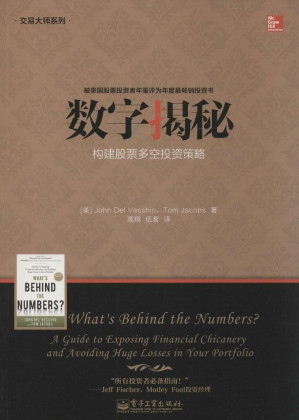
lgli/德尔维奇奥 (John Del Vecchio)^雅各布 (Tom Jacobs) & chenjin5.com - 数字揭秘:构建股票多空投资策略 (交易大师系列) (2014, cj5_4838).mobi
数字揭秘:构建股票多空投资策略 (交易大师系列) 🔍
德尔维奇奥 (John Del Vecchio)^雅各布 (Tom Jacobs) & chenjin5.com
cj5_4838, 2014
中文 [zh] · MOBI · 12.2MB · 2014 · 📕 小说类图书 · 🚀/duxiu/lgli/zlib · Save
描述
Learn how to detect any corporate sleight of hand—and gain the upper hand with smart investing Investing expert John Del Vecchio and “Motley Fool” Tom Jacobs offer a compelling arguement that the secret to stock-market success today isn't finding the next Google or eBay, but avoiding the next AIG or Enron. To that end, they offer simple, clear techniques for detecting when and how legitimate companies make their numbers look better than they are. What's Behind the Numbers? offers seven rules for finding companies playing with—rather than by—the numbers and explains how to avoid losing money by determining exactly when a stock is about to head south. John Del Vecchio, CFA, serves as a Principal of Ranger Alternative Management and principal of Parabolix Research, Inc. Tom Jacobs is lead advisor for the Motley Fool Special Ops, a stock service where he manages a special situations and opportunistic portfolio. He is cofounder of Complete Growth Investor LLC.
备用文件名
zlib/no-category/德尔维奇奥 (John Del Vecchio)^雅各布 (Tom Jacobs) & chenjin5.com/数字揭秘:构建股票多空投资策略 (交易大师系列)_18516025.mobi
备选标题
数字揭秘 : 构建股票多空投资策略 = What's behind the numbers: a guide to exposing financial chicanery and avoiding huge losses in your portfolio
备选作者
(美)John Del Vecchio, (美)Tom Jacobs著 ; 高翔, 伍茗译; 威切欧; 雅各布; 高翔; 伍茗
备选作者
by John Del Vecchio and Tom Jacobs
备选作者
Del Vecchio, John, Jacobs, Tom
备选作者
John M Del Vecchio; Tom Jacobs
备选作者
(美)德尔维奇奥,(美)雅各布著;高翔,伍茗译
备选作者
威切欧 (Vecchio, John Del)
备用出版商
Publishing House of Electronics Industry
备用出版商
McGraw-Hill School Education Group
备用出版商
Irwin Professional Publishing
备用出版商
McGraw-Hill Professional
备用出版商
Oracle Press
备用出版商
McGraw Hill
备用出版商
北京:电子工业出版社
备用版本
McGraw Hill LLC Professional Division, [N.p.], 2012
备用版本
United States, United States of America
备用版本
Jiao yi da shi xi lie, Bei jing, 2015
备用版本
China, People's Republic, China
备用版本
New York, New York State, 2012
备用版本
Di 1 ban, Beijing, 2015
备用版本
New York [u.a, 2013
备用版本
1, US, 2012
元数据中的注释
Bookmarks: p1 (p2): 第1部分揭露圈套(骗局)
p1-1 (p2): 第1章 股票投资的真正风险
p1-1-1 (p4): 抵消通胀
p1-1-2 (p6): 美元平均成本投资法(定额投资)的问题
p1-1-3 (p7): 创新不会增加家庭净值
p1-1-4 (p9): 最低的平均成本并不能取胜
p1-1-5 (p9): 指数不是万能药
p1-1-6 (p10): 我们身处的真实投资环境
p1-1-7 (p12): 所做与所失
p1-1-7-1 (p15): 昙花一现的潮流
p1-1-7-2 (p17): 欺诈
p1-1-7-3 (p18): 生意的失败
p1-1-7-4 (p21): 非对不可
p1-1-7-5 (p22): 避免出错的两个度量标准
p1-1-8 (p24): 亏损最小化,财富最大化
p1-2 (p26): 第2章 激进的收入确认
p1-2-1 (p27): 从头开始
p1-2-2 (p28): 已变现收入还是可变现收入
p1-2-3 (p30): 喂饱渠道
p1-2-3-1 (p32): 应收账款天数的增加应归因于额外的付款条件
p1-2-4 (p33): 会计完工百分比法
p1-2-5 (p38): 关联方收益
p1-2-6 (p39): 监视递延收入的变动
p1-2-7 (p40): 非货币性交易
p1-2-8 (p41): 开单留置收入
p1-2-9 (p42): 一次性收益还是收入的利息收益
p1-2-10 (p42): 销售型租赁增长
p1-2-11 (p42): 收购分销商
p1-2-12 (p43): 收入确认政策的变动
p1-2-13 (p46): 低于报告水平的真实收入增长
p1-2-14 (p48): 总结
p1-3 (p49): 第3章 激进的存货管理
p1-3-1 (p54): 积极和消极的存货构成要素差异
p1-3-2 (p55): 消极差异:卡洛驰和美信集成产品公司
p1-3-2-1 (p57): 上涨的库存
p1-3-3 (p59): 存货堆积
p1-3-4 (p60): 后进先出法下的准备金变化
p1-3-5 (p61): 销售冲销的存货
p1-3-6 (p63): 存货估计方法的改变
p1-3-7 (p63): 存货提升
p1-4 (p66): 第4章 更多不可持续增长的盈余
p1-4-1 (p67): 会计变更
p1-4-1-1 (p67): 会计准则变更
p1-4-1-2 (p68): 会计估计变更
p1-4-1-3 (p68): 报告实体变更
p1-4-2 (p68): 资产
p1-4-2-1 (p69): 坏账准备金
p1-4-2-2 (p71): 商誉和无形资产
p1-4-2-3 (p72): 在收购尚未完成的时期提高商誉
p1-4-2-4 (p74): 其他流动资产:资本化
p1-4-3 (p76): 负债
p1-4-3-1 (p76): 递延收入
p1-4-3-2 (p77): 非现金递延收入
p1-4-3-3 (p77): 其他应计负债的变更
p1-4-3-4 (p78): 保证金减值
p1-4-3-5 (p79): 利用养老金计划获取的增长
p1-4-3-6 (p79): 负债
p1-4-4 (p82): 股东权益:账面价值和有形资产账面价值
p1-4-5 (p85): 损益表的特殊科目
p1-4-5-1 (p85): 毛利润
p1-4-5-2 (p85): 总利润与投入成本
p1-4-5-3 (p88): 重复的“一次性”费用
p1-4-5-4 (p90): 税收估值扣除
p1-4-6 (p91): 国外税率及海外所得利润(海外盈利)
p1-4-7 (p94): 结合资产负债表和损益表的关键问题:阿卡迈科技公司案例
p1-4-8 (p100): 结论
p1-5 (p101): 第5章 现金流警示
p1-5-1 (p102): 现金流量表概述
p1-5-2 (p102): 经营产生的现金流量
p1-5-2-1 (p103): 添加回来的非现金项目要仔细查阅
p1-5-2-2 (p103): 添加回来的折旧与摊销
p1-5-2-3 (p104): 来自优先认股权的股权薪酬和超额税收优惠
p1-5-2-4 (p106): 营运资金的变动(流动资产与流动负债的变动)
p1-5-2-5 (p112): 营运活动产生的净现金流(营运现金流)
p1-5-2-6 (p114): 营运现金流净值
p1-5-2-7 (p115): 营运现金流与净收益差值
p1-5-2-8 (p117): 息税折旧摊销前利润(EBITDA)
p1-5-2-9 (p119): 过去12个月的EBITDA净值与过去12个月的营运现金流净值之差
p1-5-2-10 (p124): 现金每股盈余幻象
p1-5-2-11 (p126): 净现金流:经营活动和投资活动现金流的交点
p1-5-3 (p128): 投资活动产生的现金流
p1-5-3-1 (p128): 增长资本支出和维修支出
p1-5-3-2 (p130): 并购
p1-5-3-3 (p133): 连续并购者:做空,也可以做多
p1-5-4 (p134): 融资活动中产生的现金流量
p1-5-5 (p136): 总结
p2 (p138): 第2部分避免巨额损失
p2-1 (p138): 第6章 应用于多空投资组合的多头策略
p2-1-1 (p140): 激烈的争辩:股票价格从不会错位吗
p2-1-2 (p141): 研究开始支持经验事实
p2-1-3 (p143): 5个使你有效投资的共同特性
p2-1-3-1 (p143): 低市净率,即价格与资产价值(有形资账面价值)之比
p2-1-3-2 (p144): 安全边际
p2-1-3-3 (p145): 计算风险比率
p2-1-3-4 (p148): 低市盈率(现金流、高股利收益率和低股息支出率)
p2-1-3-5 (p152): 搭便车模式(包括公司股票回购)
p2-1-3-6 (p155): 下降的股票价格(均值回归)
p2-1-3-7 (p155): 低市值
p2-1-4 (p156): 第6个特性:特殊情况催化因素
p2-1-5 (p157): 王牌绝招:为什么是多空投资组合
p2-1-6 (p161): 结论
p2-2 (p164): 第7章 股价图:知道何时买入,何时卖掉
p2-2-1 (p165): 最有争议的章节
p2-2-2 (p166): 方法1:最简法则
p2-2-3 (p170): 方法2:供需法则不会被否定
p2-2-4 (p172): 方法3:注意背离
p2-2-5 (p176): 方法4:50天的移动平均线是马其诺防线(最后防线)
p2-2-6 (p179): 方法5:风险管理比挑选股票更重要
p2-2-7 (p180): 总结
p2-3 (p182): 第8章 市场择时(揣测最佳时机)
p2-3-1 (p184): 识别长期的与周期性的牛市与熊市
p2-3-2 (p187): 认识市场历史,虽然这取决于年龄与经验
p2-3-3 (p190): 理解长期中资本损失的问题
p2-3-4 (p191): 限制损害远重于追逐收益
p2-3-5 (p191): 有针对性的技术分析
p2-3-6 (p192): 移动平均线
p2-3-7 (p192): 死亡交点
p2-3-8 (p194): 提升绩效:持有债券而非现金
p2-3-9 (p196): 小盘股与大盘股间的现金流
p2-3-10 (p201): 当前提供的市场择时信号
p2-4 (p202): 第9章 为什么行得通:数字背后的数字
p2-4-1 (p203): 股票价格表现出投资者的期望
p2-4-2 (p204): 结论没有改变
p2-4-3 (p205): 为了满足预期所承担的压力
p2-4-4 (p207): 提高收益
p2-4-5 (p209): 盈余质量能力
p2-4-6 (p210): 过时的理论与运作仍然在继续
p2-4-7 (p212): 解决方案:做空实践
p3 (p213): 作者附注
p4 (p214): 注 释
p1-1 (p2): 第1章 股票投资的真正风险
p1-1-1 (p4): 抵消通胀
p1-1-2 (p6): 美元平均成本投资法(定额投资)的问题
p1-1-3 (p7): 创新不会增加家庭净值
p1-1-4 (p9): 最低的平均成本并不能取胜
p1-1-5 (p9): 指数不是万能药
p1-1-6 (p10): 我们身处的真实投资环境
p1-1-7 (p12): 所做与所失
p1-1-7-1 (p15): 昙花一现的潮流
p1-1-7-2 (p17): 欺诈
p1-1-7-3 (p18): 生意的失败
p1-1-7-4 (p21): 非对不可
p1-1-7-5 (p22): 避免出错的两个度量标准
p1-1-8 (p24): 亏损最小化,财富最大化
p1-2 (p26): 第2章 激进的收入确认
p1-2-1 (p27): 从头开始
p1-2-2 (p28): 已变现收入还是可变现收入
p1-2-3 (p30): 喂饱渠道
p1-2-3-1 (p32): 应收账款天数的增加应归因于额外的付款条件
p1-2-4 (p33): 会计完工百分比法
p1-2-5 (p38): 关联方收益
p1-2-6 (p39): 监视递延收入的变动
p1-2-7 (p40): 非货币性交易
p1-2-8 (p41): 开单留置收入
p1-2-9 (p42): 一次性收益还是收入的利息收益
p1-2-10 (p42): 销售型租赁增长
p1-2-11 (p42): 收购分销商
p1-2-12 (p43): 收入确认政策的变动
p1-2-13 (p46): 低于报告水平的真实收入增长
p1-2-14 (p48): 总结
p1-3 (p49): 第3章 激进的存货管理
p1-3-1 (p54): 积极和消极的存货构成要素差异
p1-3-2 (p55): 消极差异:卡洛驰和美信集成产品公司
p1-3-2-1 (p57): 上涨的库存
p1-3-3 (p59): 存货堆积
p1-3-4 (p60): 后进先出法下的准备金变化
p1-3-5 (p61): 销售冲销的存货
p1-3-6 (p63): 存货估计方法的改变
p1-3-7 (p63): 存货提升
p1-4 (p66): 第4章 更多不可持续增长的盈余
p1-4-1 (p67): 会计变更
p1-4-1-1 (p67): 会计准则变更
p1-4-1-2 (p68): 会计估计变更
p1-4-1-3 (p68): 报告实体变更
p1-4-2 (p68): 资产
p1-4-2-1 (p69): 坏账准备金
p1-4-2-2 (p71): 商誉和无形资产
p1-4-2-3 (p72): 在收购尚未完成的时期提高商誉
p1-4-2-4 (p74): 其他流动资产:资本化
p1-4-3 (p76): 负债
p1-4-3-1 (p76): 递延收入
p1-4-3-2 (p77): 非现金递延收入
p1-4-3-3 (p77): 其他应计负债的变更
p1-4-3-4 (p78): 保证金减值
p1-4-3-5 (p79): 利用养老金计划获取的增长
p1-4-3-6 (p79): 负债
p1-4-4 (p82): 股东权益:账面价值和有形资产账面价值
p1-4-5 (p85): 损益表的特殊科目
p1-4-5-1 (p85): 毛利润
p1-4-5-2 (p85): 总利润与投入成本
p1-4-5-3 (p88): 重复的“一次性”费用
p1-4-5-4 (p90): 税收估值扣除
p1-4-6 (p91): 国外税率及海外所得利润(海外盈利)
p1-4-7 (p94): 结合资产负债表和损益表的关键问题:阿卡迈科技公司案例
p1-4-8 (p100): 结论
p1-5 (p101): 第5章 现金流警示
p1-5-1 (p102): 现金流量表概述
p1-5-2 (p102): 经营产生的现金流量
p1-5-2-1 (p103): 添加回来的非现金项目要仔细查阅
p1-5-2-2 (p103): 添加回来的折旧与摊销
p1-5-2-3 (p104): 来自优先认股权的股权薪酬和超额税收优惠
p1-5-2-4 (p106): 营运资金的变动(流动资产与流动负债的变动)
p1-5-2-5 (p112): 营运活动产生的净现金流(营运现金流)
p1-5-2-6 (p114): 营运现金流净值
p1-5-2-7 (p115): 营运现金流与净收益差值
p1-5-2-8 (p117): 息税折旧摊销前利润(EBITDA)
p1-5-2-9 (p119): 过去12个月的EBITDA净值与过去12个月的营运现金流净值之差
p1-5-2-10 (p124): 现金每股盈余幻象
p1-5-2-11 (p126): 净现金流:经营活动和投资活动现金流的交点
p1-5-3 (p128): 投资活动产生的现金流
p1-5-3-1 (p128): 增长资本支出和维修支出
p1-5-3-2 (p130): 并购
p1-5-3-3 (p133): 连续并购者:做空,也可以做多
p1-5-4 (p134): 融资活动中产生的现金流量
p1-5-5 (p136): 总结
p2 (p138): 第2部分避免巨额损失
p2-1 (p138): 第6章 应用于多空投资组合的多头策略
p2-1-1 (p140): 激烈的争辩:股票价格从不会错位吗
p2-1-2 (p141): 研究开始支持经验事实
p2-1-3 (p143): 5个使你有效投资的共同特性
p2-1-3-1 (p143): 低市净率,即价格与资产价值(有形资账面价值)之比
p2-1-3-2 (p144): 安全边际
p2-1-3-3 (p145): 计算风险比率
p2-1-3-4 (p148): 低市盈率(现金流、高股利收益率和低股息支出率)
p2-1-3-5 (p152): 搭便车模式(包括公司股票回购)
p2-1-3-6 (p155): 下降的股票价格(均值回归)
p2-1-3-7 (p155): 低市值
p2-1-4 (p156): 第6个特性:特殊情况催化因素
p2-1-5 (p157): 王牌绝招:为什么是多空投资组合
p2-1-6 (p161): 结论
p2-2 (p164): 第7章 股价图:知道何时买入,何时卖掉
p2-2-1 (p165): 最有争议的章节
p2-2-2 (p166): 方法1:最简法则
p2-2-3 (p170): 方法2:供需法则不会被否定
p2-2-4 (p172): 方法3:注意背离
p2-2-5 (p176): 方法4:50天的移动平均线是马其诺防线(最后防线)
p2-2-6 (p179): 方法5:风险管理比挑选股票更重要
p2-2-7 (p180): 总结
p2-3 (p182): 第8章 市场择时(揣测最佳时机)
p2-3-1 (p184): 识别长期的与周期性的牛市与熊市
p2-3-2 (p187): 认识市场历史,虽然这取决于年龄与经验
p2-3-3 (p190): 理解长期中资本损失的问题
p2-3-4 (p191): 限制损害远重于追逐收益
p2-3-5 (p191): 有针对性的技术分析
p2-3-6 (p192): 移动平均线
p2-3-7 (p192): 死亡交点
p2-3-8 (p194): 提升绩效:持有债券而非现金
p2-3-9 (p196): 小盘股与大盘股间的现金流
p2-3-10 (p201): 当前提供的市场择时信号
p2-4 (p202): 第9章 为什么行得通:数字背后的数字
p2-4-1 (p203): 股票价格表现出投资者的期望
p2-4-2 (p204): 结论没有改变
p2-4-3 (p205): 为了满足预期所承担的压力
p2-4-4 (p207): 提高收益
p2-4-5 (p209): 盈余质量能力
p2-4-6 (p210): 过时的理论与运作仍然在继续
p2-4-7 (p212): 解决方案:做空实践
p3 (p213): 作者附注
p4 (p214): 注 释
备用描述
Learn how to detect corporate sleight of hand--and gain the upper hand with smart investing
Companies are under more pressure than ever to "beat by a penny," but you don't need to be a forensic accountant to uncover where the spin ends and the truth begins. With the help of a powerhouse team of authors, you can avoid losing a chunk of your portfolio when the next overhyped growth stock fails by knowing What's Behind the Numbers?
Investing experts John Del Vecchio and Tom Jacobs mix a potent combination of earnings quality analysis, long-side investing, and short-side portfolio risk management to help you create a long-short portfolio with less volatility and greater returns, while avoiding landmine stocks that will blow a hole in your financial security.
First, the authors explain the practical side of financial analysis. They demystify widely held assumptions about stock performance, expected returns, earnings quality, and short sellers. Then they comb the financial statements to find the places where companies hide poor earnings quality. Finally, they provide the value and special situations investing to pair with the short-side thinking and offer a tactical manual for applying what you've learned in the technical, day-to-day world of portfolio management.
Armed with this wealth-saving guide, you can confidently trade based on clear data--not the aggressive accounting tactics companies use to make their numbers look better than they are. Better still, it helps you start protecting yourself right away with:
Rules for finding companies playing with--rather than by--the numbers
Repeatable methods for uncovering what companies don't tell you about their numbers
Multistep approach to deciding when to sell a stock and when to short sell it
Reliable formulas for determining when a stock will get hit
The next time a company goes south, you can be the successful investor who knew What's Behind the Numbers?
Praise for What's Behind the Numbers?
"At Crazy Eddie, we succeeded in perpetrating our financial fraud for many years because most Wall Street analysts and investors took for granted the integrity of our reported numbers. What's Behind the Numbers? teaches investors to critically look under the surface and spot red flags that could help them avoid potential losses from fraudulent companies like Crazy Eddie."
--Sam E. Antar, former Crazy Eddie CFO and convicted felon
"I know of no other book that better teaches the reader how to determine earnings quality at a company, so you can avoid large losses on stocks you would otherwise own, and score profits by going short. Not only that, this book teaches you how to grow wealth with small-cap stocks in a way that would make value deity Ben Graham proud. . . . Essential for any investor."
--Jeff Fischer, Portfolio Manager , Motley Fool Pro and Motley Fool Options
"Under [Del Vecchio and Jacobs's] tutelage, forensic accounting is reduced to Math 101. We learn how to employ the metrics they use to expose fi nancial chicanery in companies, to unearth the best short sales, and to protect ourselves from owning those stocks most likely to blow up and wreak havoc on your portfolio. Read What's Behind the Numbers? so you can keep your portfolio clear of ticking stock bombs.
--Jeffrey A. Hirsch, Chief Market Strategist, Magnet AE Fund, and Editor-in-Chief, Stock & Commodity Trader's Almanacs
"Wow! A must-read for anyone who thinks they know how to make money in the stock markets! Del Vecchio and Jacobs forced me to confront the stark reality of What's Behind the Numbers? It isn't pretty. . . . One of the best books on investing I have read in years."
--Tom Meredith, former Chief Financial Officer of Dell Inc., venture capitalist
"This work will be a sought-after reference book among investment managers and analysts for years to come."
--Janet J. Mangano, CFA Institute's Financial Analysts Journal
Companies are under more pressure than ever to "beat by a penny," but you don't need to be a forensic accountant to uncover where the spin ends and the truth begins. With the help of a powerhouse team of authors, you can avoid losing a chunk of your portfolio when the next overhyped growth stock fails by knowing What's Behind the Numbers?
Investing experts John Del Vecchio and Tom Jacobs mix a potent combination of earnings quality analysis, long-side investing, and short-side portfolio risk management to help you create a long-short portfolio with less volatility and greater returns, while avoiding landmine stocks that will blow a hole in your financial security.
First, the authors explain the practical side of financial analysis. They demystify widely held assumptions about stock performance, expected returns, earnings quality, and short sellers. Then they comb the financial statements to find the places where companies hide poor earnings quality. Finally, they provide the value and special situations investing to pair with the short-side thinking and offer a tactical manual for applying what you've learned in the technical, day-to-day world of portfolio management.
Armed with this wealth-saving guide, you can confidently trade based on clear data--not the aggressive accounting tactics companies use to make their numbers look better than they are. Better still, it helps you start protecting yourself right away with:
Rules for finding companies playing with--rather than by--the numbers
Repeatable methods for uncovering what companies don't tell you about their numbers
Multistep approach to deciding when to sell a stock and when to short sell it
Reliable formulas for determining when a stock will get hit
The next time a company goes south, you can be the successful investor who knew What's Behind the Numbers?
Praise for What's Behind the Numbers?
"At Crazy Eddie, we succeeded in perpetrating our financial fraud for many years because most Wall Street analysts and investors took for granted the integrity of our reported numbers. What's Behind the Numbers? teaches investors to critically look under the surface and spot red flags that could help them avoid potential losses from fraudulent companies like Crazy Eddie."
--Sam E. Antar, former Crazy Eddie CFO and convicted felon
"I know of no other book that better teaches the reader how to determine earnings quality at a company, so you can avoid large losses on stocks you would otherwise own, and score profits by going short. Not only that, this book teaches you how to grow wealth with small-cap stocks in a way that would make value deity Ben Graham proud. . . . Essential for any investor."
--Jeff Fischer, Portfolio Manager , Motley Fool Pro and Motley Fool Options
"Under [Del Vecchio and Jacobs's] tutelage, forensic accounting is reduced to Math 101. We learn how to employ the metrics they use to expose fi nancial chicanery in companies, to unearth the best short sales, and to protect ourselves from owning those stocks most likely to blow up and wreak havoc on your portfolio. Read What's Behind the Numbers? so you can keep your portfolio clear of ticking stock bombs.
--Jeffrey A. Hirsch, Chief Market Strategist, Magnet AE Fund, and Editor-in-Chief, Stock & Commodity Trader's Almanacs
"Wow! A must-read for anyone who thinks they know how to make money in the stock markets! Del Vecchio and Jacobs forced me to confront the stark reality of What's Behind the Numbers? It isn't pretty. . . . One of the best books on investing I have read in years."
--Tom Meredith, former Chief Financial Officer of Dell Inc., venture capitalist
"This work will be a sought-after reference book among investment managers and analysts for years to come."
--Janet J. Mangano, CFA Institute's Financial Analysts Journal
备用描述
The real risk of stock investing
Aggressive revenue recognition
Aggressive income management
More unsustainable boosts to earnings
Cash flow warnings
The long strategy that works for our long-short portfolio
Stock charts: know when to hold 'em and know when to fold 'em
Market timing
Why this works: the numbers behind the numbers.
Aggressive revenue recognition
Aggressive income management
More unsustainable boosts to earnings
Cash flow warnings
The long strategy that works for our long-short portfolio
Stock charts: know when to hold 'em and know when to fold 'em
Market timing
Why this works: the numbers behind the numbers.
备用描述
Learn how to detect corporate sleight of hand{u2014}and gain the upper hand with smart investing
备用描述
本书通过大量的实际案例和直观的图表, 浅显易懂的表述, 阐述了如何对上市公司财务状况进行深入解读, 通过财务数据计算出行之有效的指标, 避开"地雷"个股, 并运用这些结论去寻找绩优股
开源日期
2021-12-24
🚀 快速下载
成为会员以支持书籍、论文等的长期保存。为了感谢您对我们的支持,您将获得高速下载权益。❤️
🐢 低速下载
由可信的合作方提供。 更多信息请参见常见问题解答。 (可能需要验证浏览器——无限次下载!)
- 低速服务器(合作方提供) #1 (稍快但需要排队)
- 低速服务器(合作方提供) #2 (稍快但需要排队)
- 低速服务器(合作方提供) #3 (稍快但需要排队)
- 低速服务器(合作方提供) #4 (稍快但需要排队)
- 低速服务器(合作方提供) #5 (无需排队,但可能非常慢)
- 低速服务器(合作方提供) #6 (无需排队,但可能非常慢)
- 低速服务器(合作方提供) #7 (无需排队,但可能非常慢)
- 低速服务器(合作方提供) #8 (无需排队,但可能非常慢)
- 低速服务器(合作方提供) #9 (无需排队,但可能非常慢)
- 下载后: 在我们的查看器中打开
所有选项下载的文件都相同,应该可以安全使用。即使这样,从互联网下载文件时始终要小心。例如,确保您的设备更新及时。
外部下载
-
对于大文件,我们建议使用下载管理器以防止中断。
推荐的下载管理器:JDownloader -
您将需要一个电子书或 PDF 阅读器来打开文件,具体取决于文件格式。
推荐的电子书阅读器:Anna的档案在线查看器、ReadEra和Calibre -
使用在线工具进行格式转换。
推荐的转换工具:CloudConvert和PrintFriendly -
您可以将 PDF 和 EPUB 文件发送到您的 Kindle 或 Kobo 电子阅读器。
推荐的工具:亚马逊的“发送到 Kindle”和djazz 的“发送到 Kobo/Kindle” -
支持作者和图书馆
✍️ 如果您喜欢这个并且能够负担得起,请考虑购买原版,或直接支持作者。
📚 如果您当地的图书馆有这本书,请考虑在那里免费借阅。
下面的文字仅以英文继续。
总下载量:
“文件的MD5”是根据文件内容计算出的哈希值,并且基于该内容具有相当的唯一性。我们这里索引的所有影子图书馆都主要使用MD5来标识文件。
一个文件可能会出现在多个影子图书馆中。有关我们编译的各种数据集的信息,请参见数据集页面。
有关此文件的详细信息,请查看其JSON 文件。 Live/debug JSON version. Live/debug page.