
lgli/s:\NZB\usenet_complete1\b_2014-05-25 - 8ab11409de8592a2dce615b6440d5f5f - Emyl.Jenkins.-.[Sterling.Glass.02].-.The.Big.Steal.(v5.0).(epub)/Emyl Jenkins - [Sterling Glass 02] - The Big Steal (v5.0) (epub).epub
Sterling Glass: The big steal--Sterling Glass--2 🔍
Jenkins, Emyl
Chivers, Sterling Glass 2, 2009
英语 [en] · EPUB · 2.7MB · 2009 · 📕 小说类图书 · 🚀/lgli/lgrs/zlib · Save
描述
Over 10,000,000 copies in print worldwide #1 New York Times Bestseller A Los Angeles Times Bestseller A Wall Street Journal Bestseller A Newsday Favorite Book of 2006 A USA Today Bestseller A Major Motion Picture starring Reese Witherspoon, Robert Pattinson, and Christoph Waltz Jacob Janowski’s luck had run out--orphaned and penniless, he had no direction until he landed on a rickety train that was home to the Benzini Brothers Most Spectacular Show on Earth. A veterinary student just shy of a degree, he was put in charge of caring for the circus menagerie. It was the Great Depression and for Jacob the circus was both his salvation and a living hell. There he met Marlena, the beautiful equestrian star married to August, the charismatic but brutal animal trainer. And he met Rosie, an untrainable elephant who was the great hope for this third-rate traveling show. The bond that grew among this group of misfits was one of love and trust, and ultimately, it was their only hope for survival.
备用文件名
lgrsfic/R:\0day\eng3\2014-05-21 Part 1-2\Emyl Jenkins - [Sterling Glass 02] - The Big Steal (v5.0) (epub).epub
备用文件名
lgli/Emyl Jenkins - Sterling Glass 02 - The Big Steal.epub
备用文件名
lgli/Emyl Jenkins - [Sterling Glass 02] - The Big Steal (v5.0) (epub)
备用文件名
zlib/Crime, Thrillers & Mystery/Jenkins Emyl/The Big Steal_3845079.epub
备选标题
Reader's Voice Book Club kit for Water for elephants by Sara Gruen
备选标题
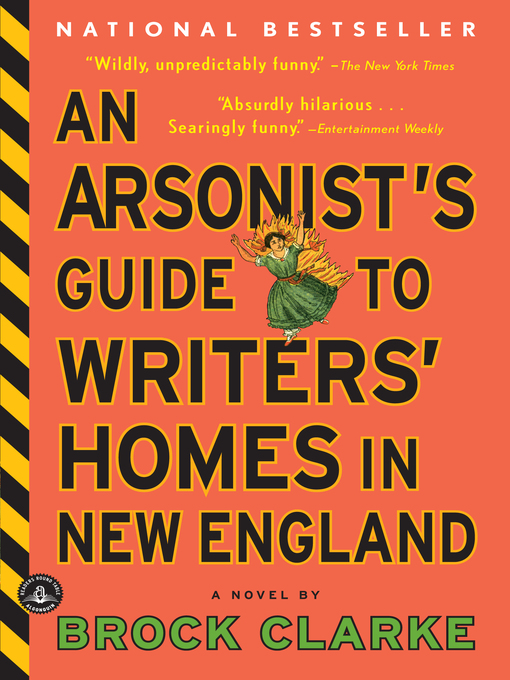
An Arsonist's Guide to Writers' Homes in New England : A Novel
备选标题
Saving the World (Shannon Ravenel Books (Paperback))
备选标题
READS-TO-GO : [bookclub kit for water for elephants
备选标题
The Big Steal (Sterling Glass Mysteries)
备选标题
The big steal : a Sterling Glass mystery
备选标题
The Big Steal (Sterling Glass, #2)
备选标题
The Ghost at the Table : A Novel
备选标题
Water for Elephants : A Novel
备选标题
Saving the world : a novel
备选标题
Coal Black Horse
备选作者
Sara Gruen; New Hampshire Library Association Reference and Adult Services (READS); New Hampshire Library Association READS-TO-GO
备选作者
Sara Gruen; Reader's Voice Book Club (Bismarck, N.D.); Bismarck Public Library (Bismarck, N.D.)
备选作者
Sara Gruen, David LeDoux, John Randolph Jones
备选作者
[compiled by Vanessa Hall-Bennett]
备选作者
Olmstead, Robert
备选作者
Robert Olmstead
备选作者
by Emyl Jenkins
备选作者
Alvarez, Julia
备选作者
Berne, Suzanne
备选作者
Suzanne Berne
备选作者
Julia Alvarez
备选作者
Clarke, Brock
备选作者
Brock Clarke
备用出版商
Algonquin Books of Chapel Hill; Algonquin Books
备用出版商
Bismarck Public Library
备用出版商
A Shannon Ravenel Book
备用出版商
Moline Public Library
备用出版商
Shannon Ravenel Books
备用出版商
NHLA READS-TO-GO
备用版本
Novel Conversation, Novel Conversation, Moline, IL, Illinois, 2010
备用版本
1st pbk. ed., Chapel Hill, N.C, North Carolina, 2007
备用版本
1st pbk. ed. Algonquin Books of Chapel Hill, 2008
备用版本
1st ed., Chapel Hill, NC, North Carolina, 2009
备用版本
First paperback edition, Chapel Hill, NC, 2007
备用版本
Sterling Glass, 1st ed, Chapel Hill, NC, 2009
备用版本
Hachette Book Group, Chapel Hill, N.C., 2007
备用版本
Hachette Book Group, Chapel Hill, N.C., 2008
备用版本
Hachette Book Group, Chapel Hill, NC, 2009
备用版本
Hachette Book Group, Chapel Hill, NC, 2006
备用版本
1st pbk. ed, Chapel Hill, N.C, 2008, ©2007
备用版本
United States, United States of America
备用版本
Trade paperback, Chapel Hill, NC, 2007
备用版本
First edition, Chapel Hill, N.C, c2006
备用版本
Hachette Book Group, Moline, IL, 2010
备用版本
Reprint edition, September 27, 2007
备用版本
1st ed, Chapel Hill, N.C. :, ©2006
备用版本
New Hampshire, 2007
备用版本
Bismarck, N.D, 2008
备用版本
Illustrated, 2015
备用版本
April 27, 2007
备用版本
Reprint, 2008
备用版本
April 9, 2007
备用版本
May 20, 2008
元数据中的注释
version: 5.0
元数据中的注释
lg_fict_id_1118704
元数据中的注释
"A Sterling Glass mystery."
元数据中的注释
Book: An arsonist's guide to writers' homes in New England : a novel / by Brock Clarke. 1st ed. Chapel Hill, N.C. : Algonquin Books Of Chapel Hill, 2008, c2007. 317 p. ; 21 cm.
Includes a conversation with the author.
Includes reading group questions and topics for discussion.
Print version record.
Includes a conversation with the author.
Includes reading group questions and topics for discussion.
Print version record.
备用描述
<br><h3> Chapter One </h3> I, Sam Pulsifer, am the man who accidentally burned down the Emily Dickinson House in Amherst, Massachusetts, and who in the process killed two people, for which I spent ten years in prison and, as letters from scholars of American literature tell me, for which I will continue to pay a high price long into the not-so-sweet hereafter. This story is locally well known, and so I won't go into it here. It's probably enough to say that in the Massachusetts Mt. Rushmore of big, gruesome tragedy, there are the Kennedys, and Lizzie Borden and her ax, and the burning witches at Salem, and then there's me. <p> So anyway, I served my time, and since the sentencing judge took mercy on me, I served my time at the minimum-security prison up at Holyoke. At Holyoke there were bond analysts and lawyers and day traders and city managers and school administrators, all of them caught with their hands in the till and nothing at all like me, an eighteen-year-old accidental arsonist and murderer with blood and soot on his hands and a heavy heart and plenty to learn and no high school diploma. I flung in and tried. I took a biweekly self-improvement seminar called the College of Me, in which I learned the life-changing virtues of patience, hard work, and positive attitude, and in which I earned my GED. I also hung around this group of high-stepping bond analysts from Boston who were in the clink for insider trading. While they were inside, the bond analysts had set out to write their fond, freewheeling memoirs about their high crimes and misdemeanors and all the cashish-that's the way they talked-they had made while screwing old people out of their retirement funds and kids out of their college savings. These guys seemed to know everything, the whole vocabulary of worldly gain and progress, so I paid extra attention during their memoir-brainstorming sessions, listened closely to their debates over how much the reading public did or did not need to know about their tortured childhoods in order to understand why they needed to make so much money in the manner in which they made it. I took notes as they divided the world between those who had stuff taken from them and those who took, those who did bad things in a good way-gracefully, effortlessly-and those bumblers who bumbled their way through life. <p> "Bumblers," I said. <p> "Yes," they said, or one of them did. "Those who bumble." <p> "Give me an example," I said, and they stared at me with those blue-steel stares they were born with and didn't need to learn at Choate or Andover, and they stared those stares until I realized that I was an example, and so this is what I learned from them: that I was a bumbler, I resigned myself to the fact and had no illusions about striving to be something else-a bond analyst or a memoirist, for instance-and just got on with it. Life, that is. <p> I learned something from everyone, is the point, even while I was fending off the requisite cell-block buggerer, a gentle but crooked corporate accountant at Arthur Andersen who was just finding his true sexual self and who told me in a cracked, aching voice that he wanted me-wanted me, that is, until I told him I was a virgin, which I was, and which, for some reason, made him not want me anymore, which meant that people did not want to sleep with twenty-eight-year-old male virgins, which I thought was useful to know. <p> Finally, I learned to play basketball from this black guy named Terrell, which was one of the big joys of my life in prison and which ended badly. Terrell, who had written checks to himself when he was the Worcester city treasurer, was in prison for the last three of my ten years, and whenever he would beat me in one-on-one (this wasn't often, even when I was first learning to play, because although he was very strong, Terrell was also shorter than I was and about as sleek as a fire hydrant; plus, he was twice my age and his knees were completely shot and would crack like dry wood when he ran)-whenever he would beat me, Terrell would yell out, "I'm a grown-ass man." That sounded good, and so after our last game, which I won easily, I also yelled out, "I'm a grown-ass man." Terrell thought I was mocking him, so he started hitting me around the head, and since I get passive in the face of true anger, I just stood there and took Terrell's abuse and didn't try to defend myself. As the guards dragged him to solitary, he promised that he would beat on me a little more once he got out, which he shouldn't have, because, of course, the guards then gave him more solitary than they might have otherwise. By the time Terrell got out, I'd already been released from prison and was home, living with my parents. <p> That didn't work out too well, living with my parents. For one, my burning down the Emily Dickinson House caused them some real heartbreak, because my mother was a high school English teacher, my father an editor for the university press in town, and beautiful words really mattered to them; they didn't care anything for movies or TV, but you could always count on a good poem to make them cry or sigh meaningfully. For another, their neighbors in Amherst weren't exactly happy that I'd burned down the town's most famous house and killed two of its citizens in the bargain, so they took it out on my parents. People never had trouble finding our old, creaking house on Chicopee Street: it was always the one with the driveway that had been spray-painted murderer! (which I understand) or fascist! (which I don't), or with some quote from Dickinson herself that seemed to promise vengeance, but you could never tell exactly what the vengeance might be, because there were a lot of words and the spray-painter always got sloppy and illegible from fatigue or maybe overemotion. It only got worse when I went home after prison. There was some picketing by the local arts council and some unwelcome, unflattering news coverage, and neighborhood kids who cared nothing about Emily Dickinson or her house started egging the place and draping our noble birches with toilet paper, and for a while there it was like Halloween every day. Then things really got serious and someone slashed every tire on my parents' Volvo, and once, in a fit of anger or grief, someone hurled a Birkenstock through one of our bay windows. It was a man's right shoe, size twelve. <p> All of this happened within the first month of my return home. At the end of the month, my parents suggested I move out. I remember it was August, because the three of us were sitting on our front porch and the neighbors' flags were out, caught between the Fourth of July and Labor Day and in full flutter, and the light was spectral through the maple and birch leaves and it was all very pretty. You can imagine how much my parents' request that I leave home wounded me, even though the College of Me said that life after prison wouldn't be easy and that I shouldn't fool myself into thinking otherwise. <p> "But where should I go?" I asked them. <p> "You could go anywhere," my mother said. Back then I thought she was the harder parent of the two and had had high hopes for me, so the disappointment weighed on her more heavily. I remember that my mother was a dry well at my trial when the jury brought back the verdict, although my father had wept loudly and wetly, and he was starting to cry now, too. I hated to see them like this: one cold, the other weepy. There was a time when I was six and they taught me to skate on a pond at the Amherst public golf course. The ice was so thick and clean and glimmery that the fish and errant golf balls were happy to be frozen in it. The sun was streaking the falling snow, making it less cold. When I finally made it around the perimeter of the pond without falling, my mother and father gave me a long ovation; they were a united front of tickled, proud parenthood. Those times were gone: gone, gone, forever gone. <p> "Maybe you could go to college, Sam," my father said after he'd gotten ahold of himself. <p> "That's a good idea," my mother said. "We'd be happy to pay for it." <p> "OK," I said, because I was looking at them closely, really scrutinizing them for the first time since I'd been home from prison, and I could see what I'd done to them. Before I burned down the Emily Dickinson House, they seemed to be normal, healthy, somewhat happy Americans who took vacations and gardened and who'd weathered a rough patch or two (when I was a boy, my father left us for three years, and after he left us, my mother started telling me tall tales about the Emily Dickinson House, and all of this is part of the larger story I will get to and couldn't avoid even if I wanted). Now they looked like skeletons dressed in corduroy and loafers. Their eyes were sunken and wanting to permanently retreat all the way back into their skulls. A few minutes earlier, I'd been telling them about my virginity and the lecherous Arthur Andersen accountant. My parents, as far as I knew back then, were both modest Yankees who didn't like to hear about anyone's private business, but the College of Me insisted that it was healthy and necessary to tell the people we love everything. Now I was regretting it. Why do we hurt our parents the way we do? There's no way to make sense of it except as practice for then hurting our children the way we do. <p> "OK," I said again. "I'll go to college." And then: "I love you both." <p> "Oh, us too," my father said, and then started weeping again. <p> "We certainly do," my mother said. And then to my father: "Bradley, quit crying." <p> Later that night, after my mother had gone to sleep, my father came into my room without knocking, stood over my bed, then leaned down-either to say something to me or to see if I was asleep. I wasn't asleep: I was thinking hopeful thoughts about my future, of how I would go to college and make a clean, honest, painless life for myself, and how proud my parents would be once I'd made it. My father, bent over at the waist the way he was, looked like a crane there to either lift me up with its hook or wreck me with its heavy ball. <p> "Come downstairs," my father whispered, his face close to mine in the darkness. "I want to show you something." <p> I got out of bed, followed him downstairs. My father walked into his study, which was-like most of the rooms in the house-lined floor to ceiling with overflowing bookshelves. He sat in a chair, opened the end table drawer next to him, pulled out a Converse shoe box, the sort of box in which you kept your old photos or Christmas cards, and handed it to me. I took the lid off the box and saw that there were envelopes inside, envelopes slit open with a letter opener. The envelopes were addressed to me, all of them. The letters were still inside the envelopes, so I took them out and read them. <p> There were at least a hundred letters. Some of them, as I mentioned, were from scholars of American literature, damning me to hell, et cetera. There is something underwhelming about scholarly hate mail-the sad literary allusions, the refusal to use contractions-and so I didn't pay much attention to those letters at all. I'd also received several letters from your ordinary arson enthusiasts, which were minor variations on the "Burn, baby, burn" theme. These particular letters didn't affect me much, either. The fact that the world was full of kooks wasn't any bigger news than the fact that the world was full of bores. <p> But there were other letters. They were from all over New England and beyond: from Portland, Bristol, Boston, Burlington, Derry, Chicopee, Hartford, Providence, Pittsfield-from towns and cities in New York and Pennsylvania, too. They were all from people who lived near the homes of writers and who wanted me to burn those houses down. A man in New London, Connecticut, wanted me to burn Eugene O'Neill's home because of what an awful drunk O'Neill was and what a bad example he set for the schoolchildren visiting his home, who needed, after all, more positive role models in the here and now. A woman in Lenox, Massachusetts, wanted me to torch Edith Wharton's house because visitors to Wharton's house parked in front of the woman's mailbox and because Wharton was always, in her opinion, something of a whiner and a phony. A dairy farmer in Cooperstown, New York, wanted me to pour gasoline down the chimney of the James Fenimore Cooper House because the dairy farmer couldn't stand the thought of someone being from such a rich family when his family was so awfully poor. "I've had it harder than Cooper ever did," the man wrote. "That family's got money up to <i>here</i> and they charge ten dollars' admission to their home and people <i>pay</i> it. Won't you please burn that son-of-a-bitching house right to the ground for us? We'll pay, too; I'll sell some of our herd if I have to. I look forward to your response." <p> There were more letters, and they all wanted the same thing. All of them wanted me to burn down the houses of a variety of dead writers-Mark Twain, Louisa May Alcott, Robert Lowell, Nathaniel Hawthorne. Some of the correspondents wanted me to burn down the homes of writers I'd never even heard of. All of the letter writers were willing to wait for me to get out of prison. And all of them were willing to pay me. <p> "Wow," I said to my father when I was done reading. He hadn't said anything in a while. It was interesting: when my mother was around, my father always appeared weak minded and softhearted-a slight, unnecessary, and mostly foolish human being. But now, in that room, with those letters, he seemed to me wise-silent and massive like a Buddha in wire-rimmed glasses. I felt the enormity of the situation, in my throat and face and elsewhere. "Why didn't you tell me about these letters while I was in prison?" <p> He looked at me but didn't say anything. This was a test of sorts, because this, of course, is what the wise do: they test the unwise to make them less so. <p> "You wanted to protect me," I said, and he nodded. It heartened me to know I could give him the right answer, and so I persisted. "You wanted to protect me from these people who thought I was an arsonist." <p> My father couldn't leave this one alone. He went into a violent struggle with his better judgment, wrestling with his mouth as he started and stopped himself from speaking a dozen times. It was like watching Atlas gear up to hoist that big boulder we now live on. Finally my father got it out and said sadly, so sadly, "Sam, you <i>are</i> an arsonist." <p> Oh, how that hurt! But it was true, and I needed to hear it, needed my father to tell it to me, just as we all need our fathers to tell us the truth, as someday I'll tell it to my children, too. And someday my children will do to me what I did to my father: they will deny it, the truth. <p> "You're wrong," I said. "I'm a college student." I put the top back on the box of letters, handed it back to him, and left before he could say anything else. When I got back in bed, I made myself promise never to think of the letters again. <i>Forget about them,</i> I commanded myself. I thought I could do it, too. After all, wasn't this what college was all about? Emptying your mind of the things you didn't want to remember and filling your mind up with new things before the old, unwanted things could find their way back in? <p> I left for college two weeks later; it was ten years before I saw my parents again, ten years before I reread those letters, ten years before I met some of the people who'd written the letters, ten years before I found out things about my parents that I'd never suspected and never wanted to know, ten years before I went back to prison, ten years before any of what happened, happened. <p> But I'm getting ahead of myself. College: Since it was late in the application season, I went to the only school that accepted me-Our Lady of the Lake in Springfield, about twenty miles south of Amherst. It was a Catholic college that had just started accepting men because apparently there weren't enough Catholic women left in the Western world who wanted to pay a lot of money to get an education with no men around except for Jesus and his priests, and even the priests who supposedly ran it didn't want to teach there. A few nuns with nothing else to do other than deliver communion at the early, unpopular masses taught a couple of classes-World Religions 101 and 102-and the rest were taught by normal, irreligious teachers who couldn't get jobs anywhere else. <p> <i>(Continues...)</i> <p> <p> <!-- copyright notice --> <br></pre> <blockquote><hr noshade size='1'><font size='-2'> Excerpted from <b>An Arsonist's Guide to Writers' Homes in New England</b> by <b>BROCK CLARKE</b> Copyright © 2007 by Brock Clarke. Excerpted by permission.<br> All rights reserved. No part of this excerpt may be reproduced or reprinted without permission in writing from the publisher.<br>Excerpts are provided by Dial-A-Book Inc. solely for the personal use of visitors to this web site.
备用描述
<p><br>strikingly Different Since Childhood And Leading Dissimilar Lives Now, Sisters Frances And Cynthia Have Managed To Remain "devoted"—as Long As They Stay On Opposite Coasts. When Frances Arranges To Host Thanksgiving At Her Idyllic New England Farmhouse, She Envisions A Happy Family Reunion, One That Will Include The Sisters' Long-estranged Father. Cynthia, However, Doesn't Understand How Frances Can Ignore The Past Their Father's Presence Revives, A Past That Includes Suspicions About Their Mother's Death Twenty-five Years Earlier.<p>as Thanksgiving Day Arrives, With A Houseful Of Guests Looking Forward To Dinner, The Sisters Continue To Struggle With Different Versions Of A Shared Past, Their Conflict Escalating To A Dramatic, Suspenseful Climax.</p><h3>the Washington Post - Ron Charles</h3><p>there's Almost No Forward Motion To The Novel's Plot, But Somehow This Proxy Battle Between Cynthia And Frances Over Their Childhood—an Effort By Each Sister To Enforce Her Own Version Of The Past And Dismiss The Other's Memories As Irrelevant Or Skewed—s Enough To Make <i>the Ghost At The Table</i> Wholly Engaging, The Perfect Spark For Launching A Rich Conversation Around Your Own Table Once The Dishes Have Been Cleared.<p> Cynthia Can Be A Bitter Narrator, And Frances's Sepia-toned Desire For A Regular Old-fashioned Family Holiday Makes Her An Easy Target, But Berne Is Not A Bitter Author, And Forgiveness Finally Comes To These People In The Most Natural And Believable Ways. Despite Some Good Shots At The Hysteria That Infects Most Of Us Around The Fourth Thursday Of November, This Is A Surprisingly Tender Story That Celebrates The Infinite Frustrations And Joys Of These Crazy People We're Yoked To Forever. All In All, Something To Add To Your List Of Things To Be Grateful For.</p>
备用描述
<p>Though he may not speak of them, the memories still dwell inside Jacob Jankowski's ninety-something-year-old mind. Memories of himself as a young man, tossed by fate onto a rickety train that was home to the Benzini Brothers Most Spectacular Show on Earth. Memories of a world filled with freaks and clowns, with wonder and pain and anger and passion; a world with its own narrow, irrational rules, its own way of life, and its own way of death. The world of the circus: to Jacob it was both salvation and a living hell.</p>
<p>Jacob was there because his luck had run out—orphaned and penniless, he had no direction until he landed on this locomotive "ship of fools." It was the early part of the Great Depression, and everyone in this third-rate circus was lucky to have any job at all. Marlena, the star of the equestrian act, was there because she fell in love with the wrong man, a handsome circus boss with a wide mean streak. And Rosie the elephant was there because she was the great gray hope, the new act that was going to be the salvation of the circus; the only problem was, Rosie didn't have an act—in fact, she couldn't even follow instructions. The bond that grew among this unlikely trio was one of love and trust, and ultimately, it was their only hope for survival.</p>
<p>Surprising, poignant, and funny, <i>Water for Elephants</i> is that rare novel with a story so engrossing, one is reluctant to put it down; with characters so engaging, they continue to live long after the last page has been turned; with a world built of wonder, a world so real, one starts to breathe its air.</p>
<p>Jacob was there because his luck had run out—orphaned and penniless, he had no direction until he landed on this locomotive "ship of fools." It was the early part of the Great Depression, and everyone in this third-rate circus was lucky to have any job at all. Marlena, the star of the equestrian act, was there because she fell in love with the wrong man, a handsome circus boss with a wide mean streak. And Rosie the elephant was there because she was the great gray hope, the new act that was going to be the salvation of the circus; the only problem was, Rosie didn't have an act—in fact, she couldn't even follow instructions. The bond that grew among this unlikely trio was one of love and trust, and ultimately, it was their only hope for survival.</p>
<p>Surprising, poignant, and funny, <i>Water for Elephants</i> is that rare novel with a story so engrossing, one is reluctant to put it down; with characters so engaging, they continue to live long after the last page has been turned; with a world built of wonder, a world so real, one starts to breathe its air.</p>
备用描述
Latina novelist Alma Huebner is suffering from writer's block and is years past the completion date for yet another of her bestselling family sagas. Her husband, Richard, works for a humanitarian organization dedicated to the health and prosperity of developing countries and wants her help on an extended AIDS assignment in the Dominican Republic. But Alma begs off joining him: the publisher is breathing down her neck. She promises to work hard and follow him a bit later.
The truth is that Alma is seriously sidetracked by a story she has stumbled across. It's the story of a much earlier medical do-gooder, Spaniard Francisco Xavier Balmis, who in 1803 undertook to vaccinate the populations of Spain's American colonies against smallpox. To do this, he required live "carriers" of the vaccine.
Of greater interest to Alma is Isabel Sendales y Gmez, director of La Casa de Expsitos, who was asked to select twenty-two orphan boys to be the vaccine carriers. She agreed with the stipulation that she would accompany the boys on the proposed two-year voyage. Her strength and courage inspire Alma, who finds herself becoming obsessed with the details of Isabel's adventures.
This resplendent novel-within-a-novel spins the disparate tales of two remarkable women, both of whom are swept along by machismo. In depicting their confrontation of the great scourges of their respective eras, Alvarez exposes the conflict between altruism and ambition.
Julia Alvarezs new novel, Afterlife , is available now.
The truth is that Alma is seriously sidetracked by a story she has stumbled across. It's the story of a much earlier medical do-gooder, Spaniard Francisco Xavier Balmis, who in 1803 undertook to vaccinate the populations of Spain's American colonies against smallpox. To do this, he required live "carriers" of the vaccine.
Of greater interest to Alma is Isabel Sendales y Gmez, director of La Casa de Expsitos, who was asked to select twenty-two orphan boys to be the vaccine carriers. She agreed with the stipulation that she would accompany the boys on the proposed two-year voyage. Her strength and courage inspire Alma, who finds herself becoming obsessed with the details of Isabel's adventures.
This resplendent novel-within-a-novel spins the disparate tales of two remarkable women, both of whom are swept along by machismo. In depicting their confrontation of the great scourges of their respective eras, Alvarez exposes the conflict between altruism and ambition.
Julia Alvarezs new novel, Afterlife , is available now.
备用描述
<p><br>When Robey Childs's mother has a premonition about her husband, a soldier fighting in the Civil War, she does the unthinkable: she sends her only child to find his father on the battlefield and bring him home.<p>At fourteen, wearing the coat his mother sewed to ensure his safety—blue on one side, gray on the other— Robey thinks he's off on a great adventure. But not far from home, his horse falters and he realizes the enormity of his task. It takes the gift of a powerful and noble coal black horse to show him how to undertake the most important journey of his life: with boldness, bravery, and self-posession.<p><i>Coal Black Horse</i> joins the pantheon of great war novels—<i>All Quiet on the Western Front, The Red Badge of Courage, The Naked and the Dead</i>.</p><h3>The New York Times - Roy Hoffman</h3><p>A callow youth, a mystical horse, a Civil War landscape—Robert Olmstead uses these familiar elements to fashion <i>Coal Black Horse,</i> an exciting if periodically overwrought coming-of-age novel. They are all brought together at Gettysburg when his 14-year-old protagonist, Robey Childs, is confronted with the grim aftermath of the fighting, in which there were "50,000 men who were killed, and wounded and missing from the rolls. They were in parts and pieces. They were whole and seemingly unscathed and wandering about as the future dead while others were vapor or grease or but rags of flesh and pulverized bone."</p>
备用描述
Latina novelist Alma Huebner is suffering from writer's block and is years past the completion date for yet another of her bestselling family sagas. Her husband, Richard, works for a humanitarian organization dedicated to the health and prosperity of developing countries and wants her help on an extended AIDS assignment in the Dominican Republic. But Alma begs off joining him: the publisher is breathing down her neck. She promises to work hard and follow him a bit later. The truth is that Alma is seriously sidetracked by a story she has stumbled across. It's the story of a much earlier medical do-gooder, Spaniard Francisco Xavier Balmis, who in 1803 undertook to vaccinate the populations of Spain's American colonies against smallpox. To do this, he required live'carriers'of the vaccine. Of greater interest to Alma is Isabel Sendales y Gómez, director of La Casa de Expósitos, who was asked to select twenty-two orphan boys to be the vaccine carriers. She agreed— with the stipulation that she would accompany the boys on the proposed two-year voyage. Her strength and courage inspire Alma, who finds herself becoming obsessed with the details of Isabel's adventures. This resplendent novel-within-a-novel spins the disparate tales of two remarkable women, both of whom are swept along by machismo. In depicting their confrontation of the great scourges of their respective eras, Alvarez exposes the conflict between altruism and ambition.
备用描述
This Book Is The Delightfully Dark Story Of Sam Pulsifer, The Accidental Arsonist And Murderer Narrator Who Leads Readers Through A Multilayered, Flame-filled Adventure About Literature, Lies, Love And Life. Growing Up In Amherst, Mass., With An Editor For A Father And An English Teacher For A Mother, Sam Was Fed Endless Stories That Fueled (literally And Figuratively) The Rest Of His Life. Thus, The Blurred Boundaries Between Fact And Fiction, Story And Reality Become The Landscape For Amusing And Provocative Adventures That Begin When, At Age 18, Sam Accidentally Torches The Emily Dickinson Homestead, Killing Two People. After Serving 10 Years, Sam Tries To Distance Himself From His Past Through College, Employment, Marriage And Fatherhood, But He Eventually Winds Up Back In His Parents' Home, Separated From His Wife And Jobless. When More Literary Landmarks Go Up In Flames, Sam Is The Likely Suspect, And His Determination To Find The Actual Arsonist Uncovers Family Secrets And More Than A Bit About Human Nature. Sam Is Equal Parts Fall Guy And Tour Guide In This Bighearted And Wily Jolt To The American Literary Legacy By Brock Clarke. Includes A Conversation With The Author. Includes Reading Group Questions And Topics For Discussion.
备用描述
Over 10 million copies sold worldwide! • Now A Broadway Musical Starring Grant Gustin and Isabella McCalla#1 New York Times Bestseller • A Los Angeles Times, Wall Street Journal, & USA Today Bestseller'This colorful headlong tale of a Depression-era circus simply can't be beat.'—Stephen KingA Major Motion Picture starring Reese Witherspoon, Robert Pattinson, and Christoph Waltz Jacob Janowski's luck had run out--orphaned and penniless, he had no direction until he landed on a rickety train that was home to the Benzini Brothers Most Spectacular Show on Earth. A veterinary student just shy of a degree, he was put in charge of caring for the circus menagerie. It was the Great Depression and for Jacob the circus was both his salvation and a living hell. There he met Marlena, the beautiful equestrian star married to August, the charismatic but brutal animal trainer. And he met Rosie, an untrainable elephant who was the great hope for this third-rate traveling show. The bond that grew among this group of misfits was one of love and trust, and ultimately, it was their only hope for survival.
备用描述
"Strikingly different since childhood and leading dissimilar lives now, sisters Frances and Cynthia have managed to remain "devoted"--As long as they stay on opposite coasts. When Frances arranges to host Thanksgiving at her idyllic New England farmhouse, she envisions a happy family reunion, one that will include the sisters' long-estranged father. Cynthia, however, doesn't understand how Frances can ignore the past their father's presence revives, a past that includes suspicions about their mother's death twenty-five years earlier. As Thanksgiving Day arrives, with a houseful of guests looking forward to dinner, the sisters continue to struggle with different versions of a shared past, their conflict escalating to a dramatic, suspenseful climax."--Publisher's website.
The Fiske family is gathered at the exquisitely restored New England home of the second of three sisters. The family table groans with the weight of guilt and blame. The result is the taut story of a 21st-century family's unraveling, played against a famous 19th-century writer's own family dysfunction.
The Fiske family is gathered at the exquisitely restored New England home of the second of three sisters. The family table groans with the weight of guilt and blame. The result is the taut story of a 21st-century family's unraveling, played against a famous 19th-century writer's own family dysfunction.
备用描述
Hired to assess the value of broken and missing antiques following a suspicious burglary at a Virginia manor house, intrepid appraiser and amateur sleuth Sterling Glass finds that her job is more complicated than she’d anticipated. The antiques, she realizes, are not always what they seem: some are worth tens of thousands, others are well-done replicas.
<p>Whether the well-traveled and well-heeled couple who once owned Wynderly could have been trafficking in fakes is what Sterling must unravel from the secret rooms, hidden treasures, uncovered diaries, and convoluted trail of paperwork and provenance. As our sharp-witted heroine sifts through details doled out by the museum's curators, board members, and the town's local residents, she discovers that objects, unlike people, do not lie.</p>
<p><i>The Big Steal</i> is a delightful mystery that enhances readers' antiques acumen and provides an easy guide to identifying the most popular styles and periods in an illustrated appendix.<br>
</p>
<p>Whether the well-traveled and well-heeled couple who once owned Wynderly could have been trafficking in fakes is what Sterling must unravel from the secret rooms, hidden treasures, uncovered diaries, and convoluted trail of paperwork and provenance. As our sharp-witted heroine sifts through details doled out by the museum's curators, board members, and the town's local residents, she discovers that objects, unlike people, do not lie.</p>
<p><i>The Big Steal</i> is a delightful mystery that enhances readers' antiques acumen and provides an easy guide to identifying the most popular styles and periods in an illustrated appendix.<br>
</p>
备用描述
<p>While Alma Huebert is researching a new novel, she finds her real story—and her salvation—in a little-known but staggering historical footnote: the Royal Expedition of the Vaccine. In 1803, Don Francisco Balmis embarked on a two-year sea voyage to rescue the New World from smallpox. Accompanying him were twenty-two orphan boys, acting as live carriers, and their guardian, Isabel Sendales y Gómez. As Alma digs deeper into Isabel's life, she finds her own power to commit an act as life-changing as Isabel's.</p>
<p>In <b>Saving the World</b>, Julia Alvarez, author of perennial bestsellers, including <b>How the García Girls Lost Their Accents</b> and <b>In the Time of the Butterflies</b>, takes us into the worlds of "two women living two centuries apart [who] each face 'a crisis of the soul' when their fates are tied to idealistic men" (<b>Publishers Weekly</b>).</p>
<p>In <b>Saving the World</b>, Julia Alvarez, author of perennial bestsellers, including <b>How the García Girls Lost Their Accents</b> and <b>In the Time of the Butterflies</b>, takes us into the worlds of "two women living two centuries apart [who] each face 'a crisis of the soul' when their fates are tied to idealistic men" (<b>Publishers Weekly</b>).</p>
备用描述
When Jacob Jankowski, recently orphaned and suddenly adrift, jumps onto a passing train, he enters a world of freaks, drifters, and misfits, a second-rate circus struggling to survive during the Great Depression, making one-night stands in town after endless town. A veterinary student who almost earned his degree, Jacob is put in charge of caring for the circus menagerie. It is there that he meets Marlena, the beautiful young star of the equestrian act, who is married to August, the charismatic but twisted animal trainer. He also meets Rosie, an elephant who seems untrainable until he discovers a way to reach her.
Beautifully written, Water for Elephants is illuminated by a wonderful sense of time and place. It tells a story of a love between two people that overcomes incredible odds in a world in which even love is a luxury that few can afford.
Beautifully written, Water for Elephants is illuminated by a wonderful sense of time and place. It tells a story of a love between two people that overcomes incredible odds in a world in which even love is a luxury that few can afford.
备用描述
From the Publisher: While Alma Huebert is researching a new novel, she finds her real story-and her salvation-in a little-known but staggering historical footnote: the Royal Expedition of the Vaccine. In 1803, Don Francisco Balmis embarked on a two-year sea voyage to rescue the New World from smallpox. Accompanying him were twenty-two orphan boys, acting as live carriers, and their guardian, Isabel Sendales y Gómez. As Alma digs deeper into Isabel's life, she finds her own power to commit an act as life-changing as Isabel's. In Saving the World, Julia Alvarez, author of perennial bestsellers, including How the García Girls Lost Their Accents and In the Time of the Butterflies, takes us into the worlds of "two women living two centuries apart [who] each face 'a crisis of the soul' when their fates are tied to idealistic men"-(Publishers Weekly)
备用描述
'Funny, profound... a seductive book with a payoff on every page.'—People A lot of remarkable things have happened in the life of Sam Pulsifer, the hapless hero of this incendiary novel, beginning with the ten years he spent in prison for accidentally burning down Emily Dickinson's house and unwittingly killing two people. emerging at age twenty-eight, he creates a new life and identity as a husband and father. But when the homes of other famous New England writers suddenly go up in smoke, he must prove his innocence by uncovering the identity of this literary-minded arsonist. In the league of such contemporary classics as A Confederacy of Dunces and The World According to Garp, An Arsonist's Guide to Writers'Homes in New England is an utterly original story about truth and honesty, life and the imagination.
备用描述
When Robey Childs's mother has a premonition about her husband, a soldier fighting in the Civil War, she does the unthinkable: she sends her only child to find his father on the battlefield and bring him home. At fourteen, wearing the coat his mother sewed to ensure his safety—blue on one side, gray on the other— Robey thinks he's off on a great adventure. But not far from home, his horse falters and he realizes the enormity of his task. It takes the gift of a powerful and noble coal black horse to show him how to undertake the most important journey of his life: with boldness, bravery, and self-posession.Coal Black Horse joins the pantheon of great war novels—All Quiet on the Western Front, The Red Badge of Courage, The Naked and the Dead.
备用描述
As a young man, Jacob Jankowski was tossed by fate onto a rickety train that was home to the Benzini Brothers Most Spectacular Show on Earth. It was the early part of the great Depression, and for Jacob, now ninety, the circus world he remembers was both his salvation and a living hell. A veterinary student just shy of a degree, he was put in charge of caring for the circus menagerie. It was there that he met Marlena, the beautiful equestrian star married to August, the charismatic but twisted animal trainer. And he met Rosie, an untrainable elephant who was the great gray hope for this third-rate traveling show. The bond that grew among this unlikely trio was one of love and trust, and, ultimately, it was their only hope for survival.
备用描述
A novel of star-crossed lovers, set in the circus world circa 1932. When Jacob Jankowski, recently orphaned and suddenly adrift, jumps onto a passing train, he enters a world of freaks, grifters, and misfits, a second-rate circus struggling to survive during the Great Depression, making one-night stands in town after endless town. A veterinary student who almost earned his degree, Jacob is put in charge of caring for the circus menagerie. It is there that he meets Marlena, the beautiful young star of the equestrian act, who is married to August, the charismatic but twisted animal trainer. He also meets Rosie, an elephant who seems untrainable until he discovers a way to reach her.--From publisher description.
备用描述
"Alma Heubner's husband, Richard, goes to the Dominican Republic to help eradicate AIDS, while Alma, a bestselling Latina writer, stays at home in Vermont to work on a story about a real, ill-fated 19th-century expedition chaperoned by Doña Isabel Sendales y Gómez, the spinster director of a Spanish orphanage who agrees to vaccinate 20 of her charges with cowpox and bring them from Spain to Central America to prevent future smallpox epidemics. While the leader of the anti-smallpox expedition, Dr. Francisco Balmis, and Richard see their missions collapse in defeat, Doña Isabel and Alma surmount their personal depressions to find inner strength."--Publishers Weekly
开源日期
2014-11-17


🚀 快速下载
成为会员以支持书籍、论文等的长期保存。为了感谢您对我们的支持,您将获得高速下载权益。❤️
- 高速服务器(合作方提供) #1 (推荐)
- 高速服务器(合作方提供) #2 (推荐)
- 高速服务器(合作方提供) #3 (推荐)
- 高速服务器(合作方提供) #4 (推荐)
- 高速服务器(合作方提供) #5 (推荐)
- 高速服务器(合作方提供) #6 (推荐)
- 高速服务器(合作方提供) #7
- 高速服务器(合作方提供) #8
- 高速服务器(合作方提供) #9
- 高速服务器(合作方提供) #10
- 高速服务器(合作方提供) #11
- 高速服务器(合作方提供) #12
- 高速服务器(合作方提供) #13
- 高速服务器(合作方提供) #14
- 高速服务器(合作方提供) #15
- 高速服务器(合作方提供) #16
- 高速服务器(合作方提供) #17
- 高速服务器(合作方提供) #18
- 高速服务器(合作方提供) #19
- 高速服务器(合作方提供) #20
- 高速服务器(合作方提供) #21
- 高速服务器(合作方提供) #22
🐢 低速下载
由可信的合作方提供。 更多信息请参见常见问题解答。 (可能需要验证浏览器——无限次下载!)
- 低速服务器(合作方提供) #1 (稍快但需要排队)
- 低速服务器(合作方提供) #2 (稍快但需要排队)
- 低速服务器(合作方提供) #3 (稍快但需要排队)
- 低速服务器(合作方提供) #4 (稍快但需要排队)
- 低速服务器(合作方提供) #5 (无需排队,但可能非常慢)
- 低速服务器(合作方提供) #6 (无需排队,但可能非常慢)
- 低速服务器(合作方提供) #7 (无需排队,但可能非常慢)
- 低速服务器(合作方提供) #8 (无需排队,但可能非常慢)
- 低速服务器(合作方提供) #9 (无需排队,但可能非常慢)
- 低速服务器(合作方提供) #10 (稍快但需要排队)
- 低速服务器(合作方提供) #11 (稍快但需要排队)
- 低速服务器(合作方提供) #12 (稍快但需要排队)
- 低速服务器(合作方提供) #13 (稍快但需要排队)
- 低速服务器(合作方提供) #14 (无需排队,但可能非常慢)
- 低速服务器(合作方提供) #15 (无需排队,但可能非常慢)
- 低速服务器(合作方提供) #16 (无需排队,但可能非常慢)
- 低速服务器(合作方提供) #17 (无需排队,但可能非常慢)
- 低速服务器(合作方提供) #18 (无需排队,但可能非常慢)
- 下载后: 在我们的查看器中打开
所有选项下载的文件都相同,应该可以安全使用。即使这样,从互联网下载文件时始终要小心。例如,确保您的设备更新及时。
外部下载
-
对于大文件,我们建议使用下载管理器以防止中断。
推荐的下载管理器:JDownloader -
您将需要一个电子书或 PDF 阅读器来打开文件,具体取决于文件格式。
推荐的电子书阅读器:Anna的档案在线查看器、ReadEra和Calibre -
使用在线工具进行格式转换。
推荐的转换工具:CloudConvert和PrintFriendly -
您可以将 PDF 和 EPUB 文件发送到您的 Kindle 或 Kobo 电子阅读器。
推荐的工具:亚马逊的“发送到 Kindle”和djazz 的“发送到 Kobo/Kindle” -
支持作者和图书馆
✍️ 如果您喜欢这个并且能够负担得起,请考虑购买原版,或直接支持作者。
📚 如果您当地的图书馆有这本书,请考虑在那里免费借阅。
下面的文字仅以英文继续。
总下载量:
“文件的MD5”是根据文件内容计算出的哈希值,并且基于该内容具有相当的唯一性。我们这里索引的所有影子图书馆都主要使用MD5来标识文件。
一个文件可能会出现在多个影子图书馆中。有关我们编译的各种数据集的信息,请参见数据集页面。
有关此文件的详细信息,请查看其JSON 文件。 Live/debug JSON version. Live/debug page.