Metadata record
这是元数据记录,而非可下载的文件。你可以使用这个链接来请求文件。 若你拥有的文件未被安娜的档案收录,请考虑上传文件。
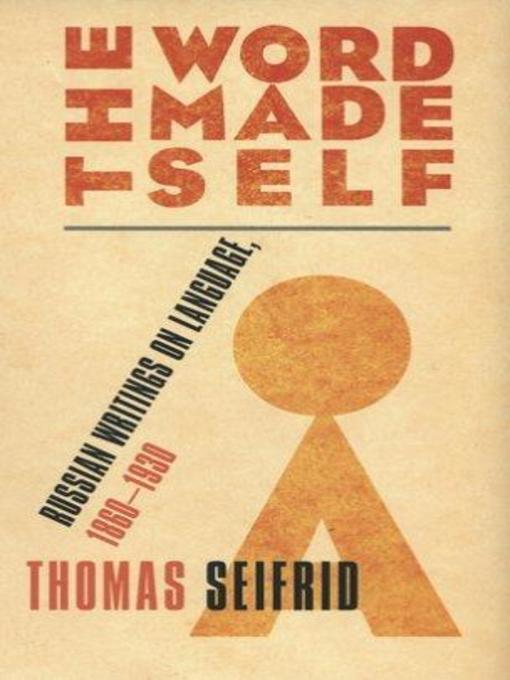
The Word Made Self 🔍
Thomas J. Seifrid
Cornell University Press, 2018
元数据 · 英语 [en] · 2018 · 📗 未知类型的图书 · libby · Libby 5323616
描述
When Osip Mandelstam wrote that the Russian word was "sentient and breathing flesh," he voiced one of the most powerful themes in his culture. In The Word Made Self, Thomas Seifrid explores this Russian fascination with the power of the word as expressed in the work of philosophers, theologians, and artists of the Silver Age and early Soviet period. He shows that their diverse works (poems, novels, philosophical and religious tracts) share an attempt to articulate "a model of selfhood within the phenomenon of language." The thinkers included in this book—among them Pavel Florenskii, Roman Jakobson, Aleksei Losev, and Gustav Shpet—frequently responded to the work of contemporary European philosophers even as they drew upon and revitalized powerful elements of early Russian religious thought. On Seifrid's view, this highly original body of writing about language was the essential context for the development of Russian Futurism, Formalism, and the work of Mikhail Bakhtin and the Soviet structuralists—movements and ideas whose influence has extended far beyond Russia and long past their years of efflorescence. This book will have a lasting impact among readers who will be fascinated to discover the richness of this long-suppressed chapter in the history of Russian culture.
| When Osip Mandelstam wrote that the Russian word was "sentient and breathing flesh," he voiced one of the most powerful themes in his culture. In The Word Made Self , Thomas Seifrid explores this Russian fascination with the power of the word as expressed in the work of philosophers, theologians, and artists of the Silver Age and early Soviet period. He shows that their diverse works (poems, novels, philosophical and religious tracts) share an attempt to articulate "a model of selfhood within the phenomenon of language."
The thinkers included in this book—among them Pavel Florenskii, Roman Jakobson, Aleksei Losev, and Gustav Shpet—frequently responded to the work of contemporary European philosophers even as they drew upon and revitalized powerful elements of early Russian religious thought. On Seifrid's view, this highly original body of writing about language was the essential context for the development of Russian Futurism, Formalism, and the work of Mikhail Bakhtin and the Soviet structuralists—movements and ideas whose influence has extended far beyond Russia and long past their years of efflorescence. This book will have a lasting impact among readers who will be fascinated to discover the richness of this long-suppressed chapter in the history of Russian culture.
| When Osip Mandelstam wrote that the Russian word was "sentient and breathing flesh," he voiced one of the most powerful themes in his culture. In The Word Made Self , Thomas Seifrid explores this Russian fascination with the power of the word as expressed in the work of philosophers, theologians, and artists of the Silver Age and early Soviet period. He shows that their diverse works (poems, novels, philosophical and religious tracts) share an attempt to articulate "a model of selfhood within the phenomenon of language."
The thinkers included in this book—among them Pavel Florenskii, Roman Jakobson, Aleksei Losev, and Gustav Shpet—frequently responded to the work of contemporary European philosophers even as they drew upon and revitalized powerful elements of early Russian religious thought. On Seifrid's view, this highly original body of writing about language was the essential context for the development of Russian Futurism, Formalism, and the work of Mikhail Bakhtin and the Soviet structuralists—movements and ideas whose influence has extended far beyond Russia and long past their years of efflorescence. This book will have a lasting impact among readers who will be fascinated to discover the richness of this long-suppressed chapter in the history of Russian culture.
备选作者
Seifrid, Thomas J.
开源日期
2024-09-11
- 未找到下载。
有关此文件的详细信息,请查看其JSON 文件。 Live/debug JSON version. Live/debug page.